To receive the old-age pension, you must have been enrolled in the National Pension for at least 10 years, allowing you to receive a stable monthly pension once you reach the eligible age. It is common to see people approaching retirement worry about how much pension they will receive, as the amount varies significantly depending on the length of enrollment and income level. Some wonder if simply completing 10 years is enough, while others worry about whether continuing to work will reduce their pension. In this article, we will examine in detail the basic conditions for the old-age pension, how benefits are calculated, and its relationship with the basic pension. We will explain the pension system, which can seem complex, in an easy-to-understand manner using specific examples.
=
Eligibility Criteria, Benefit Calculation, and Application Process for the Old-Age Pension and Basic Pension
1. What is the Old-Age Pension?

The old-age pension is a national public pension system designed to secure the basic livelihood of those whose ability to work has declined or been lost due to old age. It serves as a reliable pillar to fill the income gap after retirement, with the significant advantage of being paid monthly for life. It is structured so that the period during which you diligently paid premiums as an employee or regional enrollee forms the basis for the benefits you receive as you age. While many people view this money simply as pocket money, it is actually a core resource for maintaining their livelihood in old age. Therefore, it is considered most important to steadily increase your enrollment period from a young age. To receive the old-age pension stably, you must meet two core conditions: enrollment period and age. In the past, many people mistakenly believed that simply reaching a certain age was enough to receive it, but if your enrollment period is short, you may not be eligible at all or your receipt date may be delayed. For example, Manager Kim, who suddenly quit his job in his 50s, was shocked to discover that his total contribution period was only 8 years. If you fail to clear the 10-year barrier, you may have to claim a lump-sum refund or pay additional premiums. Therefore, it is wise to check your enrollment period in advance and utilize voluntary enrollment or deferred payment systems if it is insufficient.
The old-age pension is a core system for securing livelihood in old age, requiring a minimum enrollment period of 10 years to be eligible for receipt.
2. Minimum Enrollment Period and Receipt Age Conditions

The minimum enrollment period required to receive the old-age pension is exactly 10 years; if you do not meet this period, you cannot receive it as a pension. It is common for people to ask how much they can receive after paying for 10 years, and naturally, the longer the enrollment period, the higher the monthly benefit. If your enrollment period is only 9 years, you are unfortunately excluded from the old-age pension and must make additional payments to complete the required period. For instance, Mr. Park, an office worker, discovered late that his enrollment period was 9 years and 6 months as he approached retirement. He paid the premiums for the remaining period in a lump sum to barely meet the eligibility requirements. Checking your enrollment history in advance is thus the first step in retirement preparation. The age of receipt varies slightly depending on the year of birth and has been gradually delayed compared to the past. Currently, you must be over 60 and reach a specific age to receive the pension, which is being phased up to age 65. For example, those born after 1960 must reach the age of 65 to receive the designated old-age pension. You can apply for the early old-age pension to receive it up to 5 years earlier, but the monthly amount will be reduced accordingly, so you must decide carefully. You should calculate in advance when your pension will start based on your birthday to plan your post-retirement finances.
A minimum 10-year enrollment is essential for the old-age pension, and you must reach the designated age based on your year of birth.
3. Monthly Benefit Calculation and Reduction for Income-Generating Activities

The monthly old-age pension benefit is determined by combining the total premiums paid during the enrollment period and the average income level of all enrollees. The structure is such that the more premiums you diligently paid each month or the longer your enrollment period, the higher the amount deposited into your account after retirement. For example, an office worker with a monthly salary of 3 million KRW who consistently paid National Pension premiums for 20 years will receive a significantly higher pension than someone who paid for only 10 years. While the specific calculation formula is complex, you can easily find your estimated benefit amount by checking the projected pension on the National Pension Service website. It is advisable to regularly use this projected pension inquiry to gauge your expected living expenses after retirement. If you continue to engage in economic activities and generate income while receiving the pension, the pension may be partially reduced if you exceed a certain standard. As of 2026, if the average monthly income amount of a general old-age pension recipient, reflecting labor or business income, exceeds a certain threshold, they become subject to reduction. The income referred to here is calculated based on the pre-tax monthly salary deposited into the account, excluding labor income deductions. For example, President Choi, who runs a store and earns considerable income, was initially surprised to receive a notice that his pension benefit would be partially reduced. However, this is a mechanism to adjust the pension paid to high-income retirees to enhance the sustainability of the system.
The old-age pension benefit is proportional to the enrollment period and premiums paid, and may be partially reduced if income exceeds a certain level.
4. Conditions for Receiving Both Old-Age and Basic Pensions
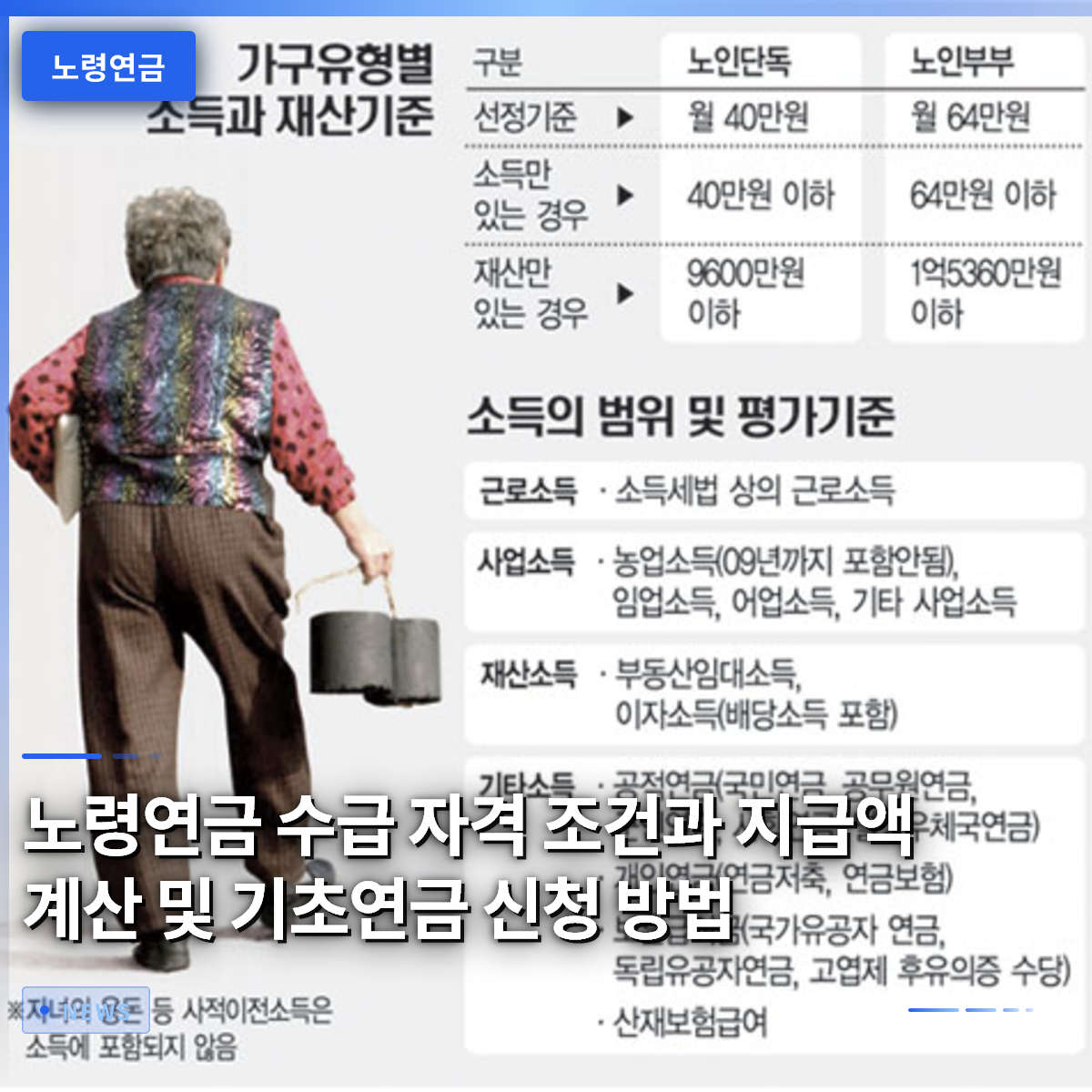
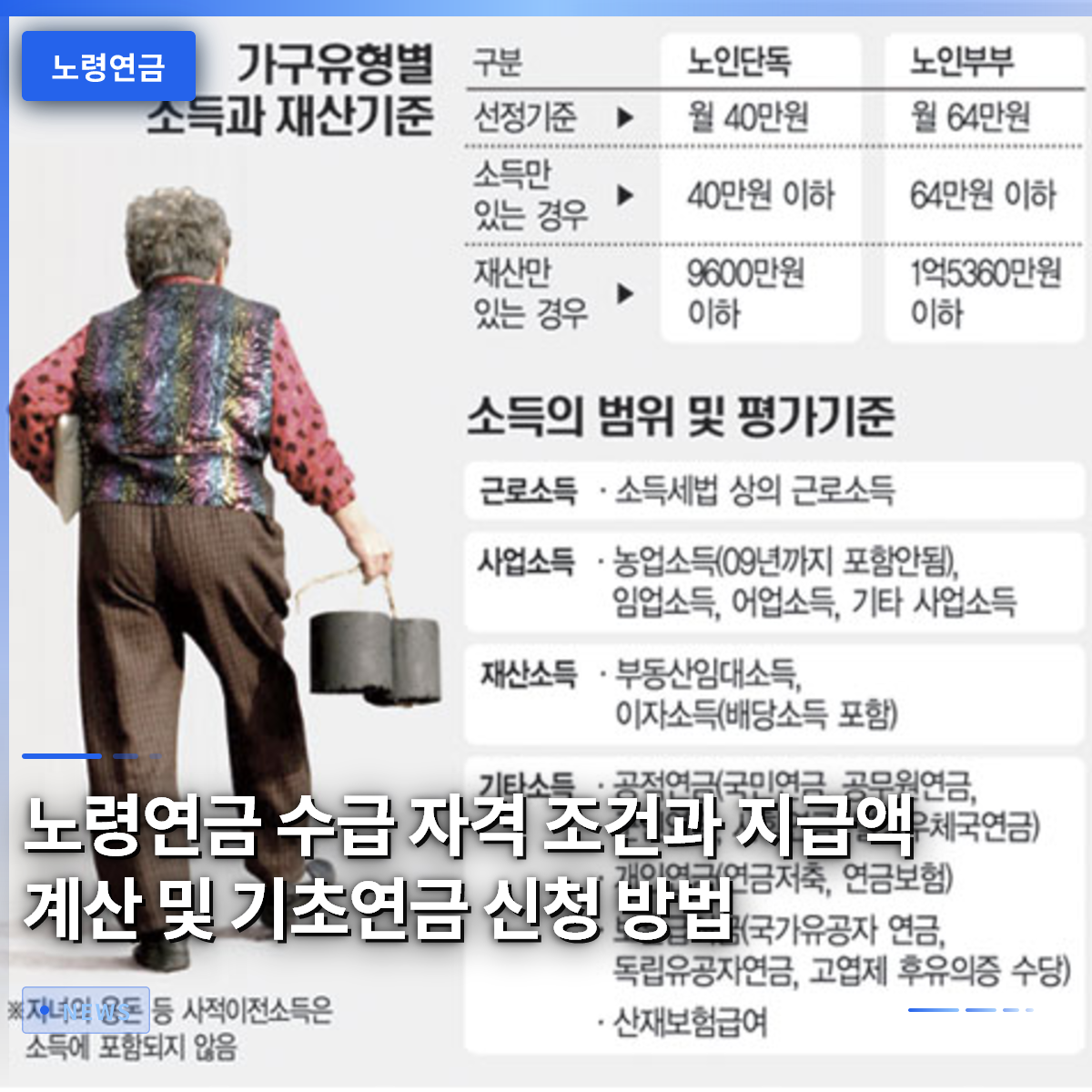
Even if you are receiving the old-age pension, you can receive the basic pension simultaneously if your income and asset levels meet the criteria. Many elderly people mistakenly believe that receiving the old-age pension disqualifies them from the basic pension, but the two systems are different in nature and can be received together. In fact, those whose National Pension benefit is 524,550 KRW or less per month can apply for and receive the basic pension after passing the recognized income assessment. Mrs. Lee, who lives in the neighborhood, said her life was tight due to a small old-age pension, but her situation improved after she visited the community center to apply for the basic pension. The government operates a linked reduction system for the two pensions to prevent poverty among vulnerable elderly groups, so it is essential to check eligibility. To receive the basic pension, you must be 65 years or older, hold Korean nationality, and reside in Korea. Your household’s recognized income amount must be evaluated against the selection criteria, so assets such as housing and automobiles are also subject to detailed review. It is not automatically disqualified just because your children have high incomes; the assessment primarily considers the income and assets of the applicant and their spouse. Many elderly people hesitate to apply out of concern for their children’s opinions, but it is best to confidently check based on assets and income in your own name. You can roughly determine if you are eligible by using the simulation calculation available through community centers or the welfare portal.
If your old-age pension benefit is low, you can apply for and receive the basic pension concurrently based on the recognized income criteria.
5. Utilizing Deferred Payments and Unemployment Credits
If your National Pension enrollment period is insufficient or you have periods of payment exemption in the past, you can actively utilize the deferred payment system. This is a useful system that allows you to pay premiums later for periods where you could not pay due to unemployment or business downturns, thereby having those periods recognized as part of your enrollment. For example, if you have 5 years of unpaid periods, you can fill them as valuable enrollment periods by paying in a lump sum or in installments. However, supplementary measures have been discussed to enhance the fairness of the system, partly due to controversies over indiscriminate deferred payments by foreigners. For general domestic enrollees, it remains an excellent way to bridge insufficient enrollment periods and secure the right to receive the old-age pension. There is also the unemployment credit system, which allows you to increase your National Pension enrollment period with state support during periods of receiving unemployment benefits. Since the state covers 75% of the National Pension premiums you would otherwise have to bear during unemployment benefit receipt, the financial burden is significantly reduced. This benefit helps prevent breaks in your retirement preparation even during the difficult time of unemployment, so it should never be missed if you are eligible. For instance, Mr. Jung, who was at a loss after losing his job, was guided to the unemployment credit system at the employment center and applied, successfully continuing his pension enrollment period. By carefully taking advantage of various state support systems like these, you can build a solid retirement pension asset even with modest costs.
Utilizing deferred payments and the unemployment credit system allows you to fill insufficient enrollment periods and increase your old-age pension benefit.
6. Old-Age Pension Application Process and Successful Retirement Preparation
To receive the old-age pension, you must directly claim it from the National Pension Service upon reaching the eligible age; it will not be paid automatically, so caution is required. Usually, one or two months before the age of receipt, the National Pension Service sends a guide and a claim form to your home, so you should check the contents carefully. When claiming, you will need your ID and a copy of a bankbook for a deposit account in your name. You can apply easily by visiting a service center or online. Mr. Kim, who was approaching retirement, visited the center promptly after receiving the guide and submitted the claim documents, allowing him to receive his pension without interruption from his first month of retirement. While you can receive retroactive payments from the date the right to receive arises if you delay the application, applying on time is much more advantageous for managing living expenses. Retirement preparation is a process of creating a stable cash flow by maximizing the use of national systems, going beyond simply saving money. Since the old-age pension is adjusted to reflect inflation rates, it is the most reliable source of retirement income, offering an advantage in defending against inflation. As an aging society deepens, the importance of the pension system will grow, and it is necessary to develop the habit of regularly checking your enrollment history. Before your retirement date approaches, you should check your projected pension amount in advance and supplement any shortfalls with personal pensions or housing pensions. If you start understanding and preparing for the system step by step now, anyone can welcome a comfortable and worry-free retirement.
You must directly claim the pension from the National Pension Service upon reaching the eligible age, and thorough prior preparation leads to a stable retirement.
Frequently Asked Questions
=