To reduce capital gains tax, you must thoroughly verify the acquisition cost and necessary expenses before selling real estate and accurately understand the criteria for calculating the number of owned homes. Recently, Mr. Kim, a friend who sold an apartment in Seoul, was shocked to receive a tax notice for tens of millions of won from the tax office after assuming he met the tax exemption requirements. It turned out that a villa he had acquired in the past was counted toward his home ownership limit, classifying him as a multi-home owner and causing him to lose the tax exemption benefit entirely. Tax laws are far more intricate and complex than we often think, and a moment of carelessness can lead to a massive tax bill. Recently, there have been numerous cases of tax assessment errors or unfair taxation by the National Tax Service, making it more important than ever for taxpayers to equip themselves with the ability to defend their rights. In this article, we will explain everything from the basic concepts of capital gains tax to hidden deduction items that can significantly reduce your tax burden in an easy-to-understand manner. Prepare yourself and read to the end; you will surely find it very helpful.
=
How to Calculate Capital Gains Tax and Tax-Saving Strategies: Practical Tips to Avoid a Tax Bomb
1. The Trap of Home Ownership Counting
If you own an officetel or a villa, you must first check whether it is included in your home ownership count when calculating capital gains tax. Many people mistakenly believe that officetels do not count as homes simply because their registered use or legal classification is for business purposes. However, the National Tax Service strictly applies the principle of substantive taxation; if an officetel is actually used for residential purposes, it is included in the home ownership count. Even low-priced homes or villas in rural areas with low assessed values can be a decisive variable in determining whether you qualify for the one-home-per-household tax exemption when selling an apartment.
In reality, Mr. Park, an office worker, did not think much of lending his name to a relative’s house in the countryside or owning a cheap villa. He assumed he would naturally receive a tax exemption when disposing of his main apartment in Seoul, but those villas were added to his home count, instantly making him subject to heavy taxation for multi-home owners. As a result, he had to pay tens of millions of won in capital gains tax, suffering the painful experience of losing a significant portion of his selling profit to taxes. Therefore, before selling real estate, you must carefully check not only your registered address but also your actual residence status to prevent any tax disadvantages from arising.
Officetels and villas are included in the home ownership count if used for residential purposes, so special caution is required when applying for apartment tax exemptions.
2. Necessary Expense Deductions and Reducing Capital Gains
Capital gains tax is calculated based on the capital gain, which is the selling price minus the acquisition cost and various necessary expenses. To legally reduce your tax, the key is to ensure you claim every eligible necessary expense item without missing any. Costs for capital expenditures, such as veranda expansion construction, boiler replacement, and window frame installation, are all excellent tools for lowering your capital gains.
Mr. Lee, a former self-employed business owner, found all receipts for past interior construction and window frame replacement costs when selling his commercial property and submitted them to his tax accountant. He successfully had items paid in cash without receipts recognized as necessary expenses by locating bank transfer records and contracts. Thanks to this, he was able to deduct a significant amount from his hundreds of millions of won in capital gains, saving over several million won in actual capital gains tax. The tax office does not automatically account for expenses if the taxpayer does not actively submit evidence, so it is essential to keep relevant documents meticulously organized at all times.
In addition to the acquisition cost, you must thoroughly document various repair and construction costs that qualify as capital expenditures as necessary expenses to reduce your capital gains.
3. The Risks of Gifting and Split Deposits
Cases where individuals attempt to reduce taxes when gifting assets to their children but end up facing aggravated penalties are becoming increasingly common. Recently, Mr. Choi, who trusted a YouTube tax-saving broadcast and deposited cash in split amounts of 9.9 million won into his children’s accounts, was subjected to a tax audit by the National Tax Service. Even amounts within the deduction limit can cause major issues in calculating gift tax or capital gains tax if they are not accompanied by a clear declaration of the source of funds or a tax review.
In particular, gifting real estate indirectly or moving funds between family members through illegal methods can negatively impact the calculation of acquisition costs in the future. If you fail to file a return or leave supporting documents even when you are eligible for tax exemption, your children may not be able to have that funds recognized as a legitimate source of funds later. As a result, many people are labeled as tax evaders by the National Tax Service and hit with a bomb of surcharges. It is strictly forbidden to blindly follow advice without consulting an expert. The safest tax-saving method is to use legal gift deduction limits while transparently reporting all transactions and leaving objective financial evidence.
Blindly following unverified tax-saving tips from sources like YouTube by making split cash deposits or omitting reports can result in a massive tax bomb.
4. Resale of Subscription Rights and Multi-Home Heavy Taxation Measures
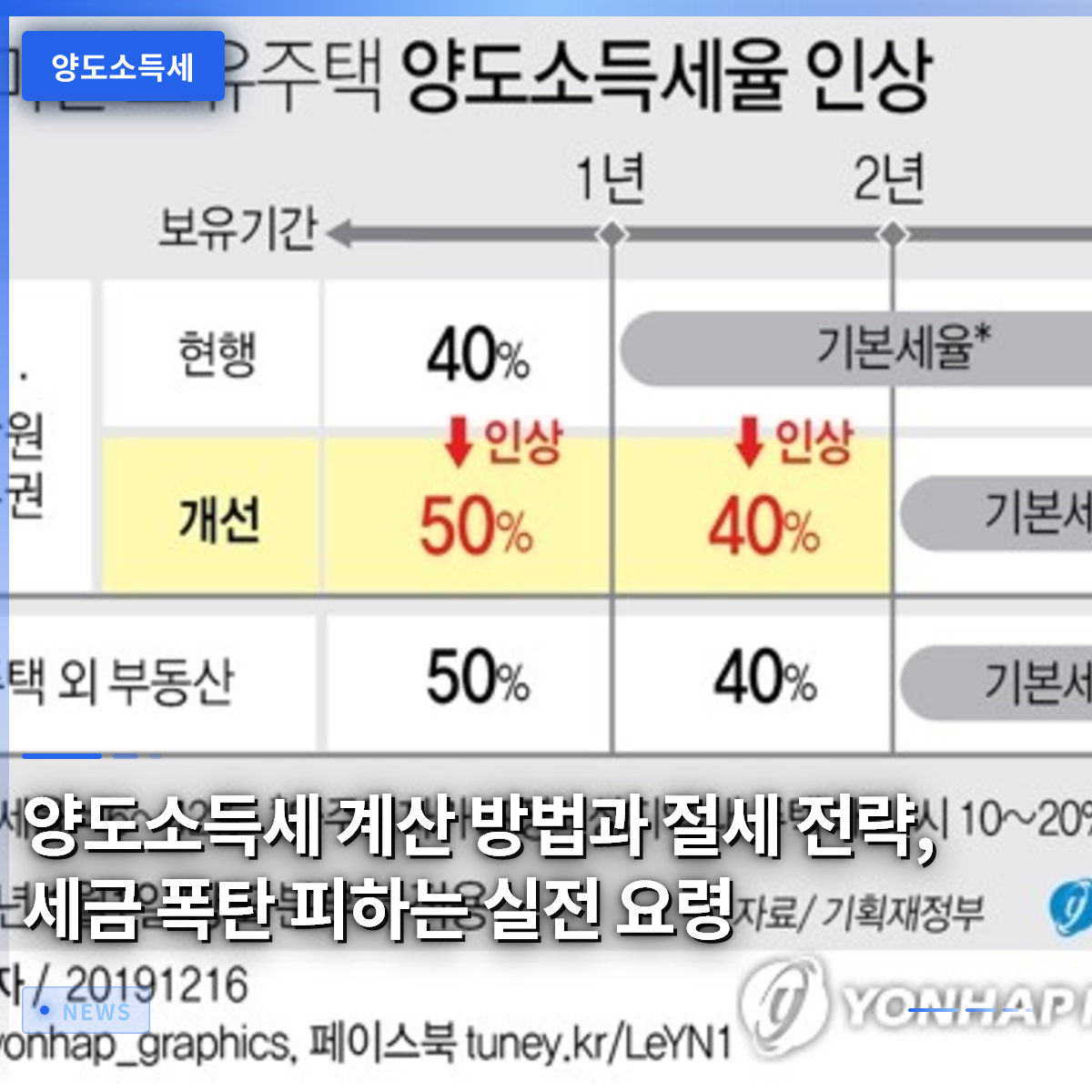
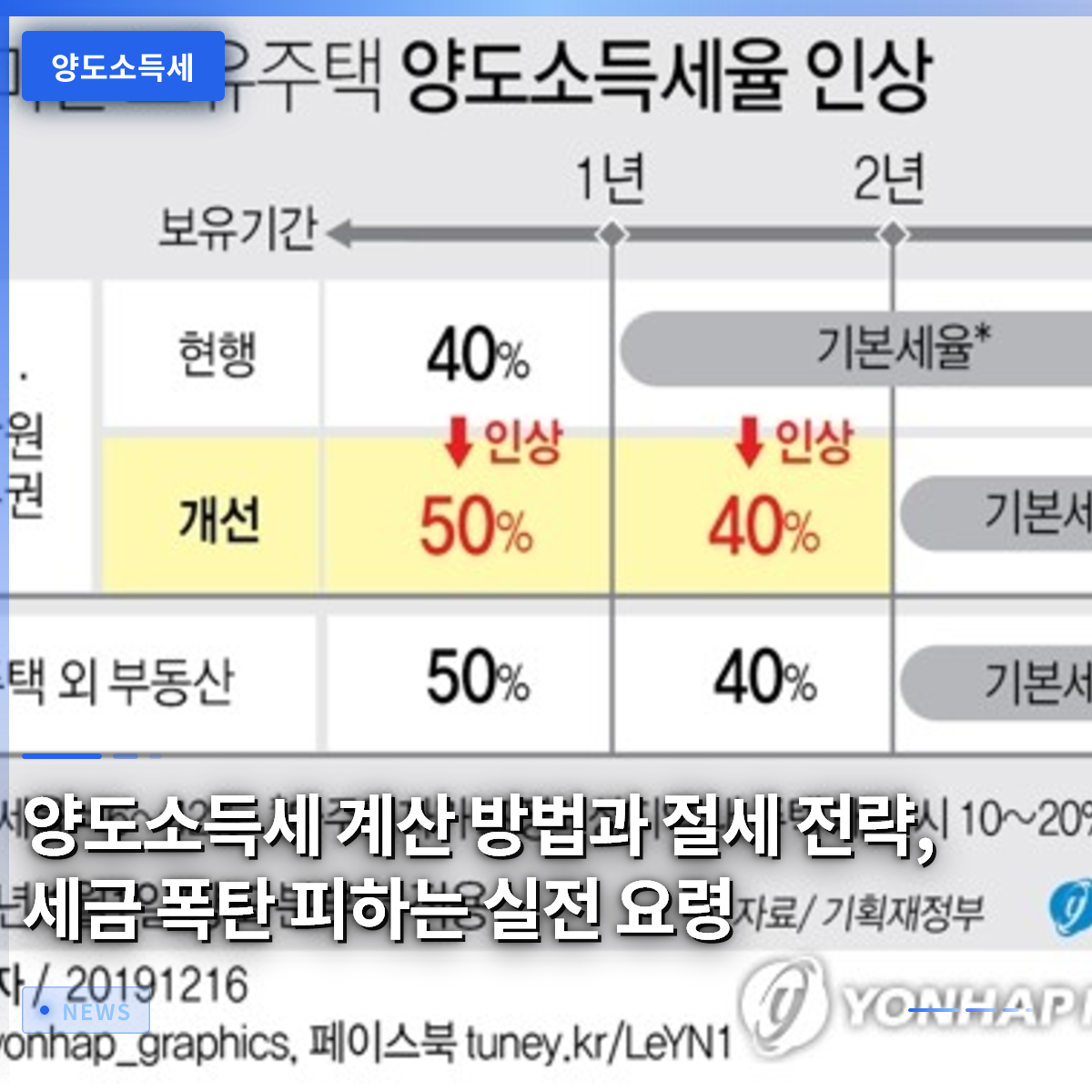
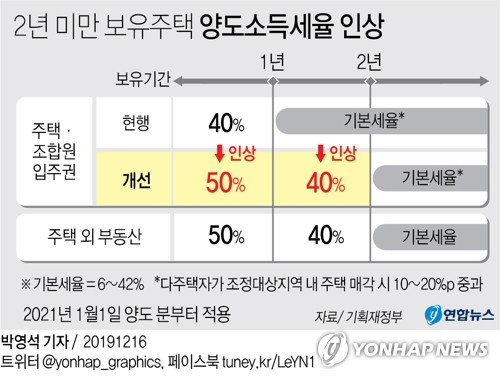
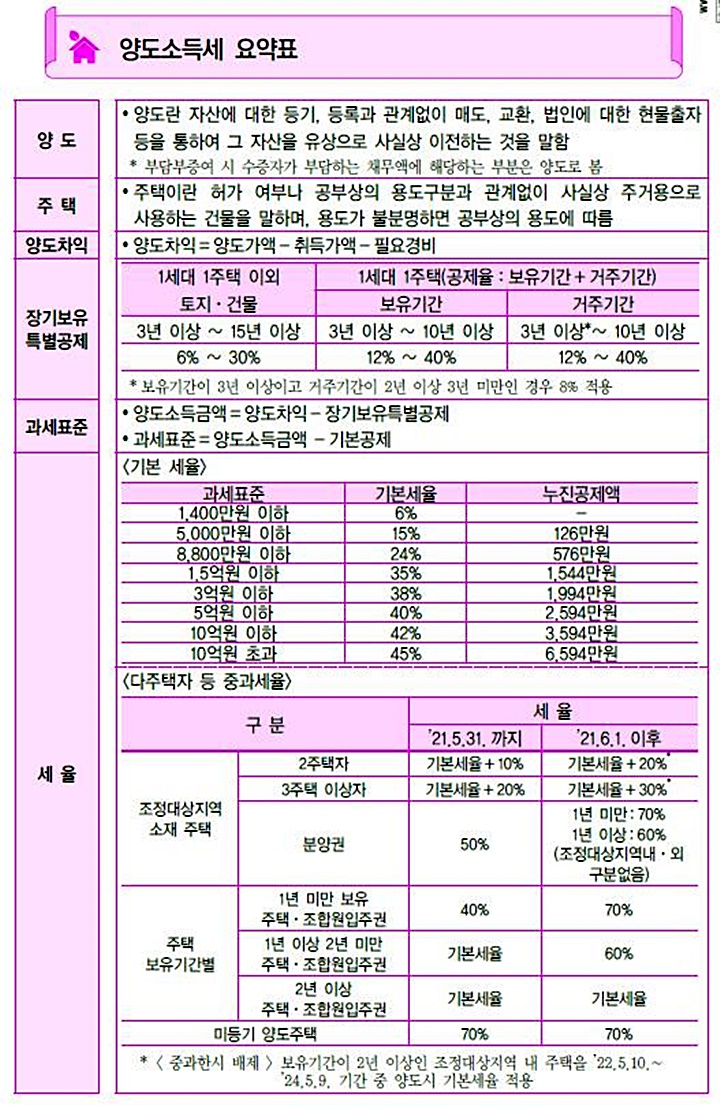
When selling subscription rights or apartment move-in rights, much higher tax rates apply compared to regular homes, requiring a meticulous strategy. Depending on whether the property is in a regulated area and the holding period, the capital gains tax rate for reselling subscription rights can reach as high as 60% to 70%. When local income tax is added, the effective tax rate approaches 77%, meaning you may have to pay the majority of your selling profit as tax.
In reality, Mr. Jung, a young office worker who won a lottery for a new apartment, was shocked when he saw the tax calculation statement for his attempt to sell the subscription rights in the short term. This was because, after combining capital gains tax and local income tax, he would have made almost no profit or even taken a loss. To avoid this tax bomb, Mr. Jung gave up on the short-term resale and instead adopted a strategy of waiting until the building was completed and registered, then holding it for at least two years. After a long wait, he entered the general taxation bracket, allowing him to significantly reduce his tax burden and fully protect his precious investment returns.
Reselling subscription rights with a short holding period is subject to high tax rates of over 70%, so you should consider a strategy of registering the title after completion.
5. National Tax Service Assessment Errors and Appeals
If you do not carefully verify whether the tax you paid was assessed fairly, you will lose valuable money for nothing. Recently, statistics were released showing that a significant number of tax assessments by the National Tax Service were incorrect or subject to correction requests, causing a great shock. Along with value-added tax, there are consistently hundreds of cases each year where capital gains tax amounts are corrected during the review request and objection processes.
Mr. Han, a businessman who disposed of real estate in the Gangnam area, had a gut feeling that the capital gains tax amount calculated by the tax office was excessive. With the help of a local tax expert, he recalculated the previously omitted necessary expenses and the exact acquisition timing and filed a review request with the National Tax Service. Ultimately, the National Tax Service acknowledged the assessment error, and Mr. Han was able to recover tens of millions of won in taxes he was about to pay unjustly. Since tax authority notices are never infallible, taxpayers must develop the habit of always reviewing the basis for tax calculations.
A significant portion of National Tax Service assessments contain errors, so if the tax amount is excessive, you should actively utilize review requests and correction requests.
6. Future Tax Reform Outlook and Reader Action
The direction of future real estate tax reforms is expected to maintain a trend of pressuring multi-home owners and strengthening the burden of holding taxes and capital gains taxes. As home prices in major areas, including the Gangnam district of Seoul, have shown an upward trend for a long period, the government is considering various tax supplementary measures to suppress speculative demand. In this market atmosphere, homeowners are busy moving quickly, either increasing gifting or weighing the timing of their sales.
Rather than vaguely waiting for the market to improve, you, our readers, must check the status of your held assets right now. You need the action power to verify today whether your officetels or villas are included in your home count and whether you have collected all necessary expense receipts. Taxes can only be reduced to the extent of your knowledge, and it is a cold system that smiles only at those who are prepared. We hope you will regularly consult with experts and consistently monitor the latest tax law amendments to safely protect your valuable assets.
In line with the strengthening trend of tax reforms, you should check your held assets in advance and establish a solid tax-saving plan with an expert.
Frequently Asked Questions
=