
When buying or selling real estate, failing to check taxes in advance can result in an unexpected massive tax bill, making pre-calculation using a capital gains tax calculator essential. Due to changes in the real estate market and tax reforms, both sellers and buyers are carefully crunching the numbers and maintaining a wait-and-see attitude. I know someone who sold an apartment a few years ago and was shocked to receive a notice for additional taxes later because they hadn’t calculated the tax properly. You must accurately determine the capital gain, which is the selling price minus the acquisition price and necessary expenses, to precisely understand the actual net proceeds from the sale. By utilizing the National Tax Service’s Hometax or the SunTax mobile program, you can easily preview calculations including tax-exemption conditions and various deduction benefits. In this article, I will detail how to easily use the capital gains tax calculator and share key tax-saving tips to significantly reduce your tax burden.
=
How to Use the Capital Gains Tax Calculator and Hometax Simulation for Tax-Saving Tips

1. Understanding the Basic Structure and Principles of the Capital Gains Tax Calculator
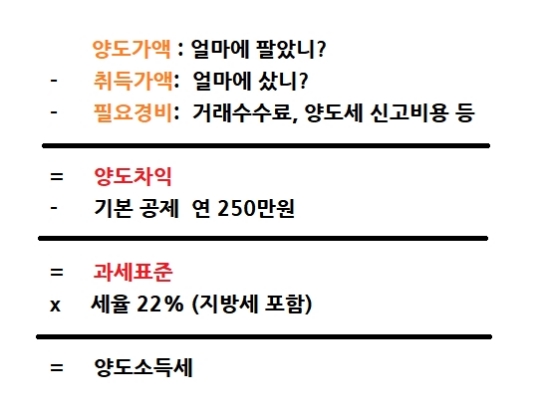
Capital gains tax is a representative tax levied on the profit generated when transferring real estate, such as land or buildings, after acquisition. The basic calculation structure is very simple: subtracting the initial acquisition price and various necessary expenses from the total selling price yields the pure capital gain. For example, if you sell an apartment for 500 million won, bought it for 300 million won, and incurred 10 million won in necessary expenses like repairs, the capital gain is 190 million won. Based on this amount, the final tax payable is determined by applying the special deduction for long-term holding and the basic deduction. Therefore, accurately entering all these items without omission when using the calculator is the first step in saving on taxes. The simulation calculator is a tool that allows you to practice this process comfortably from home using a computer or smartphone, without needing to visit the tax office in person.
Many people think tax calculations are too complex and either give up or leave everything to a tax accountant, which is more common than one might think. However, even if you only understand the basic calculation structure, you can sufficiently estimate how much you will likely have to pay. Since tax laws are frequently amended, relying solely on past knowledge when conducting transactions can lead to significant financial harm, so caution is required. Recently, various calculation tools can be easily found through internet searches, allowing anyone to easily estimate their tax liability. You must go through this process before listing your property to thoroughly prevent potential financial losses in the future.
Since capital gains tax is calculated based on the capital gain (selling price minus acquisition price and necessary expenses), it is essential to check the tax amount in advance using a calculator.
2. Checking Tax Exemptions and Deductions at a Glance with the Hometax Simulation Calculator

Anyone can easily use the capital gains tax simulation service on the National Tax Service’s Hometax website without complex authentication procedures. Click the Tax Filing menu on the main screen, enter the Capital Gains Tax Filing section, and then click the Simulation item in sequence to access the dedicated screen. Here, select the exact type of real estate you own and enter the acquisition date, transfer date, and actual contract amount. In particular, if you are a single-home owner, you can immediately check on the screen whether you are eligible for tax exemption benefits if the selling price does not exceed 1.2 billion won. You can also run the same simulation via the SunTax app on mobile devices, allowing for convenient tax inquiries anytime, anywhere.
When you first enter the Hometax screen, it is easy to get lost among the numerous menus, but following the steps sequentially yields results much more simply than expected. In fact, I personally ran a simulation last year for the sale of my parents’ house, and the step-by-step guidance made it easy to complete. The estimated tax amount changes significantly in real-time depending on the numbers entered during the calculation, so you must keep the original contract document nearby and enter the data accurately. Depending on whether you meet the tax exemption requirements, the tax could be zero or amount to tens of millions of won, so caution is necessary. Referring to guidance materials or help documents created by tax officials can help you easily understand difficult tax terms you may not be familiar with.
Using the Hometax and SunTax simulation calculators allows you to safely and accurately assess single-home tax exemption eligibility and deduction effects from home.
3. Scope of Recognized Necessary Expenses and Key Tips to Lower Tax Liability

To reduce capital gains tax, while it is impossible to lower the selling price, the most certain tax-saving strategy is to thoroughly account for the acquisition price and necessary expenses. Costs incurred during home renovations, such as interior expenses or balcony extension construction costs, are valuable items that can be recognized as necessary expenses. However, informal receipts written on paper or cash payments without proof are not recognized by the tax office, so you must keep receipts well-organized. Incidental costs incurred when buying and selling a house, such as legal fees and acquisition tax payment records, must also be totaled and entered into the calculator. These small costs accumulate to reduce the total capital gain, ultimately significantly lowering the final tax amount you have to pay.
Many people often make the mistake of focusing only on the property value itself when calculating taxes, forgetting to process necessary expenses like repair costs or incidental fees. Costs for completely replacing a sink or installing a new boiler can also be recognized as expenses if they qualify as capital expenditures under tax law. You must submit all such supporting documents when filing with the tax office to receive legitimate deductions from the tax authorities. If you have lost the supporting documents, you must find alternative evidence, such as card receipts or bank transfer records, and attach them. The difference between including or excluding these expense items when using the calculator can result in a significant difference in the final tax notice.
You must carefully gather and enter necessary expenses, such as interior costs and legal fees, into the calculator to reduce capital gains and save on taxes.
4. Points to Note Regarding Surcharge for Multi-Home Owners and Farmland Transfers
When multi-home owners dispose of real estate, surcharge rates much higher than the standard tax rates are applied, requiring special attention. Due to recent tax reforms, regulations on surcharges for multi-home owners and their implementation timing are constantly changing, so you must use a calculator that reflects the latest standards. When calculating including local income tax, the actual effective tax rate can exceed 60%, which can be shocking. Farmers planning to sell farmland should also input the self-cultivated farmland reduction limits and holding period requirements into the calculator in advance to see the results. Before impulsively selling land and regretting a massive tax bill, you must accurately calculate the reduction amount using a dedicated farmland calculator.
If you receive real estate through gift or inheritance from family members and later transfer it, you must consider both capital gains tax and gift tax comprehensively. You must compare the tax paid when receiving a house as a gift from parents with the capital gains tax to be paid upon sale to make a truly advantageous choice. It is a common and regrettable case observed in field consultations that incorrect tax calculations lead to distrust or conflict among family members. Therefore, at the stage before signing a sales contract, you must consult with an expert or run simulations multiple times using a reliable calculator. Rather than impulsively listing your property following the crowd, you should determine the most advantageous timing through thorough numerical analysis.
Precise calculations reflecting the latest standards are essential for transactions involving complex conditions such as surcharge rates for multi-home owners and farmland reduction benefits.
5. Smartly Timing Real Estate Transactions Amid Market Wait-and-See Attitudes
Recently, the metropolitan area real estate market sees both buyers and sellers in deep contemplation due to strengthened tax reform proposals and tax burdens. Homeowners, facing the pressure of both holding taxes and substantial capital gains taxes, are finding it difficult to determine the timing for selling, even those who have held a single home for a long time. One reason the entire market is maintaining a wait-and-see attitude is that it is difficult to accurately calculate how much money one will actually receive. While urgent sales occasionally appear in major areas like Gangnam, there are far more people who are deliberating while crunching numbers with tax calculators. It is wiser to formulate a tax plan based on your exact holding period and number of homes rather than just watching how others are moving.
Rather than blindly following market trends, it is much more beneficial to establish your own clear exit strategy through personalized tax calculations. You must directly run the relevant calculator whenever government policy announcements or tax reform news emerges to track changes in your estimated tax liability. To reduce tax burdens while safely protecting assets, you need to take the initiative to acquire and prepare tax information one step ahead of others. I strongly recommend running a Hometax simulation as a self-diagnosis before listing your property at a real estate office. Thorough pre-calculation not only prevents unnecessary tax expenditures but also serves as the most powerful weapon for completing a successful real estate transaction.
To achieve a successful real estate transaction amid the market’s wait-and-see attitude, you should prioritize tax calculations tailored to your own conditions rather than worrying about others’ actions.
6. Future Prospects and Conclusion on Using the Capital Gains Tax Calculator
Tax laws and real estate-related systems will continue to change in the future, and the importance of sophisticated tax calculation tools to respond to these changes will grow. In the past, you had to visit a tax accountant’s office in person to get a rough estimate of taxes, but now anyone can resolve this with a few clicks from home. With the advancement of digital technology and improvements to the National Tax Service’s systems, the quality of administrative services felt by taxpayers is visibly improving day by day. Complex tax terms are gradually being explained in an easy-to-understand manner, significantly improving public access to tax information. If you are approaching a sale date, please use the content learned today to run the calculator yourself and complete a definitive tax-saving plan.
You can save as much tax as you know, and only those who prepare thoroughly can enjoy the right to legally protect their valuable assets. You must never take lightly the fact that missing even a small detail can result in an additional tax bill of tens of millions of won. If you have any plan to dispose of real estate, take an active attitude and immediately access Hometax to run a simulation. If thorough pre-simulation is combined with smart management of necessary expenses, your real estate transaction will always conclude successfully. I encourage you to keep an ear out for tax law amendment news and cultivate the habit of regularly using calculators to become a smart tax saver.
Only taxpayers who actively utilize advanced tax calculation tools and prepare thoroughly can minimize tax burdens and protect their assets.
Frequently Asked Questions
=