
With the Chuseok holiday just around the corner, many investors are torn between selling all their stocks to leave or holding on until the end. To cut to the chase, it is a far wiser choice to hold onto existing leading stocks with solid fundamentals, such as semiconductors, rather than selling unconditionally. Anxiety is inevitable due to the shortened trading days during the holiday and movements in the U.S. stock market. In fact, just looking at my acquaintances, many are worried about their funds being tied up during the break and are considering liquidating their stocks to switch to bank deposits. However, a close look at historical statistics shows that stock price trends around holidays often move in a direction different from vague worries. In this article, we will thoroughly analyze the market situation ahead of the holiday and take a detailed look at which stocks we should hold onto.
=
Sell or Hold Before Chuseok? Why Wall Street Says to Stick With These Stocks

1. The Reality of Pre-Chuseok Selling Anxiety

Before the holiday break begins, a psychology often dominates the entire market: the belief that one must sell stocks to secure cash. This is because the fear that something might happen overseas during the long break shakes investors’ confidence. I still remember a close younger colleague who sold all his holdings right before the holiday last year, fearing a drop in stock prices. However, when the market reopened after the break, the stock price actually rebounded and rose. As seen here, if you panic-sell due to vague anxiety, you often end up in a situation where you have to buy back at a higher price later. Securities experts also emphasize that at this time, a calm attitude toward the market is more important than emotional selling.
Selling all your stocks before the holiday is likely to lead to regret. The habit of selling out of fear is a shortcut that erodes long-term investment returns.
The vague selling mentality ahead of the Chuseok holiday often contradicts actual statistics, so caution is advised.
2. Market Trends Around Holidays: A Look at Historical Statistics
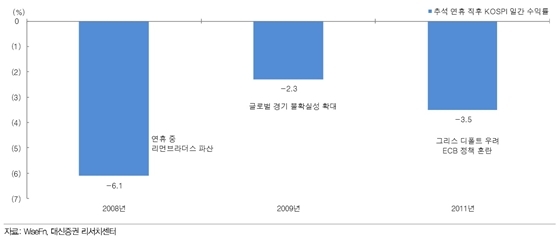
A detailed analysis of the KOSPI trend over the last five years shows that the formula of pre-holiday stock price declines has long been broken. In fact, in more than half of the last five years, the stock price closed higher during the five trading days immediately preceding Chuseok. Even looking at data from Daishin Securities, the probability of the stock price rising on the day immediately before Chuseok reached as high as 73% over the past 22 years. The probability of the stock price rising during the five trading days immediately after the holiday also recorded a high figure of 68%. Stories from people around us who claim stocks always fall during holidays are merely prejudices stuck in past experiences. Data and statistics clearly show that the holiday event itself does not guarantee a decline.
Statistical data indicates that the probability of the stock market rising around holidays is quite high. An attitude of trusting objective figures rather than relying on experience is necessary.
According to historical statistics, the probability of the stock market closing higher around the Chuseok holiday is quite high.
3. Checking Global External Variables During the Holiday
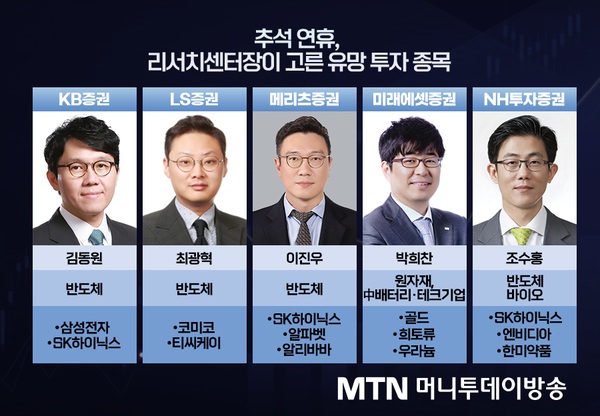
More important than the market closure itself are the various economic events happening in global markets while we are resting. The U.S.-China summit, which could change the global economic flow, is scheduled during this holiday period, drawing intense market attention. If trade negotiations or tariff-related discussions between the two countries proceed smoothly, it could act as enormous upward pressure on the domestic market when it reopens. In four out of the last five years, the direction of the U.S. S&P 500 index during the Chuseok holiday moved exactly the same way as the domestic KOSPI. Ultimately, what we should worry about is not the holiday itself, but the performance of the U.S. stock market during the closure. It is a time when the ability to monitor global economic indicators and read market trends is more necessary than ever.
Global events during the market closure determine the fate of the domestic stock market. Stock prices could surge significantly right after the holiday depending on the outcome of the U.S.-China summit.
U.S. stock market movements and the outcome of the U.S.-China summit during the closure will determine the direction of the domestic market.
4. Domestic Fundamentals and Securities Industry Advice
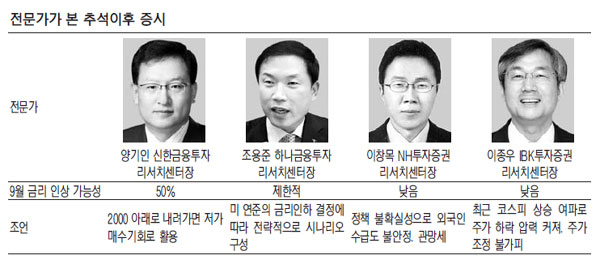
Experts generally diagnose that internal risk factors in the current domestic stock market have significantly decreased compared to the past. The volatility index, which indicates market anxiety, has plummeted from its year-to-date high, and credit default swap (CDS) premiums are maintaining stability. A researcher from Korea Investment & Securities also evaluated that the South Korean market already possesses the resilience to sufficiently absorb external shocks. Therefore, now is not a stage to hastily reduce stock exposure, but rather a phase where we should hold onto solid stocks. A strategy of continuing to hold core sectors leading the market trend is more advantageous than forcibly increasing the cash ratio.
The resilience of the domestic stock market is far stronger than in the past. Experts advise that now is the time to firmly hold onto quality stocks.
There is no reason to reduce stock exposure as domestic economic fundamentals and risk indicators are stable.
5. Stocks the Securities Industry Says to Hold

The securities industry advises that in times like these, one should absolutely not let go of semiconductor stocks with confirmed earnings and AI momentum. The semiconductor sector, which shows consistently strong export indicators, will remain the most powerful leading sector driving the domestic market in the future. In addition, export-centric sectors such as defense and cosmetics, which have shown strong trends compared to the KOSPI recently, should also maintain their weight. The Micron earnings release scheduled for the 21st is also expected to firmly support the upward trend of the semiconductor sector. Only by firmly holding onto leading stocks backed by solid earnings when others are shaken can you successfully defend your returns after the holiday.
Semiconductors and export-led sectors are the most reliable stocks in the current market. You must hold stocks with confirmed earnings to smile after the holiday.
The securities industry recommends maintaining exposure to semiconductor leading stocks with solid earnings and AI momentum.
6. The Shift to Deposits and Future Outlook
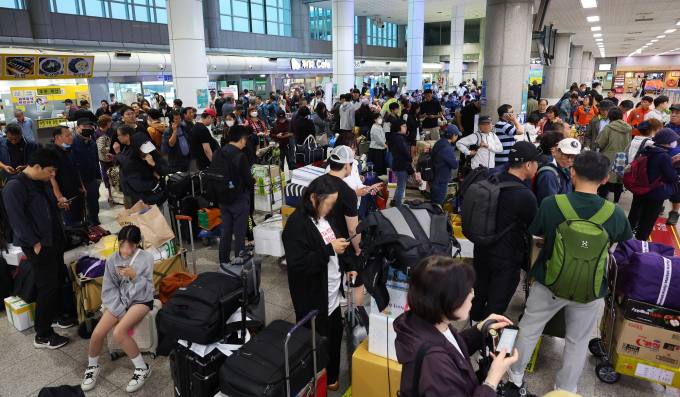
Some investors, tired of the box-range market and short-term volatility, are quickly moving their funds to safe bank time deposits. In fact, the fund shift is clear, with the time deposit balances of the five major commercial banks increasing by more than 5 trillion won in just one month. However, we must consider whether pouring all money into deposits during a rate-hiking period is truly a wise method for long-term asset growth. The fluctuations around the holiday are actually a golden opportunity to buy good stocks at a cheaper price or increase their weight. If expectations for the U.S.-China summit and strong exports coincide after the upcoming holiday, there is a high possibility that the index will level up to the next stage. I sincerely hope you can achieve successful investment results by holding onto leading stocks with unwavering resolve.
Funds are moving to safe havens, but this is not the only answer. Only those who overcome short-term volatility and hold onto leading stocks will gain significant returns.
Instead of fleeing to deposits due to short-term volatility, you should hold onto leading stocks and aim for rebound opportunities.
Frequently Asked Questions
=