If you do not fully understand the tax deduction structure when receiving your severance pay, you may end up with significantly less money than expected. Severance pay tax is calculated in a completely different manner from regular employment income, so it is crucial to grasp the exact calculation method in advance. For example, Mr. Kim, a dedicated employee who worked diligently at the same company for many years, was greatly surprised when he received his severance pay as a lump sum and was charged a higher tax than anticipated. Had Mr. Kim utilized an Individual Retirement Pension (IRP) account to defer taxes or received the payment in the form of an annuity, he could have significantly reduced his tax burden. In this article, we will cover everything from the basic structure of severance income tax to specific methods for maximizing tax benefits. Therefore, if you are approaching retirement or wondering how to manage a large sum of money, please read this content to the end.
=
How to Calculate Severance Pay Tax and Tax-Saving Tips for Closing an IRP Account: A Complete Guide
1. Understanding the Basic Structure of Severance Pay Tax
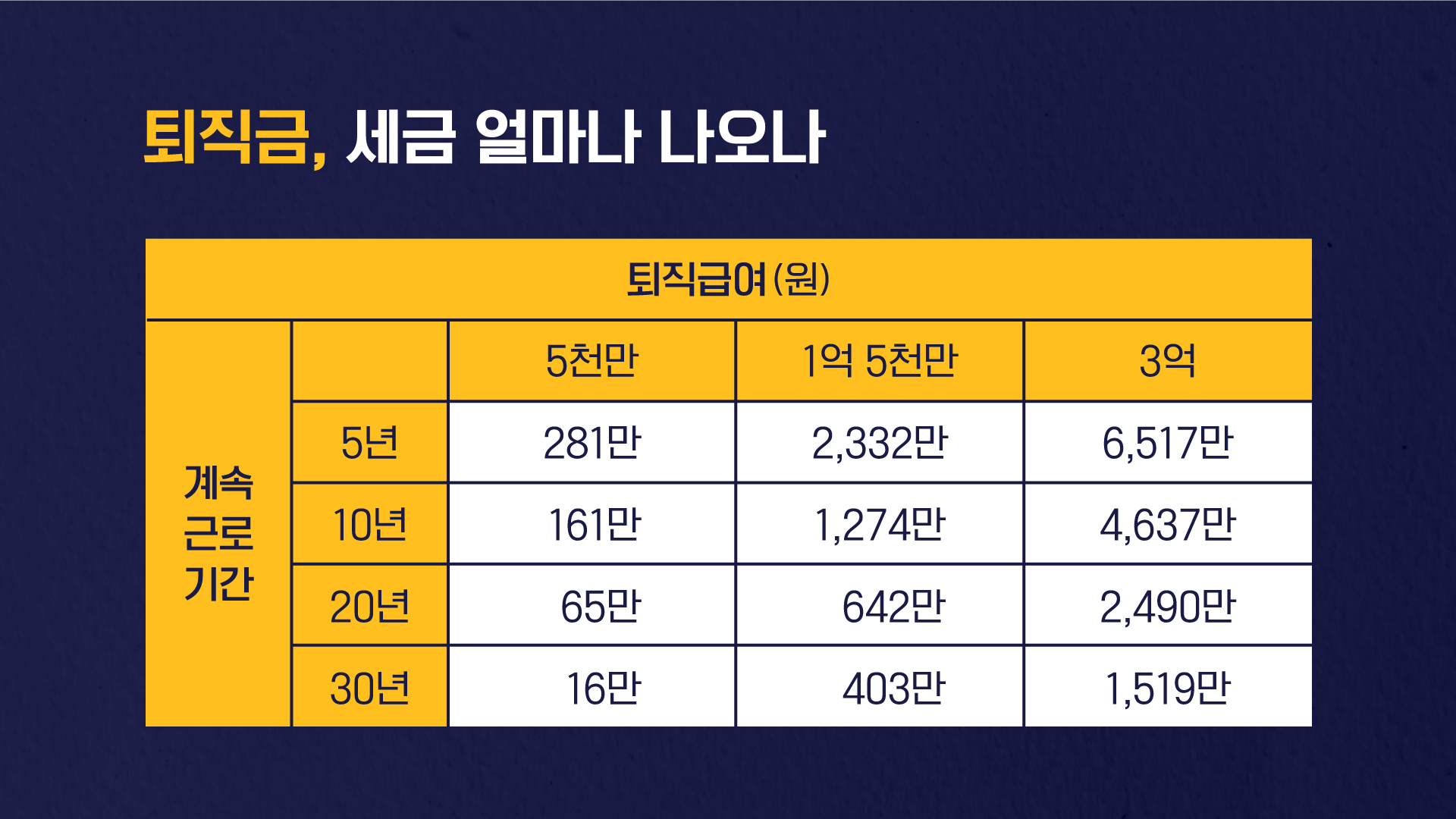
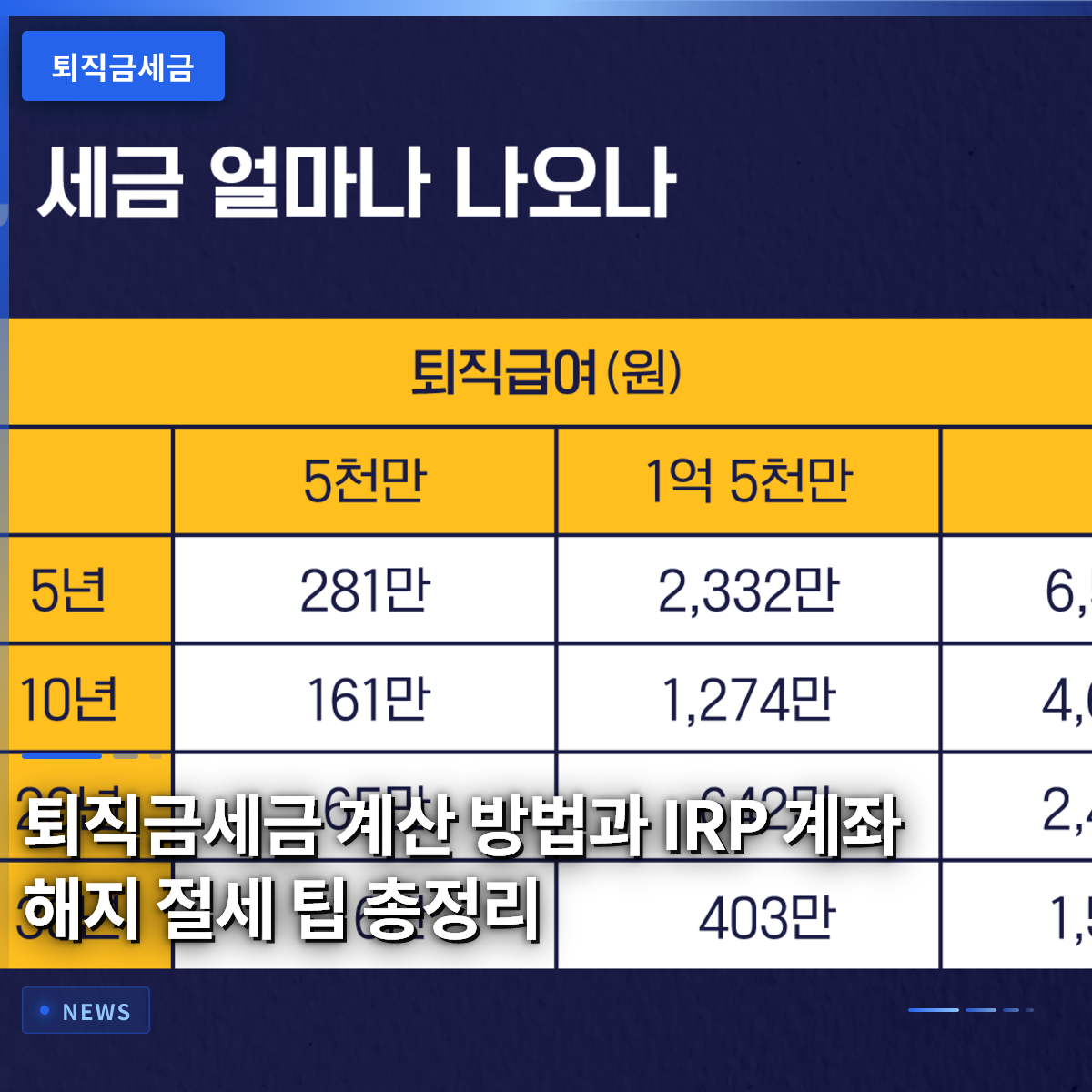
Severance pay received upon leaving a company is not combined with regular monthly salary for tax purposes; instead, it is taxed based on separate criteria. To acknowledge the efforts of long-term employees, the government provides various tax deductions when calculating severance income tax. First, tax-exempt income is deducted from the total severance pay, and then deductions based on years of service are applied to lower the taxable base. As a result, the longer you work, the larger the deduction amount, gradually reducing the tax burden. Many people mistakenly believe that tax is applied to the entire severance pay, but in reality, it goes through complex deduction stages, so it is advantageous to know the detailed calculation method.
In fact, when hearing stories from acquaintances who have settled their severance pay, many are surprised to find that the net amount received differs from their expectations. This is because not only severance income tax but also local income tax are withheld at the source. It is necessary to directly verify whether the company has accurately reflected your years of service. If there is a history of interim settlements, the starting date for calculating years of service may change, so this aspect should also be carefully examined. Once you understand the general flow of tax calculation, you can predict the actual amount that will be deposited into your account, making it much easier to plan your finances.
Severance pay tax is taxed separately from regular employment income, and the years-of-service deduction plays a crucial role.
2. The Tax Deferral Effect Through IRP Accounts
Severance pay paid by the company must be transferred to an Individual Retirement Pension (IRP) account; closing it immediately can result in a significant tax burden. By receiving your severance pay in an IRP account, you can enjoy the benefit of deferring severance income tax, meaning you do not have to pay it immediately. In other words, while the money remains in the account, no tax is deducted; tax is only imposed when you actually withdraw the funds later. Since you can manage even the amount that would have gone to taxes during this period, it greatly helps in maximizing the compound interest effect.
For example, if you received 30 million won in severance pay directly into a regular bank account, tax would be deducted immediately. However, if you transfer it to an IRP account, you can continue investing the full principal. You can earn additional returns by investing in various financial products offered by banks or securities firms while deferring tax payment to the future. As long as you avoid unnecessary early closure of the account during this period, you create very favorable conditions for growing your assets. Therefore, if you do not need a large sum of money immediately after retirement, it is wise to actively utilize the deferral system rather than simply closing the account.
Using an IRP account allows you to defer paying severance income tax until you withdraw the funds and grow your assets.
3. The Difference Between Lump-Sum and Annuity Receipt
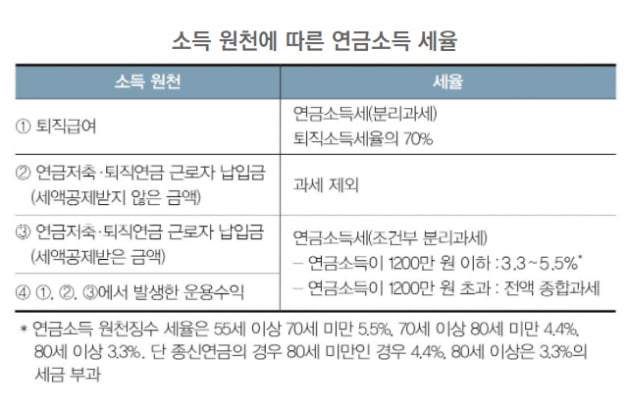
There is a huge difference in tax terms between withdrawing all your severance pay at once and receiving it in monthly installments as an annuity. If you receive the severance pay in your IRP account as an annuity after the age of 55, you can receive a tax reduction of 30% to up to 50% on the original severance income tax. The government provides greater tax benefits for longer annuity receipt periods to encourage securing income for old age. On the other hand, if you completely close the account and cash out the lump sum, the originally imposed severance income tax is fully settled and deducted.
Mr. Park, who was approaching retirement, regretted paying a substantial amount of tax after immediately withdrawing his 50 million won severance pay as a lump sum. Had Mr. Park chosen the annuity receipt method and received a fixed amount each year, he could have saved several million won in taxes. Reducing taxes is important, but from the perspective of designing a stable post-retirement cash flow, receiving an annuity is also a very attractive option. Therefore, when considering how to receive your severance pay, you must compare not only your immediate needs but also the long-term tax-saving effects.
Receiving severance pay as an annuity can reduce taxes by up to half compared to receiving it as a lump sum.
4. The Trap of Additional Contributions with Tax Deductions
In addition to the severance pay provided by the company, you can make additional cash contributions to an IRP account to receive tax deduction benefits. Since a certain percentage of individual contributions is refunded during the annual tax settlement, many employees actively utilize this system. However, caution is needed because the tax calculation method becomes complex when closing the account later. Severance income tax applies to the severance pay provided by the company, but other income tax applies to the amounts you contributed while receiving tax deductions and the investment returns generated from them.
Manager Kim consistently deposited money into his IRP account for several years to benefit from tax deductions, but he incurred unexpected taxes when he closed the account because he urgently needed cash. In cases of non-annuity receipt or early closure, not only must you return the tax deduction benefits previously received, but other income tax at a higher rate is also applied. Therefore, it is safe to keep only funds intended for long-term retirement and tax-saving purposes in an IRP account. When managing surplus funds, consider regular accounts or other tax-saving products first, and strictly manage the IRP account according to its purpose to prevent tax losses.
Amounts directly contributed to an IRP account to receive tax deductions are subject to other income tax upon early closure.
5. Severance Pay Calculation Formula and Years-of-Service Deduction
Knowing the approximate formula for how your severance pay is calculated allows you to easily verify whether there are any errors in the settlement statement provided by your company. Basically, severance pay is determined by multiplying the average salary for the three months prior to retirement by the years of service. Since the size of the deduction varies depending on the length of service, the actual tax burden differs significantly from person to person. For example, a person who worked for 10 years and a person who worked for 20 years enjoy tax benefits that go beyond just the difference in working duration.
There are various automatic calculator programs online that easily assist with this calculation process, allowing you to check your expected receipt amount in advance. The final amount of severance pay varies depending on whether bonuses or annual leave allowances are included in the average salary calculation period. If you have doubts about your company’s severance pay calculation method, you should request the exact calculation basis from the HR department to protect yourself from any disadvantages. You must not overlook the calculation formula, as knowing the exact principal of your severance pay is essential for formulating the right tax-saving strategy.
Severance pay is calculated based on average salary and years of service; knowing the calculation formula helps prevent errors.
6. Prospects for Tax Management for Wise Retirement Preparation
It is expected that the government’s tax policies will continue to be refined in a direction that encourages annuity receipt for old-age preparation. In line with the aging society, various tax-saving benefits and support measures are being established to ensure stable income for citizens in their old age. Therefore, it is very advantageous to build basic knowledge about retirement fund management and tax structures during your working life. Even if you are not immediately facing retirement, please review your IRP account or pension savings products by projecting your cash flow for the next few years.
Rather than relying on rumors or vague information, you need the wisdom to manage your assets based on accurate tax law standards and financial common sense. Tax optimization is a core element that determines the quality of life after retirement, so you must pay close attention to every small detail. Based on the severance pay tax calculation methods and IRP account utilization tips learned today, we hope you can safely protect your valuable assets. It is also a good idea to consult with experts or continuously update your financial information in preparation for your upcoming retirement.
Future tax policies are trending toward encouraging annuity receipt, making long-term asset management essential.
Frequently Asked Questions
=