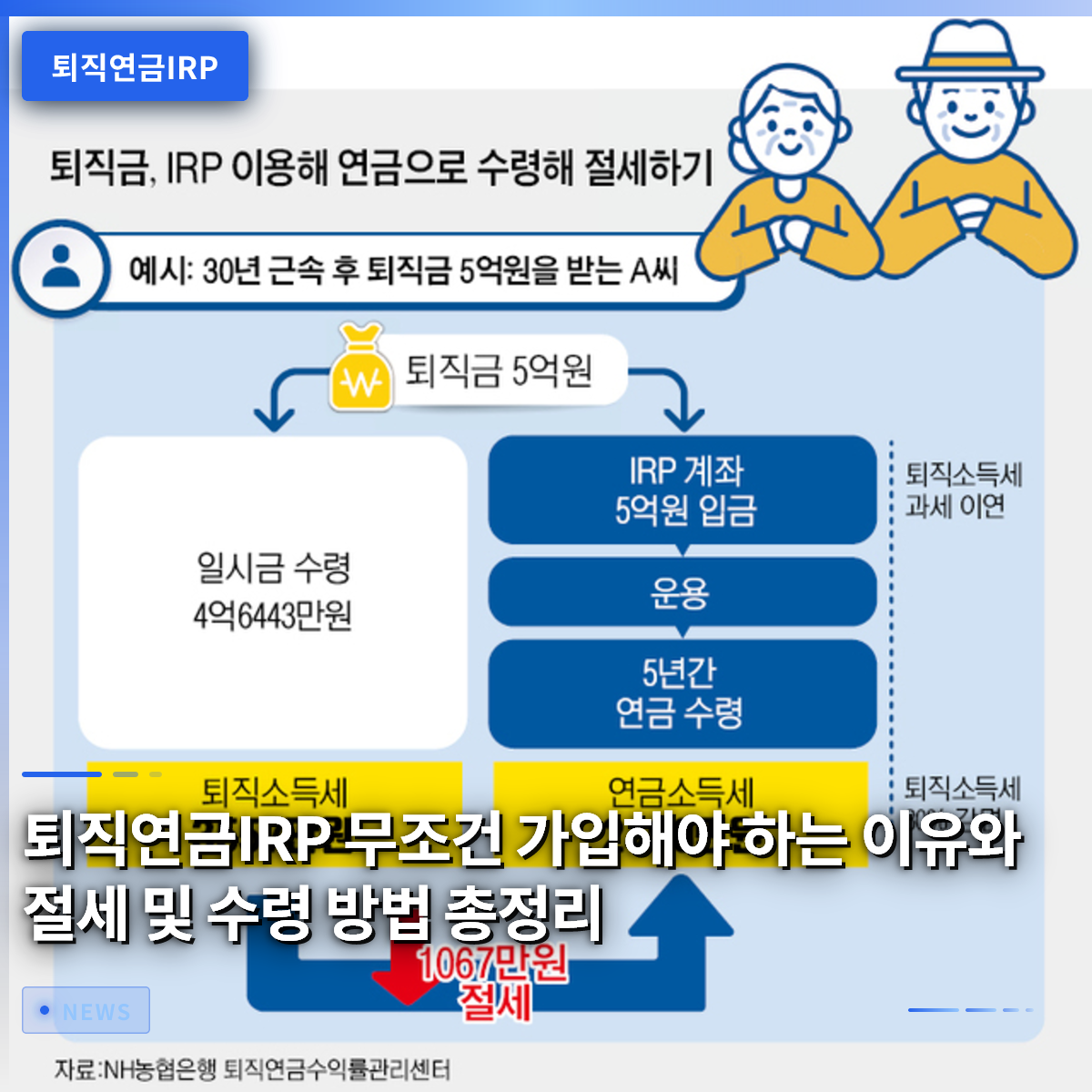
An Individual Retirement Pension (IRP) account is not just an option but a mandatory tool for any employee. It is the ultimate tax-saving instrument and an essential component for retirement planning. Many people inadvertently receive their severance pay in a regular checking account when changing jobs or retiring, only to face a massive tax bill or lose valuable funds. However, by transferring your severance pay into an IRP account, you can defer tax payments, resulting in significant financial benefits. For instance, my colleague, Manager Kim, transferred his severance pay directly into an IRP account, saving millions of won in taxes while continuing to grow his assets steadily. In this article, we will explore in detail how to utilize an IRP account to maximize tax savings and build a robust retirement fund. By learning specific strategies to reduce monthly taxes and boost returns, you will find future asset management much easier.
=
Why You Must Open an IRP Account: A Complete Guide to Tax Savings and Withdrawal Methods
1. What is an IRP Account and Why Should You Open One?

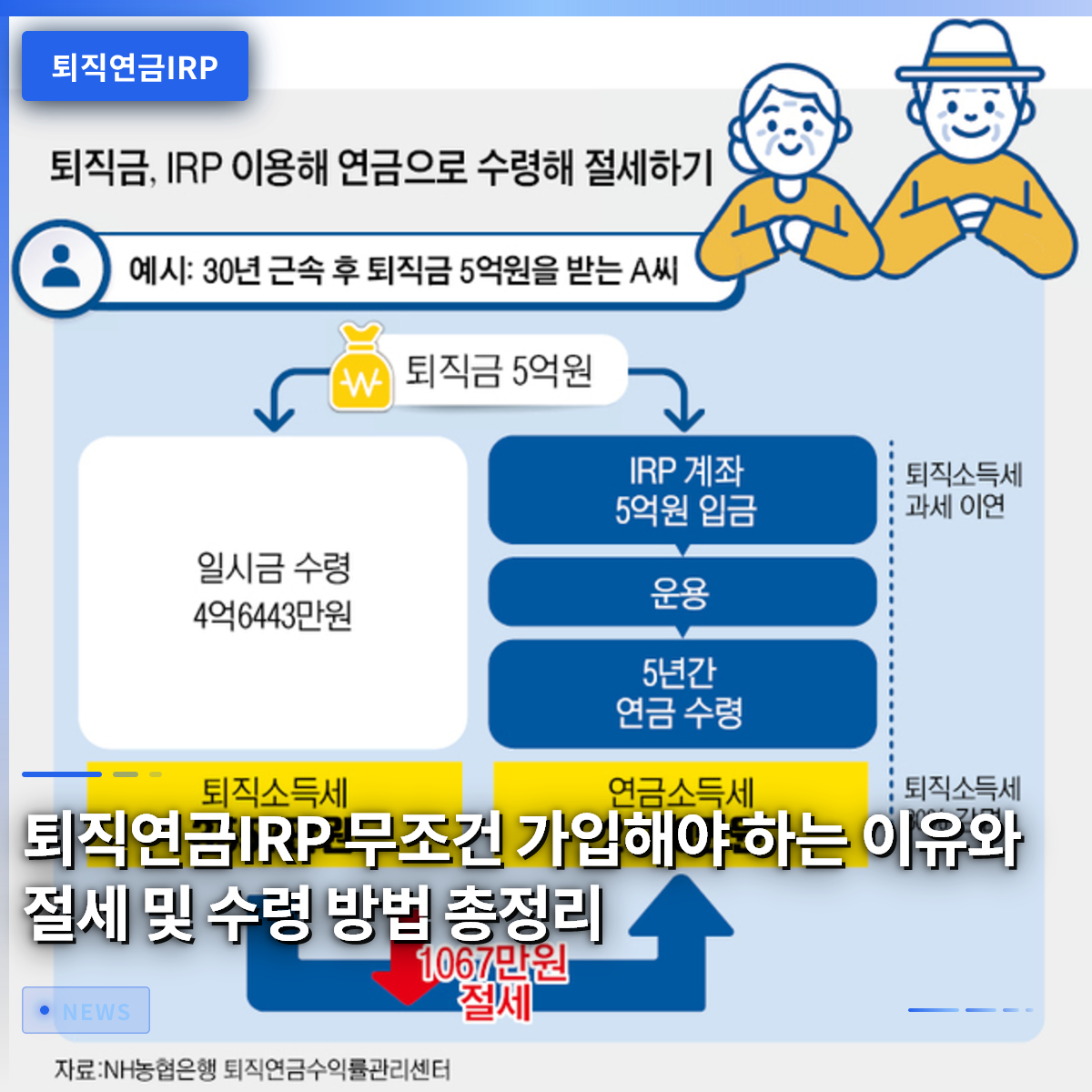
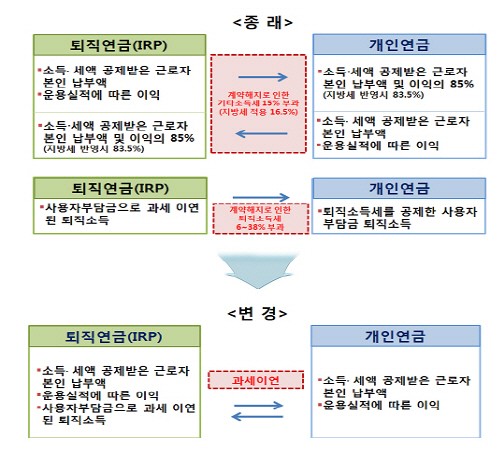
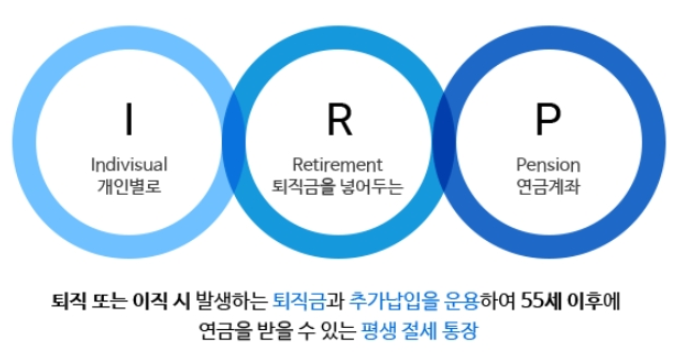
The IRP system is an integrated account that allows employees to consolidate and manage their severance pay or personal contributions upon changing jobs or retiring. In the past, when people left their jobs, their severance pay would often go into a regular bank account, where it was easily spent on living expenses or unnecessary costs. However, due to legal changes, it is now mandatory to pay severance into an IRP account in the employee’s name, with few exceptions. This ensures that valuable retirement funds are not squandered but safely preserved for retirement. If you receive severance in a regular account, you must pay substantial severance income tax immediately. In contrast, receiving it via an IRP account allows you to defer tax payments until the time of pension withdrawal. By not paying taxes upfront, you can reinvest the full amount, maximizing the power of compound interest. This account is not just a storage unit for severance pay; it is a versatile tool that allows employees to voluntarily add funds and claim tax deductions. When combined with a pension savings account, contributions are eligible for tax deductions up to 9 million won annually, making it a key factor in securing a substantial year-end tax refund. For employees whose tax burden increases with their salary, it is hard to find a more reliable and legal tax-saving method. Many colleagues boast about their year-end tax refunds, and a significant part of that secret lies in their IRP contributions. Therefore, opening an account early in your career and making consistent monthly contributions, even if small, is the shortcut to building wealth.
You must receive your severance pay in an IRP account to defer taxes, enjoy compound interest, and claim significant annual tax deductions.
2. The Real Reason to Receive Severance Pay in an IRP Instead of a Regular Account
If you receive your severance pay in a regular bank account, severance income tax is withheld immediately, significantly reducing the amount deposited into your account. It is disheartening to have hundreds of thousands or millions of won deducted from your hard-earned severance pay. However, if you transfer the severance pay to an IRP account, the full pre-tax amount is deposited, allowing you to start investing immediately. For example, if your severance pay is 50 million won, receiving it in a regular account means you get less after tax, whereas receiving it in an IRP account means the full 50 million won becomes your investment capital. As this principal grows through various investments, the final returns will differ significantly over time. Furthermore, when withdrawing funds after retirement, receiving them as a pension through the IRP account rather than a lump sum can reduce severance income tax by up to 70%. In addition to substantial tax reductions, the remaining balance continues to generate investment returns during the pension withdrawal period, ensuring your retirement assets grow rather than deplete. For instance, my retired senior colleague, Mr. Park, actively utilizes this system to minimize tax burdens and receive a stable monthly pension similar to rent. Unless you have an urgent need for the funds, it is always better to keep the money in the IRP account and withdraw it as a pension later. Spending a large sum at once can deplete your funds quickly, but receiving it as a pension allows for planned consumption, acting as a shield against retirement bankruptcy.
Receiving severance pay in an IRP account defers tax payments, allowing you to invest the full principal. Withdrawing it as a pension later significantly reduces severance income tax.
3. How to Use Pension Savings and IRP Tax Deductions to Maximize Your Refund
During the year-end tax settlement season, the most common topic among employees is whether they have maxed out their tax deduction limits. Combining pension savings accounts and IRP accounts allows for tax deductions on up to 9 million won annually, making it an essential wealth management tool for employees. For workers with a total annual income of 50 million won or less, the deduction rate is higher, resulting in a surprisingly large tax refund. Simply saving money can lead to a significant refund from the National Tax Service, which is a rare benefit in corporate life. For employees who find credit card income deductions and cash receipts insufficient, this account offers the joy of an annual bonus. Most colleagues who complain about hitting a tax wall either do not know about these tax-saving accounts or fail to reach the limit. By consistently contributing approximately 750,000 won monthly to reach the 9 million won annual cap, you can receive a refund ranging from several hundred thousand to over one million won during year-end settlement. Reinvesting this refund or using it for living expenses provides substantial support to your household economy. If a large lump sum is burdensome, the wisest approach is to spread the contributions through monthly automatic transfers. This is a state-approved benefit that any employee can enjoy with a little effort, so do not miss out on it.
Combining pension savings and IRP accounts to reach the 9 million won annual limit can result in a massive tax refund during year-end settlement.
4. Safe and Diverse Asset Management: From Stocks and Bonds to Government Bonds
While there was a strong misconception that IRP accounts could only hold safe assets like deposits, the range of available investment products has expanded significantly recently. In addition to principal-guaranteed fixed deposits, you can choose from domestic and international equity index funds and bond-mixed products to suit your preferences. Notably, due to recent regulatory changes, you can now directly subscribe to individual investor government bonds, such as 10-year and 20-year bonds, in both Defined Contribution (DC) plans and IRP accounts. With a minimum investment of just 100,000 won, you can invest in safe government bonds long-term without needing a large lump sum. These bonds are issued with attractive coupon rates, making them popular among investors who want to protect and grow their retirement funds safely. For investors who prioritize safety but seek reasonable returns, including bond-mixed index funds with an equity component in their portfolio is a good alternative. Many employees use this account to accumulate funds through long-term systematic investments in products tracking US indices or promising industries like secondary batteries. However, due to the nature of retirement pension accounts, you must maintain at least 30% in safe assets, so you need to be mindful of your asset allocation. If you have hesitated to invest directly in the stock market due to volatility, this account is the best tool for safely managing assets while enjoying tax benefits. By consulting expert advice and building a portfolio that matches your investment style, you can achieve excellent long-term results.
Within the account, you can efficiently manage a diverse range of products, including deposits, government bonds, bond-mixed products, and equity index funds.
5. The Trap of a 60% Cancellation Rate: Why Early Withdrawal is Dangerous
Many employees open IRP accounts but cancel them midway due to urgent financial needs, resulting in significant losses. Recent statistics show that a considerable portion of the massive amounts transferred to IRP accounts are lost due to early cancellations. If you cancel the account early, you must return all the tax deduction benefits you received and face a heavy “other income tax” bill. The time you spent saving on taxes is wasted, as the funds are consumed by fees and taxes. For example, my acquaintance, Mr. Choi, urgently canceled his IRP account to pay a higher deposit for his rental housing, only to face a tax bomb and deeply regret his decision. Since the IRP account is the last line of defense for your retirement, it is an iron rule never to break it unless there is a very special exception. If you urgently need a large sum of money, you should explore withdrawal options for legally recognized reasons, such as purchasing a home, securing a deposit as a non-homeowner, or bankruptcy/rehabilitation, rather than canceling the account. There are ways to overcome immediate crises while preserving your tax deduction benefits, so choosing cancellation as a first resort is strictly prohibited. Remember that the strongest defense for protecting your retirement assets is your own strong will and a wise financial management plan.
Early cancellation requires you to return all tax deduction benefits and incur heavy taxes. Therefore, you should never cancel the account unless there are special circumstances.
6. Building a Long-Term IRP Roadmap for a Successful Retirement
If you want a successful retirement, you should immediately check the status of your IRP account and create a long-term asset management plan. Make it a habit to make automatic monthly transfers and aim to max out the tax deduction limit every year. Whenever you change jobs, remember to consolidate your severance pay into this account and trust the power of compound interest to grow your assets over time. As retirement approaches, you need the flexibility to gradually reduce the proportion of aggressive products and restructure your portfolio to focus on safe assets and government bonds. The small attention and consistent savings you put in now will create a miracle that completely changes the quality of your life in old age. Even if life is busy and financial studies seem difficult, properly utilizing just this one account can wash away more than half of your retirement anxiety. Like the successful seniors around us, let us systematically grow our assets and confidently face a comfortable and prosperous retirement. Taking this article as a starting point, please open your neglected brokerage app and carefully check your account balance and portfolio. Remember that small actions build the walls of a massive asset, and start your smart employee wealth management now. I sincerely support you as you take the first strong step toward a wonderful retirement life.
By setting a long-term roadmap through consistent automatic contributions and thorough portfolio management, you can ensure a prosperous and stable life after retirement.
Frequently Asked Questions
=