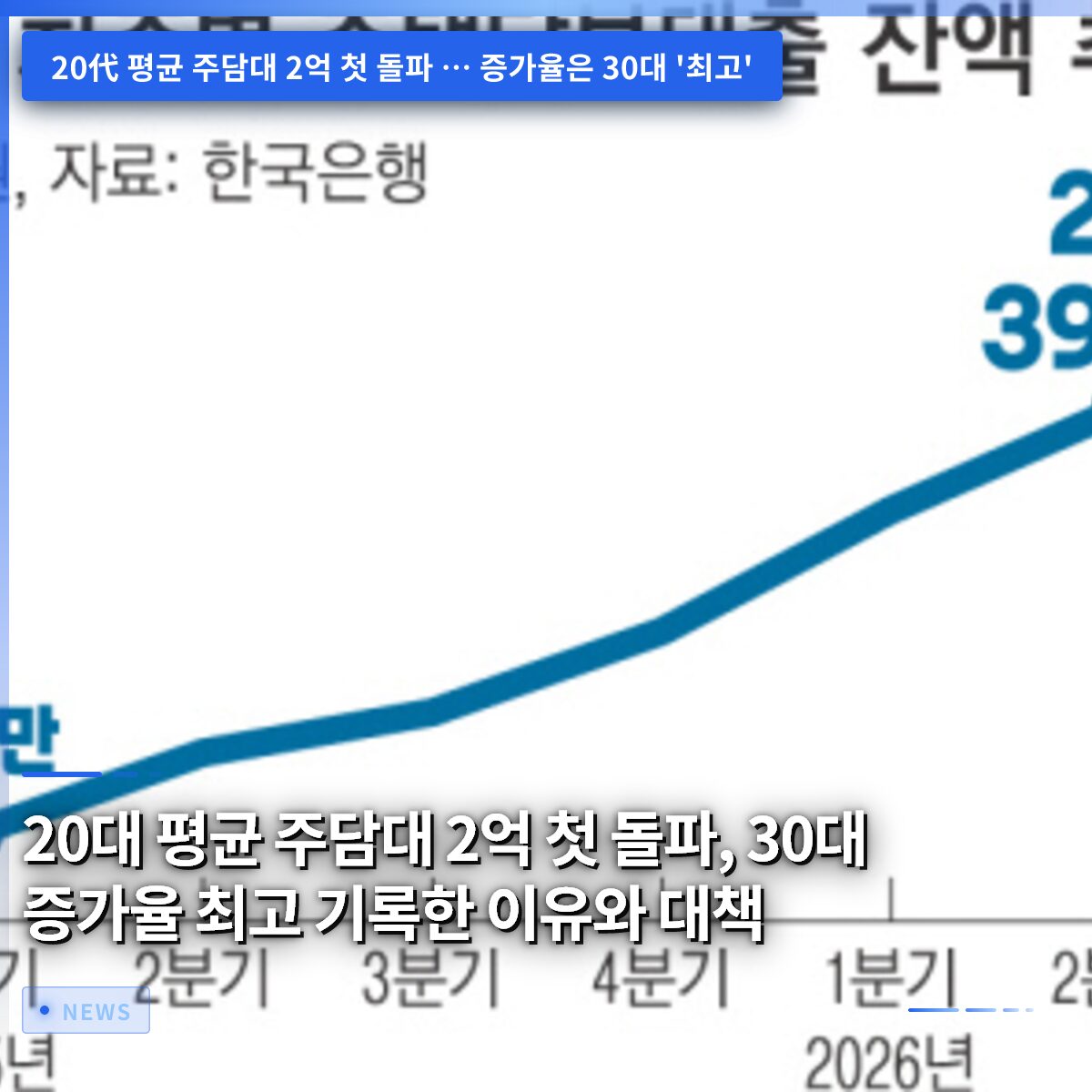
As the desire among young people to own their own homes intensifies, the average outstanding mortgage balance for those in their 20s has surpassed 200 million won for the first time in history. This is the result of an increasing number of young people taking on debt, even stretching their limits, to cope with soaring housing prices. Kim, an office worker living in Mapo-gu, Seoul, recently maxed out his mortgage to buy a small apartment in Yeongdeungpo. He confesses that he feels suffocated every time he looks at the monthly interest payments. In this article, we will carefully examine the current state of mortgages for those in their 20s and 30s, the reality of household debt, and realistic countermeasures to address these issues. According to recently released financial indicators, the debt burden on the younger generation is even surpassing the average of the older generation. We will deeply analyze the causes of the young generation’s mounting debt and the potential repercussions for our economy.
=
Average Mortgage for Those in Their 20s Tops 200 Million Won for the First Time: Reasons Behind Record Growth in the 30s and Countermeasures
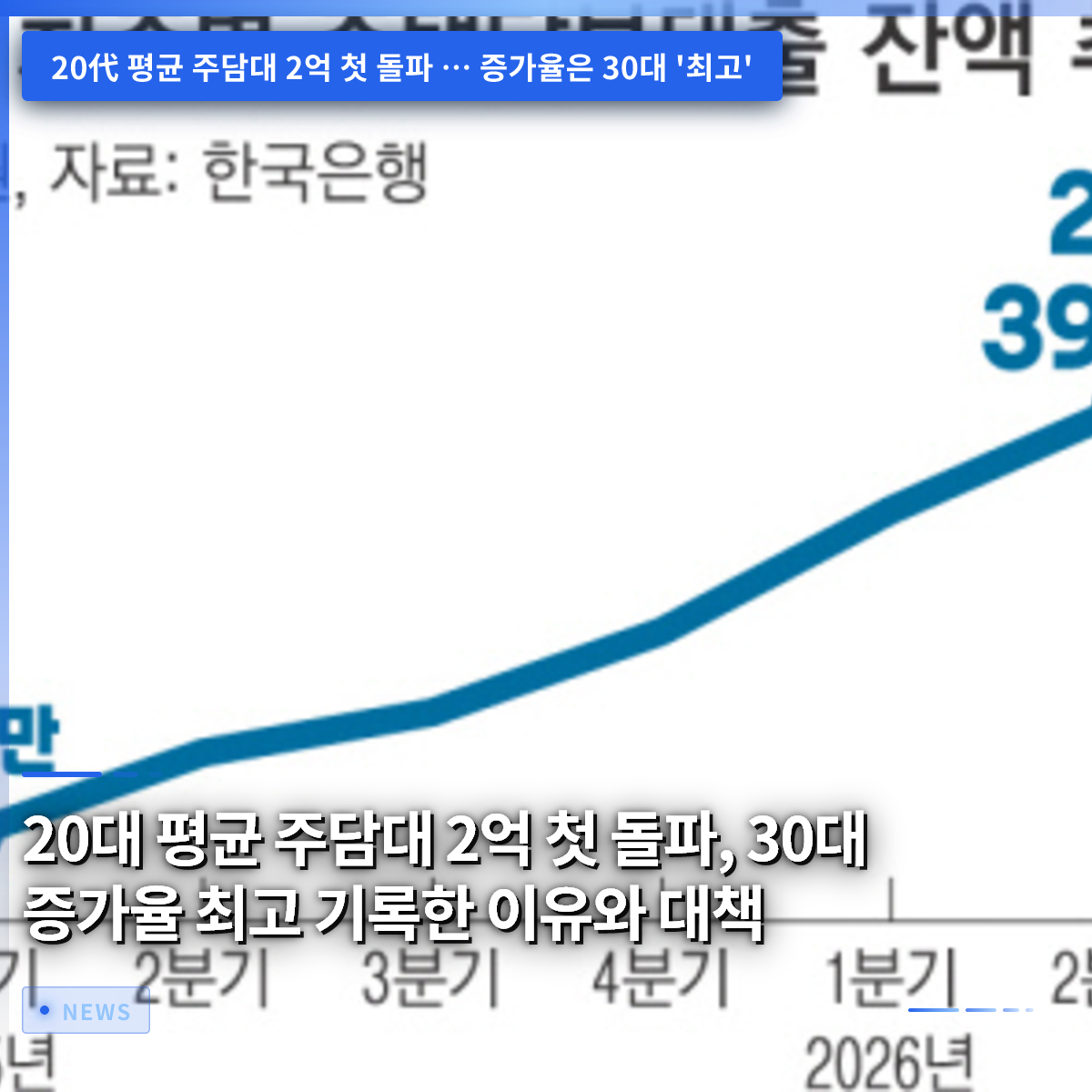
1. The Dawn of the 200 Million Won Mortgage Era for Those in Their 20s
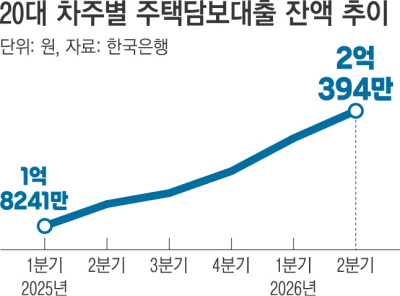
Recent financial statistics reveal that the average outstanding mortgage balance per borrower in their 20s has surpassed 200 million won, causing a significant shock. In the past, it was hard to imagine that a young person just starting their career could buy a home, but amidst the surge in housing prices over the past few years, young people have had no choice but to join the ranks of panic buyers. As finding a rental (jeonse) in Seoul or the metropolitan area became as difficult as picking stars from the sky, a surge of young people turned to taking out loans to purchase homes instead. Ordinary young people who could not rely on parental support maxed out every possible limit at banks to buy homes, resulting in them shouldering massive debt. The anxiety of feeling left behind when friends around them bought homes was also a major factor pushing young people to take on excessive large loans. This phenomenon acts as a time bomb threatening the economic soundness of the entire young generation, going beyond individual housing stability. Taking on large debts immediately upon entering society has a very negative impact on asset formation throughout their life cycle. With most of their income poured into monthly principal and interest payments ranging from hundreds of thousands to millions of won, many young people are giving up on important life plans such as marriage and childbirth. It is easy to find complaints from office workers in their 20s on workplace communities and online spaces, sighing that interest is deducted just by breathing. Experts warn that if the rapid increase in debt among the young generation is not controlled, the entire national economy could fall into a long-term recession. This is why voices are growing louder for the government and financial institutions to collaborate on effective policies to reduce the excessive debt of the young generation.
The average mortgage for those in their 20s surpassing 200 million won is a result of panic buying and housing instability, posing a significant burden on their entire life cycle.
2. Background of the Record-High Growth Rate in the 30s

Not only those in their 20s, but the generation in their 30s, who are just beginning their full economic activities, also recorded the highest mortgage growth rate among all age groups. The 30s is a period when housing stability is most urgently needed due to marriage and childbirth, making it a phase where housing purchase demand explodes. Lee, an office worker in his 30s working in Seoul, was tired of his landlord’s demands to raise the jeonse deposit and eventually bought an apartment on the outskirts of Gyeonggi Province, taking on debt in the hundreds of millions of won. Mr. Lee confessed that while the relief of owning a home was brief, the financial pressure from soaring interest rates is so great that he often loses sleep. Those in their 30s showed a tendency to actively utilize various financial benefits given to first-time homebuyers, maxing out their loan limits. Another reason for the steep increase in loans for those in their 30s is that many borrowers entered the market when housing prices were at their peak. Those in their 30s who forced themselves to buy homes during a period of relatively low interest rates later faced a wave of sharp interest rate hikes, causing their interest repayment burden to snowball. Office workers in their 30s, who have relatively limited financial resources, are barely keeping up with loan interest by cutting living expenses and taking on side jobs. Some borrowers in their 30s are repeating a vicious cycle of cutting losses on their stocks or opening additional overdraft accounts to put out immediate fires. This situation is acting as a major factor sharply reducing the consumption capacity of households in their 30s, thereby dampening the vitality of the entire domestic economy.
The 30s is a period of exploding housing demand due to marriage and childbirth, recording the highest loan growth rate coinciding with the housing price boom.
3. Clear Contrast with the 40s and 50s

Interestingly, while mortgages for the young generation in their 20s and 30s have surged, the growth rate for the older generation in their 40s and 50s has remained relatively low. According to statistics, the mortgage growth rates for those in their 40s and 50s were in the 30% and 10% ranges, respectively, showing a significant gap compared to the growth speed of the young generation. Those in their 40s and 50s often already secured housing in the past and have relatively stable income levels compared to the young generation, resulting in less demand for additional loans. Moreover, most of the older generation is in a stage of steadily repaying the principal of their loans based on their existing assets. On the other hand, as of the second quarter of this year, the average outstanding mortgage balance per borrower in their 20s and 30s was recorded to be more than 56 million won higher than the average for those in their 40s and 50s. This means that the young generation, who have had a short period for asset accumulation since entering society, are actually carrying much more debt to buy homes than the older generation. This phenomenon is pointed out as a catalyst that further deepens polarization in the asset market and intergenerational inequality. The older generation enjoyed significant capital gains by purchasing homes at relatively lower prices in the past, while the young generation bought homes at peak prices and shouldered massive interest burdens. The asset gap between generations is not only failing to narrow but is forcing the young generation onto a disadvantaged starting line in terms of debt scale.
While the older generation in their 40s and 50s is in a stable phase of gradually repaying loans, the young generation is carrying more debt, deepening the intergenerational gap.
4. Warning Signs of Youth Household Debt

As mortgage balances surge among the young generation, a dark shadow of rising delinquency rates is also being cast. Young people who bought homes with debt face a high risk of immediately falling into a state of inability to repay when unexpected interest rate fluctuations or income reductions occur. In fact, the delinquency rate for loans to the young generation at financial institutions has been gradually rising over the past few years, lighting up warning signs. Park, a person in their 30s working for a small company in Seoul, said he is in a crisis of being unable to pay bank interest due to reduced bonuses from the company’s financial difficulties, leaving him in despair. If more young people struggle to repay loans like Mr. Park, it will eventually lead to non-performing loans at banks, potentially shaking the entire financial system. The proportion of those in their 20s and 30s among personal bankruptcy or credit recovery applications is also showing a trend of gradually increasing, growing social concern. Becoming a credit cautionary subject at a young age makes normal economic activity impossible, directly leading to a decrease in national productivity. A vicious cycle is repeating where young people completely halt consumption to pay off debts, causing self-employed individuals and small business owners to experience severe recessions. To prevent this qualitative deterioration of household debt, the government is continuously supplementing loan regulations that carefully assess the repayment capacity of the young generation. However, the cold reality is that finding a solution in the short term is not easy because the scale of the already increased debt is enormous.
Excessive debt among the young generation can lead to rising delinquency rates and credit crises, imposing a significant burden on the entire national economy.
5. Response Strategies Recommended by Experts

To alleviate the mortgage burden on the young generation and induce a soft landing of household debt, experts are proposing various solutions. First, a system that thoroughly reviews borrowers’ actual income and repayment capacity must be established, moving away from the practice of indiscriminately increasing loans. Additionally, the supply of public rental housing must be significantly increased so that young people can live stably even if they do not buy homes with excessive debt. It is analyzed that only when housing stability is supported can the vicious cycle of young people rushing into panic buying out of anxiety be broken. At the individual level, it is important for young people to make realistic financial plans that match their income levels rather than pursuing asset growth through unreasonable loans. It is necessary to thoroughly consider interest rate fluctuation risks, choosing fixed-rate products over variable rates, and to wisely repay the principal little by little whenever surplus funds are available. A conservative attitude of gradually accumulating assets from a long-term perspective is required rather than forcing the purchase of an apartment with debt. Only when the government’s policy support and individuals’ cautious asset management efforts are harmonized can we escape the debt nightmare of the young generation.
Strengthen income-based loan reviews and expand public rentals, while individuals must practice conservative asset management.
6. Future Outlook and Wise Coping Methods

The arrival of the 200 million won mortgage era for those in their 20s and the record-high growth rate in the 30s frankly reveal the true face of the household debt crisis our society faces. While the magnitude of the suffering experienced by young borrowers will vary depending on the direction of the real estate market, the weight of debt is not expected to decrease easily for the time being. If the young generation collapses, the future growth engine of the South Korean economy itself could be extinguished, making meticulous countermeasures from the government and financial authorities essential. Readers, please refrain from recklessly taking on debt influenced by the surrounding atmosphere and instead coldly check your financial status. Owning a home is a very important task in life, but if quality of life collapses due to excessive debt, it leads to a result where the means and ends are reversed. You must carefully examine the various financial support policies announced by the government and the conditions of youth-preferential products to find the most advantageous option for yourself. It is wise to make housing plans within a budget that can be thoroughly endured, without being dazzled by expectations of interest rate cuts or success stories from others. I hope you will exercise the wisdom to wisely protect your assets while keeping a close eye on changing financial policies and market trends.
The youth household debt issue is a core variable for the future economy, making thorough individual asset checks and cautious housing planning essential.
Frequently Asked Questions
=