Capital gains tax is levied on the profit generated from disposing of assets such as real estate or stocks, making thorough preparation essential. Recently, the tax burden has increased significantly for many homeowners due to tax system reforms and changes in regulations for multi-homeowners in the real estate market. In fact, the number of gift transactions has surged in the Seoul area, and there are no shortage of cases where individuals have faced a “tax bomb” due to misinformation. Even if you qualify for tax exemption, failing to file the relevant reports can make it difficult to have the source of your funds recognized in the future. In this article, we will carefully examine everything from the precise calculation structure of capital gains tax to practical tips for reducing your tax liability. Let’s understand the seemingly complex tax system together and explore how to protect your assets safely.
=
Tax-Saving Secrets for Capital Gains Tax: Calculation Methods and Tips to Avoid a Tax Bomb
1. Understanding the Basic Concepts and Taxable Scope of Capital Gains Tax
Capital gains tax is a tax levied on the profit when an individual transfers real estate such as land or buildings, or stocks, resulting in a capital gain. Here, “transfer” refers to any process where ownership of an asset is transferred to another person in exchange for consideration, such as through sale or exchange. No tax is incurred merely from holding an asset; however, if a capital gain is realized at the time of disposal, it must be declared and paid. Many people mistakenly believe that the entire remaining amount from selling a house is their own money, but failing to consider taxes can lead to significant financial trouble. The taxable scope is extensive, covering not only domestic real estate but also specific stocks and derivatives, so caution is required. In particular, residential forms such as officetels or villas can be included in the number of houses owned and become subject to surtax on capital gains, depending on how they are actually used.
According to the principle of substantive taxation, if an officetel is used for residential purposes, it is added to the number of houses owned, making it difficult to avoid the surtax for multi-homeowners. Therefore, it is crucial to determine in advance which tax law criteria apply to your assets. Tax experts advise calculating the number of houses owned and the expected capital gain at least a few months before disposing of assets. Occasionally, individuals who take tax filing lightly may miss deadlines or underreport, resulting in additional penalties. Errors can also occur in the National Tax Service’s tax assessment process, so you must be able to verify the tax amount yourself. It is essential to develop the habit of properly keeping documents that prove the exact acquisition date and value of assets in your name.
Capital gains tax is levied on profits from asset disposal, making the calculation of the number of houses owned and understanding the actual usage purpose essential.
2. The Calculation Structure of Capital Gains Tax and the Importance of Necessary Expenses
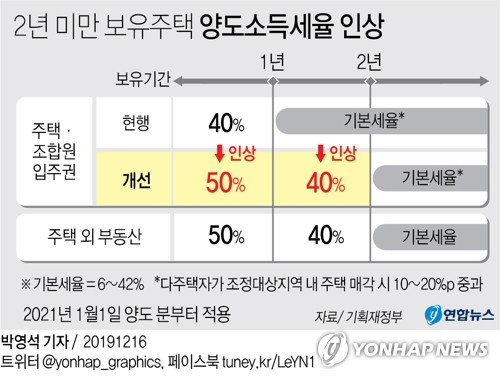
Capital gains tax fundamentally begins with calculating the capital gain by subtracting the acquisition cost and necessary expenses from the transfer price. The core of tax calculation lies in clearly comparing the actual transaction price at the time of transfer with the actual transaction price at the time of acquisition. If the actual transaction price cannot be verified, the standard price or converted acquisition cost prescribed by law is applied. Once the capital gain is determined, the long-term holding special deduction is subtracted to determine the taxable base. After the taxable base is established, a complex process follows where the tax amount is derived by multiplying the holding period and the tax rate.
If you want to significantly reduce your tax, you must meticulously account for all deductible necessary expenses when calculating the capital gain. Brokerage fees, legal costs, and incidental expenses incurred to acquire the asset are all included in necessary expenses. Additionally, capital expenditures for repairs or value enhancement can be recognized with receipts and supporting documents. Occasionally, individuals who resort to illegal methods, such as splitting deposits, to reduce taxes may face a massive tax bomb due to National Tax Service investigations. Even if you qualify for tax exemption and no tax is due, it is safe to file the relevant documents to prepare for future source-of-funds investigations. Reflecting all legitimate expense items without omission is the most reliable shortcut to legally reducing capital gains tax.
The core of tax savings lies in reducing the capital gain by deducting the acquisition cost and necessary expenses from the transfer price, and thoroughly keeping supporting documents.
3. Tax Exemption Requirements for One House per Household and High-Value Housing Standards
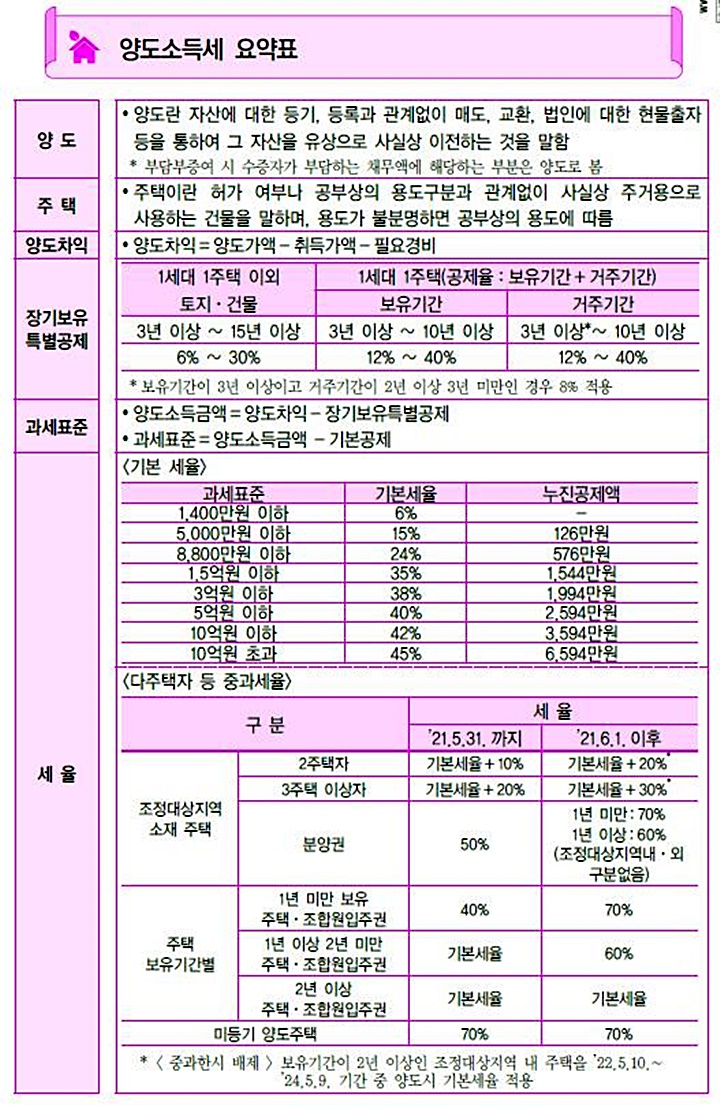
Households holding only one house in Korea can receive a tax exemption benefit, which fully exempts them from capital gains tax, if certain conditions are met. Basically, the house must be held for at least two years, and if the house was acquired in a designated area, the two-year residency requirement must also be fulfilled. As of recent standards, the threshold for the one-house tax exemption is a transfer price of 1.2 billion KRW, meaning no tax is incurred if sold within this amount. However, if the housing transaction price exceeds 1.2 billion KRW, which is considered a high-value house, tax is levied on the gain exceeding 1.2 billion KRW.
For example, if a single-homeowner sells a house for 1.6 billion KRW, tax is applied to the 400 million KRW exceeding 1.2 billion KRW according to the applicable rate. Actively utilizing the long-term holding special deduction, which reduces tax the longer you live in the house, can significantly lower the capital gains tax burden for high-value houses. Since the deduction rate is applied up to the maximum based on residency and holding periods, this is highly advantageous for homeowners who have lived in their homes for a long time. Even if you become a temporary two-householder due to unavoidable reasons such as moving or job relocation, you can maintain the tax exemption if you dispose of the existing house within a certain period. However, if this period is exceeded by even one day, you may be deemed a multi-homeowner and face a massive surtax bomb, so date calculations must be thorough. Failing to carefully check the housing tax exemption benefits and hastily proceeding with a contract can lead to unexpected expenses and significant losses.
The one-house tax exemption requires meeting the two-year holding and residency requirements and the standard of 1.2 billion KRW or less, while high-value houses are taxed on the excess amount.
4. Surtax for Multi-Homeowners and Strategies for Regulated Areas
When multi-homeowners transfer a house within a regulated area, a surtax is applied in addition to the general tax rate, resulting in an unimaginable tax burden. In the past, the surtax for multi-homeowners was temporarily suspended, but regulations can be strengthened or changed depending on market conditions. Due to movements in tax system reforms, homeowners in major areas such as Gangnam-gu and Seocho-gu are listing their properties or choosing to gift them because they cannot bear the burden of holding tax and capital gains tax. In fact, the market was very active, with the number of gift transactions surging more than three times the usual level around the time the suspension of the surtax for multi-homeowners ended.
To avoid a tax bomb, multi-homeowners must devise a meticulous transfer strategy regarding the order in which to sell their houses. The standard approach is to keep the house eligible for tax exemption until the last and dispose of houses with relatively lower value first. Additionally, utilizing corporate names or legally distributing shares through gifting among family members can also be considered. However, blindly trusting unverified tax-saving methods from YouTube or other sources and resorting to unreasonable illegal methods can easily make you a target of National Tax Service audits. Since tax laws are amended at any moment, you must not rely on outdated information circulating on the internet and must always check the latest laws. It is safe to consult with an expert to accurately diagnose the number of houses you own and their acquisition timing, and to formulate a tailored plan.
The surtax for multi-homeowners is much higher than the general tax rate, requiring strategic response through adjusting the order of sales and checking the latest tax laws.
5. Local Income Tax and Capital Gains Tax on Other Assets such as Stocks
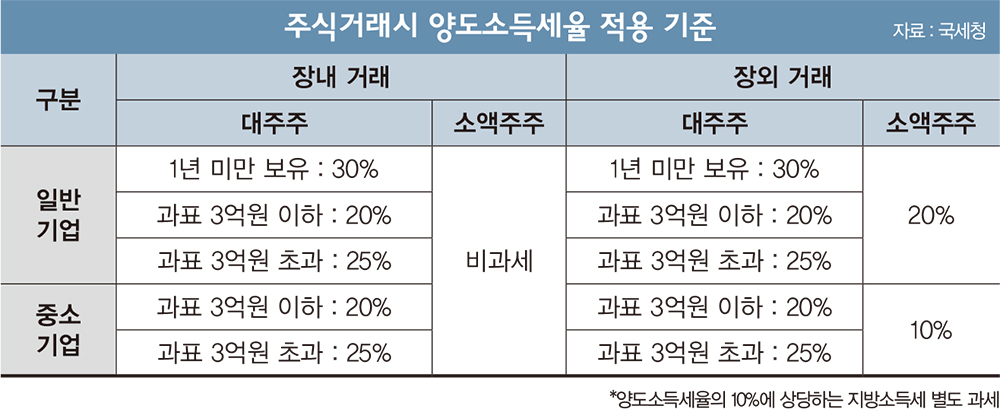
When calculating capital gains tax, do not forget that another tax is levied in addition to the principal tax paid to the National Tax Service. This is the local income tax paid to local governments, which adds 10 percent of the calculated capital gains tax. Therefore, to prevent non-payment, you must prepare funds based on the total amount of national and local taxes when making the final payment. Caution is needed not only for real estate but also when trading overseas stocks or domestic major shareholder stocks, as capital gains tax is incurred. In particular, if the annual capital gains from trading foreign stocks, such as US stocks, exceed 2.5 million KRW, it becomes subject to voluntary filing.
The capital gains tax on foreign stocks is typically applied at a rate of 22 percent to the remaining gain after deducting the basic deduction of 2.5 million KRW. If you fail to file within the prescribed period by visiting the tax office directly or through the HomeTax system, a non-filing penalty is imposed. The number of individuals facing a tax bomb due to missing the tax filing deadline or making errors in exchange rate calculations, despite making profits from stock investments, is increasing. For stock capital gains tax as well, you must meticulously deduct fees recognized as necessary expenses to accurately calculate the taxable base. Regardless of the type of asset, it is a principle that capital gains-related taxes payable to the state require voluntary filing and payment. Keeping transparent records of your asset transactions in Excel files or ledgers is a great help during year-end settlement or tax filing.
A 10 percent local income tax is added to capital gains tax, and overseas stocks, etc., must be filed at a 22 percent tax rate if they exceed 2.5 million KRW.
6. Verifying National Tax Service Errors and Mindset for Successful Tax Savings
Taxes levied by the National Tax Service are not always perfect, and in fact, a significant number of tax assessments are incorrect and are later corrected. Looking at cases of review applications, complaints related to capital gains tax account for a substantial proportion, requiring meticulous verification by taxpayers. You need to have the attitude of periodically checking your tax calculation statements to see if you have paid more tax than necessary or if there was an incorrect assessment. Even if you receive help from a tax agent, the ultimate responsibility lies with you, so having basic knowledge of tax law is advantageous. If you plan to dispose of real estate or stocks, you should consult with an expert and run a tax simulation at least a few months in advance.
Since tax system reforms in the real estate market are expected to continue, flexibility to quickly respond to changing trends is important. Rather than seeking illegal loopholes out of impatience to reduce taxes, you should focus on proving legitimate necessary expenses and meeting tax exemption requirements. Since government regulations and tax laws can change at any time, you must plan your asset management based on information from reliable official channels. Instead of being paralyzed by the fear of a tax bomb, we hope you will protect your assets safely through thorough pre-calculation and transparent filing. Based on the key points of capital gains tax learned today, try to perfectly manage tax risks in the process of buying a home and increasing your assets. Meticulous preparation and wise judgment are the most reliable secrets to preventing unnecessary expenses and accumulating wealth.
It is essential to verify the tax amount yourself to prepare for National Tax Service assessment errors and to file transparently in accordance with the latest tax laws.
Frequently Asked Questions
=