Choosing an annuity over a lump sum for your retirement pension is the most effective way to significantly reduce your tax burden and secure your financial future. Many employees are tempted by the allure of a large lump sum upon leaving their jobs, only to regret their decision when they receive a tax bill much larger than expected. Since life after retirement is longer than many anticipate, establishing a stable monthly cash flow is paramount. In this article, we will thoroughly examine everything from how to identify your specific pension type to concrete strategies for minimizing taxes. Rather than blindly following what others are doing, you must create a customized payout plan that fits your unique situation to ensure a robust household economy in retirement.
=
Tax-Saving Strategies for Receiving Your Retirement Pension: Why Annuity Payments Beat Lump Sums
1. Accurately Identify Your Retirement Pension Type
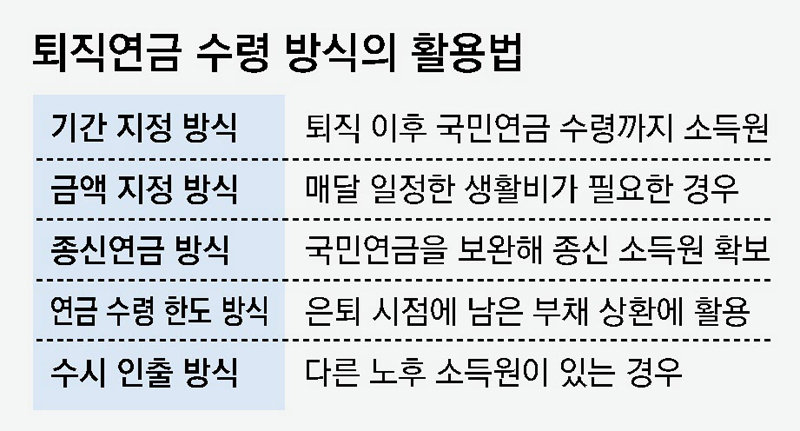
To properly understand your retirement pension payout options, the first priority is to accurately determine whether your plan is a Defined Benefit (DB) plan, a Defined Contribution (DC) plan, or an Individual Retirement Account (IRA). You cannot simply copy what a colleague did, as the application procedures and the destination accounts for the funds differ entirely depending on the type of plan you are enrolled in. In a DB plan, the company manages the accumulation of funds and pays a predetermined amount upon retirement, meaning the company leads the payment process. In contrast, in a DC plan, you personally invest the annual contributions made by your company into assets such as stocks or bonds, making your active management style a critical factor.
If you manage a DC plan poorly and incur significant losses, your final retirement payout could be drastically reduced, dealing a major blow to your entire retirement plan. It is not uncommon to hear stories of employees who, after working diligently for over a decade, check their retirement pension accounts upon leaving and are shocked to find the balance is much lower than expected. Therefore, it is wise to contact your financial institution before retiring to meticulously review your account balance and investment performance, preparing for any potential risks. Developing the habit of frequently checking your balance via your financial institution’s mobile app or website will allow you to handle the retirement process calmly without panic when the time comes.
The first step in determining your retirement pension payout method is to identify whether your account is a DB or DC plan and to check your balance status in advance.
2. Comparing Tax Differences Between Lump Sums and Annuities
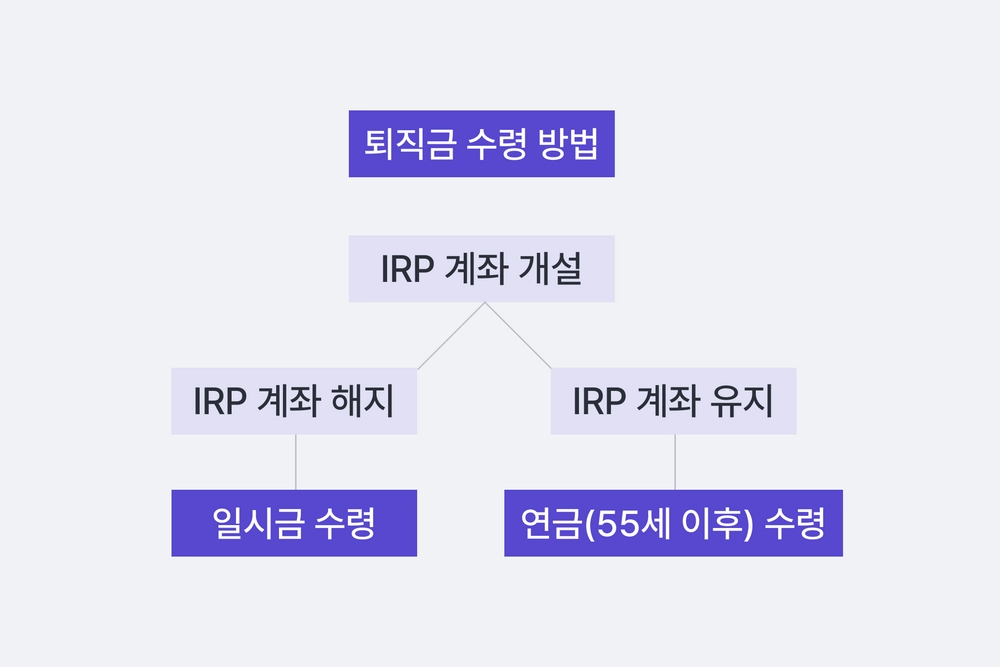
When deciding on a retirement pension payout method, tax implications are the most significant variable. If you receive a lump sum, the full amount of retirement income tax is deducted, significantly reducing the actual cash you receive. For example, while receiving a large lump sum from a long-term employer feels good, it often results in a “tax bomb” that leaves you stunned. On the other hand, if you transfer your retirement funds to an Individual Retirement Account (IRA) and receive them as an annuity, the government provides tax benefits that drastically reduce the retirement income tax you would otherwise have to pay. For the first 10 years of annuity payments, you only pay 70% of the original retirement income tax, and after 10 years, the rate drops to just 60%, significantly lowering your tax burden.
Furthermore, if you begin receiving your annuity after age 55, the tax rate decreases as you age, dropping to just 50% after age 70, which offers substantial long-term benefits. By adjusting your annual annuity payments to stay below a certain threshold, you can also avoid the burden of comprehensive income tax, achieving a double benefit. It is crucial to remember that saving on taxes in a situation where fixed income has ceased is the most reliable way to increase your living expenses in retirement. Although the tax calculation structure may seem complex, a little study can turn it into a powerful tool for protecting your valuable assets.
Receiving your retirement funds as a lump sum can result in a massive tax bill, whereas receiving them as an annuity through an Individual Retirement Account can save you up to 50% in taxes.
3. Transferring to an Individual Retirement Account for Payout

The most critical tool in determining your retirement pension payout method is the Individual Retirement Account (IRA). You must transfer your retirement funds to this account upon leaving your job to fully enjoy the tax benefits. Once the company deposits the retirement funds into an account in your personal name, you become eligible to formally apply to start receiving your annuity. If you skip this process and the company deposits the funds directly into a regular bank account, it is treated as a mandatory lump-sum payout, and you will receive no tax benefits. Therefore, you should discuss this with your HR department before retiring to ensure that your retirement funds are definitely transferred to an Individual Retirement Account.
You can open an account by visiting a securities firm or bank, or conveniently create one non-face-to-face via a mobile app, so it is best to prepare in advance. Recently, financial institutions have made the process smoother by offering various added services that support the entire process from designing and managing pension assets to receiving payouts. By consulting with experts or utilizing asset management services, you can easily create an optimal annuity payout schedule tailored to your age and retirement timing. It is a wise approach to carefully review the pension-related information pages of your usual financial institution and choose the one that offers the most advantageous benefits for you.
You must open an Individual Retirement Account in advance and ensure that your retirement funds are deposited into that account before receiving them.
4. Considering Annuity Duration and Age Requirements
To execute your retirement pension payout method, you must be at least 55 years old, and it is advantageous to set the annuity duration to 10 years or more. Even if you retire early in your 50s, you cannot immediately start receiving your annuity; you must maintain and grow the funds in your account until you turn 55. When you begin receiving your annuity after turning 55, you must set the payout period to 10 years or longer to fully benefit from the 30% reduction in retirement income tax mentioned earlier. If you choose a short payout period, such as 5 years, because you need cash quickly, you may fail to receive the full tax benefits and end up at a disadvantage.
It is most important to calculate your monthly living expenses by considering your expected lifespan and retirement period, and then rationally design your annuity amount and duration. If you have other fixed income sources, such as the National Pension or personal pensions, it is best to view your retirement pension as a supplement to cover shortfalls and receive it over a longer period. Since you will need to spend money for decades after retirement, depleting your funds too quickly can put you at risk of financial ruin in old age, so you must be careful. Managing your annual annuity payments to stay below a certain amount can also reduce your health insurance premiums, offering multiple advantages.
You must receive your annuity for a minimum of 10 years after turning 55 to simultaneously secure tax reduction benefits and a stable cash flow.
5. Checking Application Procedures and Schedules by Financial Institution
The final step in the retirement pension payout process involves the practical tasks of preparing the necessary documents and submitting a payment application to the financial institution. Once the company calculates the retirement benefits and completes the deposit with the financial institution, the participant can visit the institution or apply online by bringing their ID and annuity payment application form. Note that the timing of cashing out may vary depending on the type of product you were invested in, so you should allow extra time if the process overlaps with holidays or long weekends. For example, selling equity funds or specific bond products may take several business days, so it is safer to apply at least one week before you need the funds.
If you are in a special situation requiring special loans or specific payout schedules from regional or special banks, it is best to call the customer service center in advance to confirm the exact schedule. Occasionally, people rush to prepare documents due to urgent living expenses and face delays of over a week when additional documents are requested. Even in the non-face-to-face application process via mobile apps, issues can arise with identity verification or account password errors, so proceed calmly through each step. Actively seeking help from your assigned PB or customer service representative can help you complete the complex document procedures cleanly and without errors in one go.
Submit your application with a buffer before you actually need the funds, and coordinate your schedule considering the business days required to sell your invested products.
6. Outlook on Wise Pension Wealth Management for a Successful Retirement
Properly understanding and implementing retirement pension payout methods is the most reliable wealth management strategy for preventing financial ruin and enjoying peace of mind in the era of super-aging. In the past, it was standard to receive a lump sum from the company to buy a house or start a business, but this approach now poses significant risks. In the future, the wisdom of managing the value of your assets by directly investing in domestic and international equity index funds and other quality assets within your pension account will become even more important. The government and financial authorities are continuing to expand tax benefits related to pensions to secure income for citizens in their old age, so you should keep a close eye on these policy changes.
Do not be swayed by hearsay; carefully compare and analyze the scale of your assets with your expected post-retirement expenses to create your own customized annuity payout plan. It may feel cumbersome and complex right now, but in 10 or 20 years, when you look at your bank balance, you will realize how wise your decision was. Retirement is not an end, but the beginning of a new life; with a solid retirement pension as a safety net, you can live a confident and comfortable life indefinitely. I sincerely hope you will open your retirement pension account today and steadily prepare for your future, becoming a wonderful employee who takes charge of their own retirement.
A thorough annuity payout plan and consistent asset management are the key to a prosperous and stable life after retirement.
Frequently Asked Questions
=