Tension is gripping global financial markets as the Federal Reserve, the U.S. central bank, has raised its benchmark interest rate by 0.25 percentage points to a range of 3.75% to 4.00% per annum. This decision reflects the judgment that inflationary pressures have not yet subsided, while also indicating that the U.S. economy is robust enough to withstand tightening policies, supported by strong consumer spending and a solid labor market. In reality, Mr. Kim, a man in his 30s working in Seoul, is worried that his loan interest rates might rise again and is currently reworking his monthly budget. The Federal Reserve Committee voted unanimously in favor of this hike and, through the published dot plot, left open the possibility of one more rate increase by the end of the year. Experts warn that this high-interest-rate regime could persist into next year, advising both households and businesses to manage their finances meticulously. This article will examine the background of this monetary policy decision and its potential impact on our lives. It aims to help readers understand the central bank’s complex calculations as it attempts to achieve both price stability and economic recovery.
=
Analysis of the Fed’s 0.25% Interest Rate Hike and Outlook for Further Increases This Year
1. Background of the Rate Hike and the Unanimous Decision

The fact that all twelve members of the Federal Open Market Committee agreed to a 0.25 percentage point rate hike at this regular meeting clearly demonstrates that price stability is the top priority. According to the statement released immediately after the meeting, the U.S. economy is maintaining robust overall growth, with active private consumption and corporate capital investment. For instance, if you visit a major U.S. retail store, you will see that consumers are still buying goods steadily, refusing to close their wallets despite high prices. Because demand is not shrinking, the process of bringing the inflation rate back down to the target of 2% per annum is progressing more slowly than expected. The central bank assessed that the labor market is also maintaining a stable state without overheating, meaning the economy has sufficient resilience to endure tightening policies. Ultimately, this measure was taken based on the judgment that further tightening is unavoidable to firmly curb the persistent inflation. Market participants have evaluated this decision as an expected step while keeping a close eye on the future direction of monetary policy. In particular, the resilience of the U.S. economy is remarkable even in a situation where uncertainties such as geopolitical risks and supply chain instability persist. Compared to the currency crisis or the global financial crisis in the past, the current U.S. economy has a relatively low private sector debt ratio, allowing it to withstand interest rate shocks well. However, the interest burden for self-employed individuals who took out loans to buy homes or expand their businesses is snowballing, making the perceived economy still chilly. This widening gap between macroeconomic indicators and the livelihood economy felt by individuals is a major concern for policymakers. Since the central bank’s next move will be determined by upcoming economic indicators, meticulous monitoring is essential.
The Federal Reserve unanimously raised the benchmark interest rate, citing robust economic growth and high price levels.
2. Dot Plot Hints at Further Rate Hike This Year
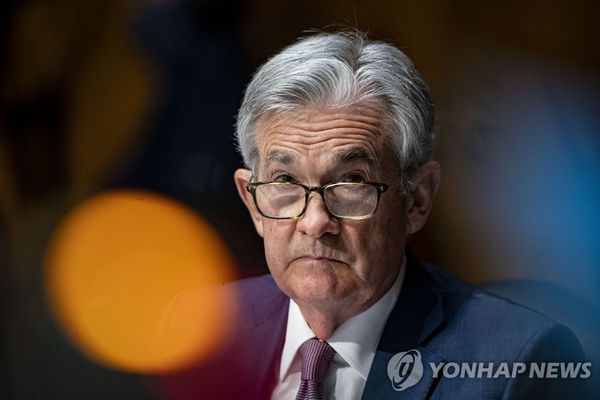
Looking at the dot plot released at this meeting, the median benchmark interest rate for the end of the year is projected at 4.1% per annum, increasing the likelihood of one more rate hike within the year. Most of the committee members who provided their views on the dot plot responded that there is a need to raise rates one more time before the end of the year, heightening market tension. Compared to the previous survey, the overall level of interest rate projections has risen by one step, signaling that the high-interest-rate regime will not end anytime soon. Mr. Lee, a common stock investor, had allocated his assets expecting rates to fall next year but is now adjusting his portfolio in surprise at the unexpectedly higher projections. The reason the central bank is maintaining such a firm stance is to express its determination not to relax until the inflation rate reaches the target. Financial markets are reflecting these projections, with bond yields fluctuating and the stock market reacting sensitively. In particular, as indicators that directly affect loan interest rates face upward pressure, concerns are growing that household interest repayment burdens will become heavier. Experts analyze that the inflation indicators and employment reports to be released in the remaining period of this year will be the decisive turning point for a further rate hike within the year. If prices stabilize faster than expected, the pace of hikes could be moderated, but in the opposite case, further hikes become an unavoidable scenario. Therefore, investors and general citizens should formulate asset management strategies from a long-term perspective rather than reacting emotionally to the central bank’s every move.
The published dot plot suggests the possibility of further rate hikes this year, requiring preparation for a prolonged period of high interest rates.
3. Upward Revision of Economic Growth and Inflation Forecasts
At this meeting, the central bank revised upward its forecasts for real GDP growth rates for this year and next, expressing confidence in a soft landing. This year’s economic growth rate is expected to record a higher figure than previously anticipated, supported by solid private consumption. However, at the same time, the forecast for this year’s Personal Consumption Expenditures (PCE) inflation rate has also been raised, proving that inflationary pressures remain strong. This is why the prices felt every time you visit a grocery store or gas station do not easily come down. The central bank expects the inflation rate to fully return to the target level of 2% several years from now, foreshadowing a persistent war against inflation. In a phase where economic growth and high prices coexist, policy finesse is required, inevitably deepening the central bank’s dilemma. Lowering rates to support growth could cause prices to spike again, while raising rates to curb inflation risks a sharp economic slowdown. Fortunately, current labor market indicators show the unemployment rate maintaining a low level, slightly reducing concerns of a sudden recession. Mr. Park, an employee at a large corporation in Seoul, laments that although his company’s performance is not bad and employment is stable, his real income feels reduced due to rising prices. As such, a subtle gap exists between favorable macroeconomic indicators and the quality of life felt by individuals.
While economic growth forecasts have been revised upward, inflationary pressures have also increased, necessitating caution against prolonged high prices.
4. Labor Market Resilience and Declining Unemployment Rate
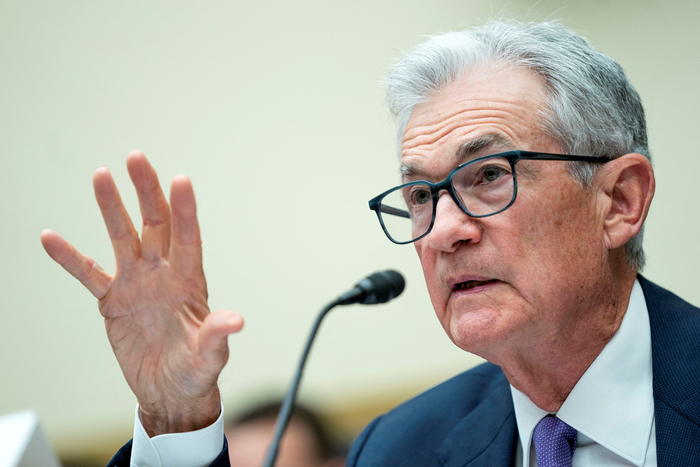
One notable aspect of this announcement is that the unemployment rate forecast for the end of the year has been revised downward to 4.1%. As the number of job seekers increases while new job creation proceeds smoothly, the labor market remains hot. News of labor shortages in major cities is no longer just a common news story but a realistic problem faced daily by small and medium-sized enterprises and small business owners. Due to labor shortages, wage inflation pressures arise, which in turn drive up service prices, acting as a factor hindering price stability. Mr. Choi, who runs a small restaurant in Busan, sighs that hiring part-time workers is like catching stars in the sky; although he raised the hourly wage, his operating profit actually decreased due to the burden of fixed costs. This resilience in the labor market provides a strong justification for the central bank to raise rates further. If unemployment is low and employment is stable, workers’ incomes are maintained, so consumption does not easily collapse even if rates are raised. However, conversely, this also carries the risk of falling into a vicious cycle where wages and prices stimulate each other. The central bank faces the difficult task of performing fine-tuning to cool down the overheating labor market without damaging the economy. This is why the attention of economists worldwide is focused on the monthly employment trend indicators to be released in the future.
A robust labor market and low unemployment rate are key drivers supporting the central bank’s policy of further rate hikes.
5. Impact on Global Financial Markets and the Domestic Economy
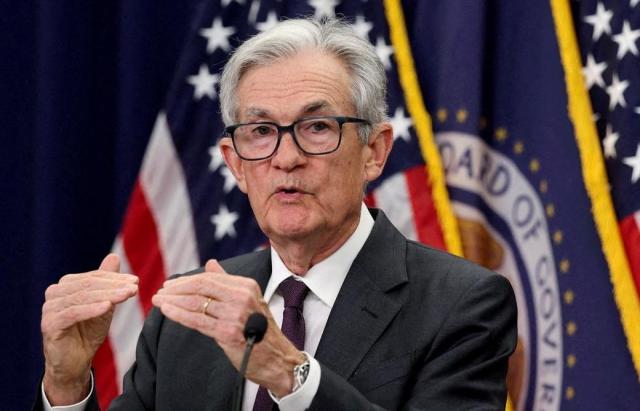
News of the U.S. interest rate hike is having immediate and multifaceted ripple effects on the South Korean economy across the Pacific. As the interest rate gap between the U.S. and South Korea widens, there is a risk of foreign capital outflows or instability in the won-dollar exchange rate, heightening tension among financial authorities. A merchant running an exchange office in Myeongdong, Seoul, reports frequently hearing voices of concern about rising imported raw material prices due to increased exchange rate volatility. For domestic households and businesses, the burden of interest payments due to rising loan rates is increasing, inevitably suppressing consumer sentiment. Ordinary office workers who took out mortgage loans to buy their first home sigh every time they receive the monthly principal and interest statement. Domestic monetary authorities are also closely monitoring these external economic variables and are deeply considering their benchmark interest rate decisions. With the U.S. choosing a path of prolonged high interest rates, the environment has become difficult for easily lowering domestic benchmark rates. At a point where it is necessary to suppress the increase in household debt and maintain financial stability, implementing an excessive rate cut is virtually impossible. Ultimately, ordinary citizens must adapt to a financial environment where deposit and loan rates remain high for the time being. It is time for everyone, from wealthy asset holders to ordinary salaried workers, to prioritize risk management and review their financial plans.
The U.S. tightening stance is affecting domestic exchange rates and loan rates, increasing the financial burden on households and businesses.
6. Future Economic Outlook and Advice for Readers
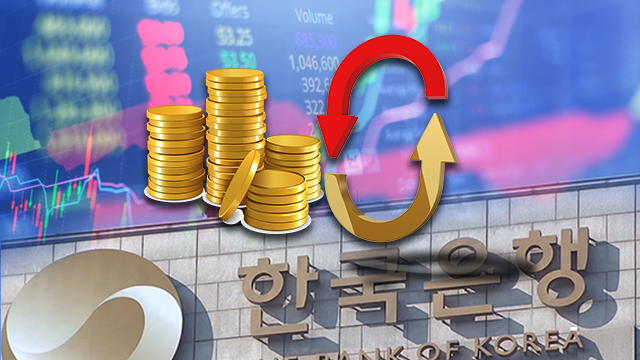
The economic environment that lies ahead will determine individual asset fortunes based on how wisely one navigates the high waves of high interest rates. If rates remain high until next year as indicated by the central bank’s dot plot, securing cash flow is safer than making investments through excessive borrowing. For example, one can consider practical measures such as reorganizing maturing deposit products and switching from variable-rate loans to fixed-rate loans. Experts unanimously agree that a conservative financial strategy of reducing debt and securing emergency funds is the wisest choice during times of high uncertainty. Rather than making hasty investments based on vague expectations, one should coldly review one’s own financial situation. The Federal Reserve’s decision is a symbolic event showing the process of structural improvement in the global economy, going beyond a simple numerical adjustment. The process of fighting high prices and removing economic bubbles is painful in the short term but is an essential rite of passage for creating a healthy economy in the long term. Readers are advised to carefully examine their monthly income and expenditure details and maintain a mindset that allows them to flexibly respond to upcoming economic changes. Economic news should not be dismissed as a story about other countries but accepted as a reality directly connected to one’s bank account balance. Thorough preparation and wise judgment will be the most reliable weapons to safely cross this era of volatility.
To respond to the era of prolonged high interest rates, a conservative financial strategy centered on debt management and cash flow is necessary.
Frequently Asked Questions
=