Personal pension savings are the most reliable and powerful tax-saving tool, allowing you to receive tax refunds ranging from several hundred thousand won to over one million won during the annual year-end tax settlement. We have all likely experienced the moment of considering joining a pension plan after hearing a colleague receive an enviable tax refund during their year-end settlement. However, when you actually try to start, the complex deduction limits and variety of products can make you feel overwhelmed and unsure of where to begin. If you want to secure your retirement while reducing your immediate tax burden, it is essential to accurately understand the core structure explained below. In this article, we will clearly outline everything from pension savings limits to effective management methods.
=
Personal Pension Savings: 9 Million Won Tax Deduction Limit and Strategies to Maximize Year-End Tax Refunds
1. Understanding Individual and Combined Pension Savings Limits
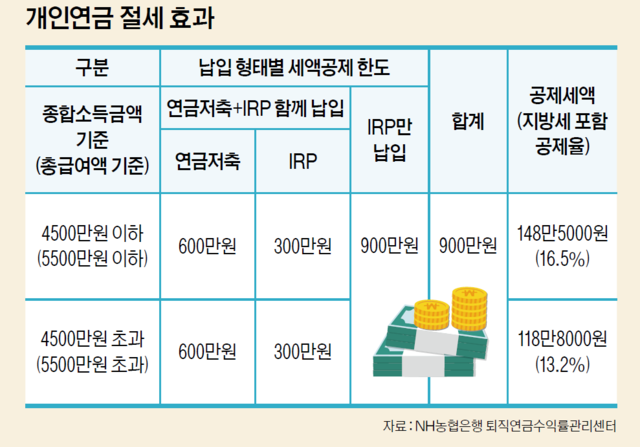
To enjoy the maximum benefits of personal pension savings, it is essential to accurately distinguish and understand the legally defined annual contribution limits and tax deduction limits. Many people assume that simply depositing money into the account will automatically yield the maximum benefit, but without understanding the specific limit structure, you are likely to miss valuable opportunities. If you contribute to a pension savings product individually, up to 6 million won per year is recognized as the tax-deductible amount. However, if you additionally open and manage an Individual Retirement Pension (IRP) account, the combined deduction limit increases significantly to a maximum of 9 million won. For example, by filling the pension savings account with 6 million won and contributing an additional 3 million won to the IRP account, you can fully utilize the 9 million won limit to maximize your benefits.
Since the applicable deduction rate varies depending on your annual income level, you must carefully consider this aspect when planning your finances. Employees with a total annual income of 55 million won or less can receive a refund of 16.5% of their contributions, resulting in a significantly higher perceived tax-saving effect. Conversely, if your total annual income exceeds 55 million won, a deduction rate of 13.2% is applied, leading to a relatively lower refund amount. It is not uncommon to hear from acquaintances who, unaware of this limit structure, poured 90 million won into pension savings only to complain about why they couldn’t get a deduction for the full amount. Therefore, it is wise to first check your salary bracket and formulate a specific monthly contribution strategy to determine how much to save each month.
The tax deduction limit for pension savings is 6 million won individually and up to 9 million won when combined with an IRP. You can receive a refund of 13.2% to 16.5% depending on your income.
2. Choosing Between Stable Principal-Interest Guaranteed Products and Investment Products
The method of managing retirement funds offers a wide range of choices, from principal-interest guaranteed products like bank deposits to performance-linked funds, depending on individual preferences and investment goals. With recent increases in interest rate volatility, flexible asset allocation tailored to market conditions is becoming more important than simply sticking to stable deposits. Subscribers who prioritize stability can safely grow their assets through principal-preserving methods such as pension savings trusts or insurance products offered by commercial banks or savings banks. On the other hand, investors looking to hedge against inflation and expect higher long-term returns typically open pension savings fund accounts through securities firms.
Using a securities firm account allows you to freely select a variety of Exchange-Traded Funds (ETFs) focused on high-quality domestic and international equity products or high-dividend value stocks, much like shopping. Recently, there has been an explosive increase in employees purchasing stable value stocks or high-dividend assets from the US market within their pension accounts. While investing in overseas stocks or dividend products in a regular securities account incurs a 15.4% dividend income tax on every profit, the situation is different with a pension account. Since you do not pay taxes immediately and dividends are reinvested as they arrive, you gain a powerful tool to maximize the effect of compound interest.
You can secure stability with principal-interest guaranteed products or enjoy tax-free reinvestment benefits by investing in value stocks and dividend products through pension savings funds.
3. Low-Rate Taxation to Watch Out For When Receiving Pensions After Retirement
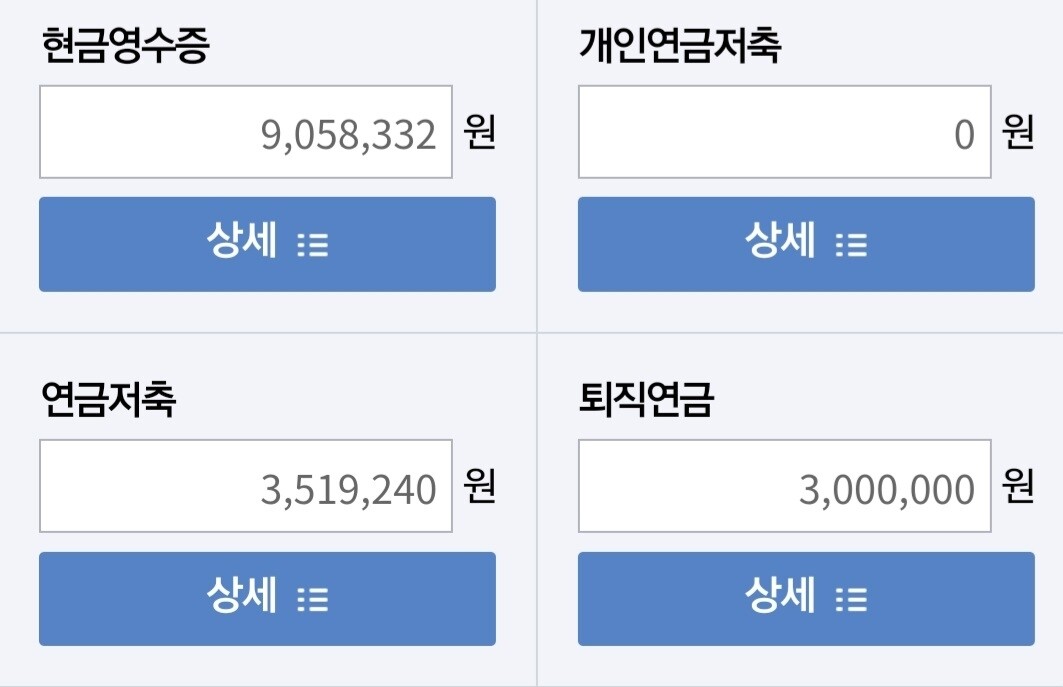
Just as important as diligently saving money is minimizing taxes when you withdraw funds after retirement, which is a key to preventing retirement bankruptcy. Many people join pension plans solely for the tax deduction benefits but later worry about facing a tax bomb when they actually start receiving their pensions, leading to misunderstandings about the system. To help stabilize retirement life, the government classifies funds from pension savings and IRPs as private pension income and applies a very low tax rate of only 3.3% to 5.5%.
However, to fully enjoy this low-rate taxation benefit, there are strict annual receipt limits that must be observed, requiring special attention. If the total amount received in a year after retirement exceeds 15 million won, you face the inconvenience of having to choose between comprehensive income tax aggregation or separate taxation instead of the low-rate taxation. In reality, news reports often feature stories of retirees who, intending to cover rent and living expenses, withdrew large amounts only to find themselves in a higher tax bracket and suffering a net loss. Therefore, a meticulous withdrawal strategy is needed, such as spreading the receipt period to ensure the monthly amount does not exceed 1.25 million won or adjusting the timing of retirement.
To fully maintain the low-rate taxation benefit of 3.3% to 5.5%, your annual pension receipt amount after retirement must not exceed 15 million won.
4. The Risk of a Tax Bomb from Early Termination
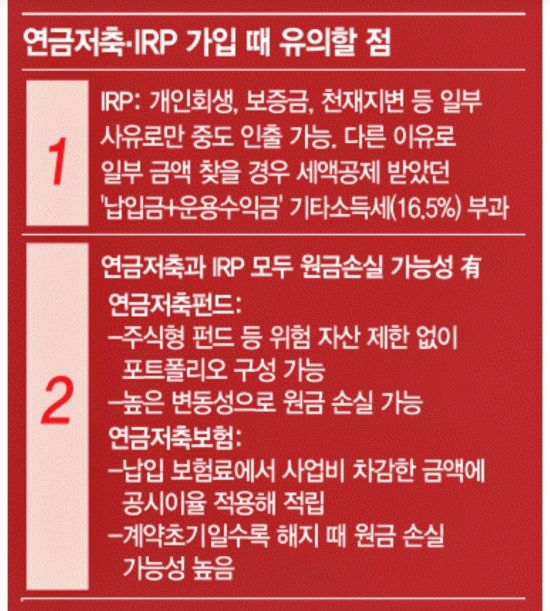
Terminating a personal pension savings account early due to sudden funding needs is the worst form of financial management, effectively eating away at the hard-earned money in your account. It is easy to be tempted to break into your pension account when deposit amounts suddenly rise or urgent business funds are needed, but this is an action to be avoided at all costs. Not only will you lose the tax deduction benefits you had been enjoying during year-end settlements, but a hefty 16.5% will be withheld as miscellaneous income tax on both the deductions and investment returns.
In reality, many employees who have diligently contributed for several years only to terminate their accounts for personal reasons end up in a situation where they must pay out of pocket after receiving a tax settlement notice, often leaving them in tears. If you urgently need a lump sum, it is much wiser to utilize the financial institution’s special loan or pension account collateral loan system rather than completely terminating the account. Alternatively, in cases of unavoidable circumstances recognized by tax law, such as natural disasters, bankruptcy, or long-term care, early withdrawal is possible at a lower tax rate, so you should first check the legal requirements. The safest principle is to open an account only with surplus funds that you can truly keep untouched for a long time, excluding living expenses and fixed costs.
In case of early termination, you must return all previously received tax deduction benefits as 16.5% miscellaneous income tax, so you should prioritize considering loans or withdrawal systems.
5. Wise Enrollment Methods Through Comprehensive Financial Product Comparison
With dozens of pension savings products available from various securities firms, banks, and insurance companies, it is easy to suffer from choice paralysis regarding where to open an account. If you sign up simply because there is a bank nearby, you may later regret it by discovering high fees or the inability to hold desired overseas stock products. In such cases, the most objective and accurate way to obtain information is to actively utilize the Financial Product Integrated Comparison Disclosure Platform operated by the Financial Services Commission. By accessing the official website, you can compare the return rates, fee rates, and past management performance of each financial institution at a glance, eliminating the need for extensive research.
For young professionals or employees new to investing, opening a pension savings fund account with a major securities firm known for low fees and a diverse product lineup is the trend. If you already have pension products with multiple financial institutions, you can switch to a lower-fee provider through the pension account transfer system without the hassle of creating a new one. Rather than relying on hearsay from friends or family, you should find the most favorable conditions for yourself based on comparison data from authoritative institutions. Setting up automatic transfers each month can also help cultivate the habit of forced saving, so it is best to configure it to be deducted immediately on payday.
You should carefully compare fees and return rates of each financial institution using the Financial Services Commission’s comparison platform to choose the securities firm or bank that best suits you.
6. The Power of Action: Securing Retirement Preparation and Tax Savings Simultaneously
Retirement preparation is one of the most urgent and realistic life challenges; if you keep putting it off, you will only grow older until it is too late to fix. With limited salaries, rising prices, and the daunting prospect of life after retirement, small tax-saving practices you can do right now make a big difference. If you start automatic transfers to your pension savings account, even with small amounts, with the mindset of saving a few cups of coffee a month, you will realize it is not as burdensome as you thought.
Even now, many smart employees are filling their accounts to catch two rabbits: maximizing year-end tax refunds and securing retirement funds. If you want to face a tax refund account that others envy when the next year-end settlement season arrives, turn on your smartphone right now and open a pension account. The magic of compound interest created by consistent contributions and wise asset management will become a sturdy shield for you after retirement. Do not let valuable saving opportunities slip away while you hesitate; take action today to design a prosperous future for yourself.
Instead of vague worries, starting automatic pension savings transfers now is the first step toward completing a prosperous and comfortable post-retirement life.
Frequently Asked Questions
=