The actual amount you receive can vary significantly, from several million to tens of millions of won, depending on how you choose to receive your retirement pension. If you opt for a lump sum simply because you need a large amount of cash immediately upon leaving your job, you may face a much larger tax burden than expected. Many people prefer to receive their retirement benefits all at once to spend on something they like or deposit in a savings account, but this is a significant disadvantage from a tax perspective. In reality, if you are over 55 years old and choose to transfer your retirement benefits to an Individual Retirement Pension (IRP) account to receive them as an annuity rather than a lump sum, you can receive a tax reduction of up to 40% on retirement income tax. In this article, we will detail the different methods of receiving retirement pensions that working professionals approaching retirement must know, along with practical strategies to significantly reduce taxes. Let’s carefully examine specific ways to protect your retirement living expenses through wise retirement asset management.
=
A Complete Guide to Receiving Your Retirement Pension: Tips for Saving Taxes by Choosing Annuities Over Lump Sums
1. The Two Types of Retirement Pensions and Basic Prerequisites for Receipt
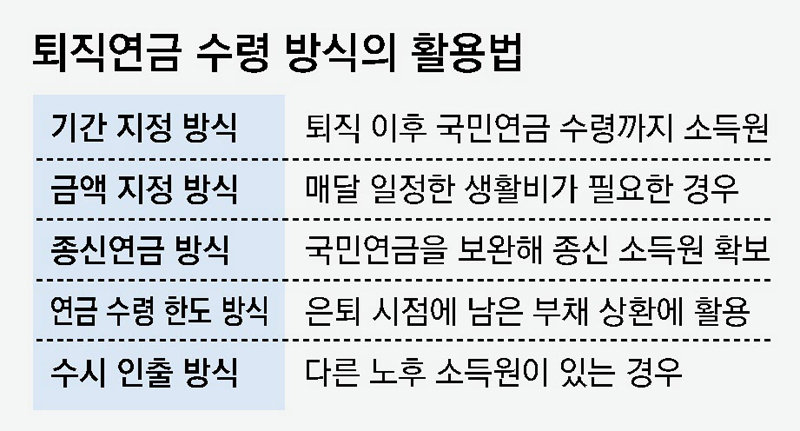
Retirement pensions are broadly divided into Defined Benefit (DB) and Defined Contribution (DC) types, and understanding the characteristics of each is essential for formulating a correct receipt strategy. In a DB plan, the company directly manages and is responsible for the pension assets, so the amount you receive is determined based on your average salary near retirement and your length of service. In contrast, in a DC plan, the company deposits a fixed amount into the employee’s account each year, and the employee directly selects and manages financial products. Both methods legally require you to be at least 55 years old to be eligible for receipt; prior to this, you generally cannot withdraw the funds. Upon reaching this age, the company must transfer your retirement benefits to an Individual Retirement Pension (IRP) account, initiating the formal receipt process. If you withdraw your retirement benefits as cash midway, retirement income tax will be fully applied, significantly reducing your valuable assets. Therefore, even if you change jobs or retire before age 55, transferring the funds to an IRP account is the first step toward tax savings.
Retirement pensions are divided into Defined Benefit and Defined Contribution types, with receipt via an Individual Retirement Pension account after age 55 being the standard.
2. The Decisive Difference Between Lump Sum and Annuity Receipt
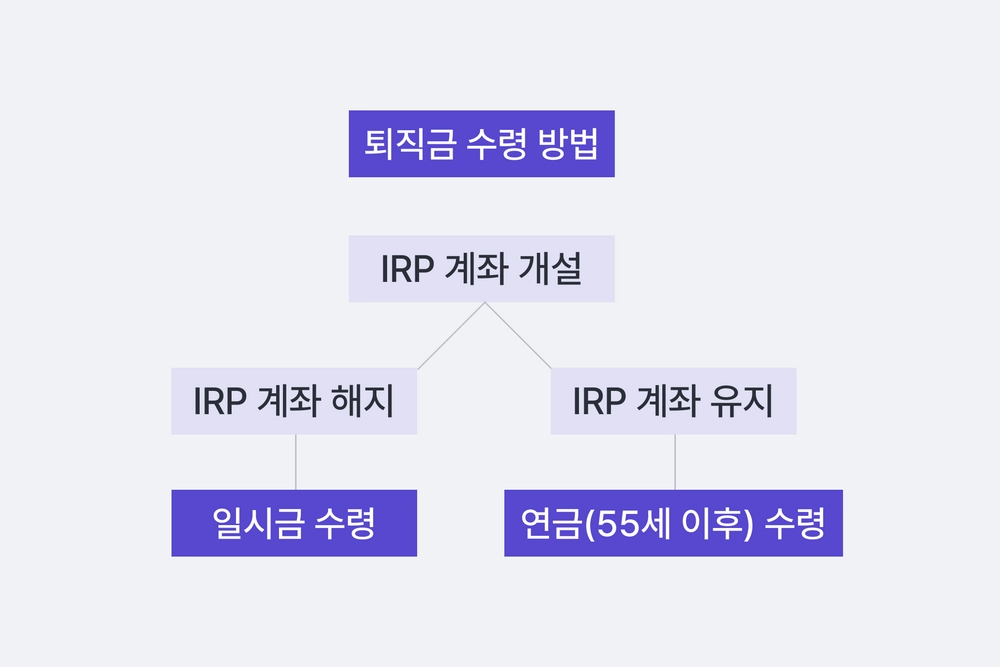
There is a vast difference in tax burden between receiving your retirement pension as a lump sum and receiving it as an annuity. If you receive 100 million won as a lump sum, retirement income tax calculated based on your length of service is applied all at once, resulting in a substantial amount going to taxes. However, if you keep this money in an IRP account and receive it as an annuity in fixed annual amounts, 30% of the withholding retirement income tax rate is reduced. If you receive it as an annuity for more than 10 years, the reduction rate can increase up to 40%, significantly lowering your tax burden. It is common to hear stories from retired seniors who chose to receive their benefits monthly over 10 years and saved millions of won in taxes compared to a lump sum. It is wise to actively utilize the institutional benefits that encourage spreading out large sums rather than withdrawing them all at once. Since you can use the money that would have gone to taxes as principal for retirement living expenses or asset growth, choosing annuity receipt is not optional but essential.
Choosing annuity receipt over a lump sum can reduce retirement income tax by up to 40%.
3. Procedures for Transferring and Terminating Individual Retirement Pension Accounts
To receive your retirement pension after leaving a company, you must open an Individual Retirement Pension (IRP) account in your name at a securities firm or bank. Recently, there has been a clear trend of funds moving from commercial banks or insurance companies to securities firms, which offer a wider range of product choices and more favorable fees. Once you have opened an account, you can submit a copy of the account to the relevant department at your company and request that your retirement benefits be transferred to that account. Legally, the company is obligated to deposit the retirement benefits into the employee’s IRP account within 14 days of the retirement date. After confirming the funds have arrived, you can proceed with the annuity commencement application by visiting a financial institution branch or using a smartphone app. If you wish to receive a lump sum, you can terminate the account to cash it out; if you prefer an annuity, you simply fill out an application form setting the payment frequency and duration. Although it may seem complex, anyone can easily handle it with just a few taps following the on-screen mobile instructions, so there is no need to worry.
After transferring your retirement benefits to an IRP account, you finalize your receipt method through a financial institution’s app or branch.
4. Annuity Income Tax and Separate Taxation Strategies to Avoid Tax Bombs
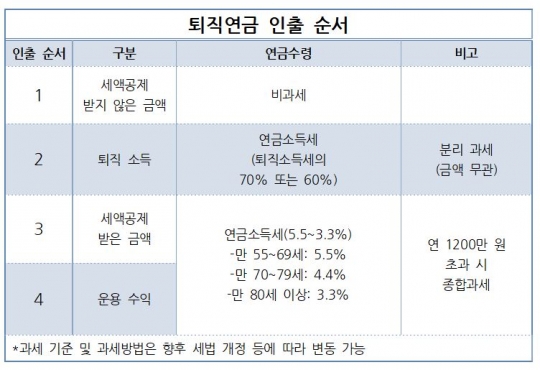
The tax applied when receiving an annuity differs from the general comprehensive income tax, with tax rates varying by age. For those aged 55 to under 70, an annuity income tax rate of 5% is applied. For those aged 70 to under 80, it drops to 4%. For those aged 80 and older, the lowest annuity income tax rate of 3% is applied, meaning the tax burden decreases further with age. If your total annual receipt from private pensions does not exceed 15 million won, you can opt for separate taxation at this lower rate, reducing the burden of tax filing. If your annual annuity receipt exceeds 15 million won, you must either file comprehensive income tax by combining it with other income or choose separate taxation. Therefore, the key to tax savings is setting a receipt period of 10 years or more to ensure your monthly post-retirement income is not excessive. Tax experts unanimously advise that keeping your annual annuity receipt within 15 million won is the most advantageous tax-saving method.
Low annuity income tax rates ranging from 3% to 5% apply depending on age, and receiving within 15 million won annually is advantageous.
5. Setting the Receipt Period and Tips for Tailored Retirement Planning
The length of your retirement pension receipt period should be carefully determined based on your individual asset situation and expected post-retirement living expenses. If you try to withdraw the full amount over a very short period due to a lack of immediate living expenses, you will not only reduce tax benefits but also deplete your assets quickly. Conversely, if the period is too long, your purchasing power may decline as it fails to keep up with inflation, so finding a balance is crucial. Many people set a period of 10 years or more to bridge the gap until they reach the age when they start receiving the National Pension. You must complete a so-called multi-tier pension system by organically combining the National Pension, retirement pension, and personal pension to create a steady monthly cash flow. From age 65 onwards, you should have a concrete plan to secure stable monthly living expenses by receiving both the National Pension and retirement pension simultaneously. To enjoy a dignified retirement without relying on your children, you should immediately check your expected pension receipt amount and fill any gaps.
Set a receipt period of 10 years or more in conjunction with the National Pension start date to build a multi-tier pension system.
6. Wise Securities Firm Selection and Outlook Amidst the Money Move Trend
Recently, there has been a strong trend in the financial market of funds moving from safe deposit-centric management to securities firm accounts that allow direct investment. In the past, many people simply left their retirement funds in banks or insurance companies, but in the low-interest-rate environment, more people are seeking to increase their returns. Transferring your retirement pension to a securities firm account allows you to invest directly in various Exchange-Traded Funds (ETFs) or bond products, helping to grow your retirement assets. However, as the proportion of investment products increases, so does the risk of principal loss, making a cautious portfolio tailored to your investment style essential. It is wise to secure a certain percentage of safe assets while investing a portion of your funds in high-quality bonds or representative index products. As aging progresses rapidly, retirement pension receipt methods and management strategies will become the most powerful weapon determining the quality of life for retirees. I encourage you to check the status of your retirement pension account now and prepare the most advantageous receipt method in advance with expert advice.
Align with the trend of moving funds to securities firm accounts to utilize diverse investment products while considering principal safety.
Frequently Asked Questions
=