
If you are looking for a stable life after retirement, utilizing pension insurance to design a long-term asset flow is far more advantageous than relying on standard savings or time deposits. Considering fixed monthly expenses and inflation, it is essential to have a mechanism that generates a consistent cash flow for a lifetime, rather than simply accumulating money. Compared to savings products offered by commercial banks, pension insurance offers various benefits, such as tax incentives and tax-exempt conditions, which is why many office workers are paying close attention to it. However, if you enroll without careful consideration and terminate the policy midway, you could incur significant losses. Therefore, you must carefully select a payment period that suits your financial situation. In this article, we will examine in detail the specific features of pension insurance, from its characteristics to its impact on health insurance premiums. If you have been interested in preparing for your retirement, you will likely find today’s content very helpful.
=
Essential Pros, Cons, Tax Savings, and Health Insurance Premium Criteria to Know Before Enrolling in Pension Insurance

1. Subtitle

Differences and Selection Criteria Between Pension Insurance and Standard Savings/Time Deposits
Standard savings and time deposits at commercial banks are suitable for accumulating a lump sum over a short period, but when inflation is taken into account, the actual effect on asset growth often falls short of expectations. On the other hand, pension insurance is a long-term financial product designed to require consistent payments for at least five years and to be received in the form of a pension after retirement. For example, if an office worker saving 500,000 KRW per month only invests in short-term deposits, they face the inconvenience of having interest income tax deducted at maturity and having to find a new product each time. However, pension insurance can offer tax-exempt benefits if certain conditions are met, giving it a significant advantage in terms of after-tax returns. Rather than blindly trusting products recommended at bank counters, it is essential to accurately calculate your income cycle and retirement timing.
Recently, short-term payment pension insurance products that boast high refund rates after a 10-year holding period have gained popularity, capturing the attention of many policyholders. These products are designed to allow for compound interest effects over the long term despite a relatively short payment period, making them ideal for those seeking practical value. However, since the payment period is short, the monthly insurance premium burden can be relatively high, so you must carefully check your salary account balance. If you are a self-employed individual or a freelancer with irregular income, it is wiser to choose a product that allows for flexible adjustment of payment amounts rather than forcing a short-term payment plan. By effectively utilizing additional payment or partial withdrawal features offered by financial institutions, you can flexibly respond to unexpected funding needs.
Pension insurance is advantageous over standard savings and time deposits in terms of long-term asset formation and tax benefits. It is important to set a payment period that matches your income cycle.
2. Subtitle
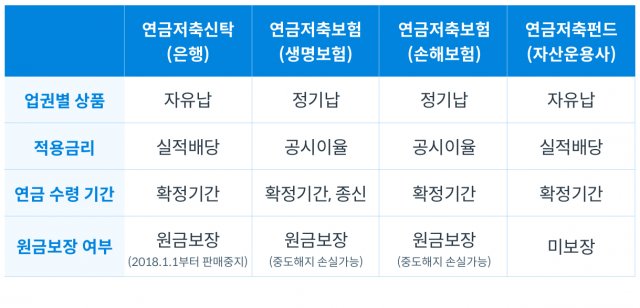
Analysis of Pros, Cons, and Precautions for Short-Term Payment Pension Insurance
The 10-year maturity short-term payment pension insurance, which has received significant attention in the financial market in recent years, is attracting policyholders with its fast refund rate. Unlike general pension products that only start to show their true value after more than 20 years of payments, these products have the advantage of allowing policyholders to recover their principal at a relatively early stage. In fact, it is not uncommon to find acquaintances who are using short-term payment products to efficiently secure their retirement funds as retirement approaches. However, one must never forget that behind the glamorous advertising of high refund rates lies the significant risk of principal loss if the policy is terminated midway.
If you need money urgently within one or two years of enrollment and terminate the policy, you may suffer a disaster where you cannot even recover half of the money you have paid. Therefore, short-term payment pension insurance should only be purchased with surplus funds that you do not need immediately, and it should never be treated like an emergency fund account. Rather than blindly trusting the insurance agent, you need to make the effort to carefully examine the surrender value table listed in the product description. In particular, the amount of pension you will receive in the future can vary significantly depending on whether the product is interest-rate linked or fixed-rate, so you must scrutinize the contract terms. Instead of being swayed by recommendations from others, the safest financial strategy is to maintain the contract within the limits of your financial capacity.
While short-term payment pension insurance is attractive due to its fast refund rate and tax benefits, it can result in significant losses if terminated midway, so it should only be purchased with surplus funds.
3. Subtitle
The Correlation Between Pension Income and the Criteria for Losing Dependent Status in Health Insurance
One of the biggest fears for office workers approaching retirement is the sudden arrival of a health insurance premium notice like a bomb after transitioning to a regional subscriber status upon retirement. While working, the burden was light because the company covered half, but after retirement, premiums are calculated by meticulously summing up not only owned real estate and vehicles but also various sources of income. In particular, to maintain dependent status in health insurance, your total annual income must not exceed a certain standard, which includes both public and private pensions. If your private pension income exceeds a certain annual amount, you may lose your dependent status without realizing it, forcing you to pay regional health insurance premiums directly.
In reality, Mr. Kim, who was receiving a decent monthly cash flow by combining the National Pension and personal pensions after retirement, was shocked to lose his health insurance dependent status. Although he could cover his living expenses with the pension, the unexpected monthly health insurance expenses completely disrupted his overall retirement budget plan. Therefore, as the time to enroll in and receive pension insurance approaches, it is wise to appropriately distribute the received amount by year or carefully calculate the tax-exempt limits. Since pension products purchased for tax savings can turn into a boomerang in the form of a health insurance premium burden, seeking expert advice is also a good method. The key to preparing for retirement is not just receiving a large amount, but smartly receiving it by comprehensively considering taxes and quasi-taxes.
The amount received from pension insurance affects the criteria for losing health insurance dependent status. You should calculate your post-retirement total income in advance and adjust the timing of receipt accordingly.
4. Subtitle
Pension Insurance Trends in the Financial Sector and How to Utilize Bancassurance
Currently, financial platforms such as commercial banks and securities firms are actively introducing various forms of pension insurance and savings products to cope with the declining trend in deposit interest rates. Through the bancassurance channel at bank counters, you can easily access pension insurance from major insurance companies like Shinhan Life and Hanwha Life. In the past, sales were dominated by whole life insurance, but recently, there is a trend of customers directly comparing and enrolling in protection or lifestyle-oriented products through mobile non-face-to-face channels. For example, services that calculate expected pension amounts in real-time when you input your retirement timing via a smartphone app have become widespread, making them easily accessible to everyone.
The activation of such non-face-to-face channels offers the enormous advantage of reducing fee burdens for customers and allowing them to directly compare the most favorable conditions for themselves. However, due to the nature of bancassurance products, cases where customers enroll based solely on the bank employee’s explanation and later face friction with the insurance company do occur, so caution is needed. It is safer to carefully read the terms to check whether the product you are enrolling in is covered by depositor protection or if it is a variable product with the possibility of principal loss. Additionally, by effectively utilizing special sale products or event interest rates offered by the affiliates of each financial institution, you can secure a slightly higher return rate than others. To find the pension insurance that best suits you in a changing financial environment, consistent information seeking and wise comparative analysis are essential.
You can easily compare various pension insurance products through mobile non-face-to-face channels and bancassurance. You must always check the terms and conditions and whether the product is covered by depositor protection.
5. Subtitle
Asset Allocation Strategies of Pension Funds and Their Similarity to Personal Pensions
Large domestic and international pension funds are increasingly emphasizing the importance of asset allocation amidst the rapid spread of artificial intelligence technology and the rapidly changing global market environment. Mutual pension insurance operators in Finland are employing an ironic investment strategy of using artificial intelligence itself to analyze the pros and cons of advanced technology. Just as these institutional investors managing huge sums of money insist on diversifying their investments across dozens of assets to mitigate risk rather than putting all their eggs in one basket, ordinary individuals also need to emulate this asset allocation philosophy of large institutions when preparing for retirement through pension insurance.
Rather than pouring all your assets into a single pension insurance product, you should use the public National Pension as the basic framework and appropriately combine tax-deductible pension savings with tax-exempt pension insurance. For example, the most ideal portfolio would be one where you receive annual tax refunds through products with large income deduction benefits while simultaneously holding a pension insurance product that qualifies for tax exemption if held for more than 10 years. This allows you to build your own unshakable pension shield even in chaotic economic situations where the stock market crashes or interest rates fluctuate sharply. The reason experts constantly preach diversification is precisely to protect valuable assets from the unpredictable risks of the future. The more you handle the heavy basket of retirement funds, the more you must exercise the wisdom of dividing the eggs into multiple baskets to ensure a regret-free retirement.
Just like the diversification strategy of large pension funds, individuals should appropriately combine pension insurance and pension savings to lower risk and increase stability.
6. Subtitle
Strategies and Action Plans for Utilizing Pension Insurance for a Successful Retirement
So far, we have examined the key features of pension insurance, the pros and cons of short-term payment products, and their impact on health insurance premiums from multiple angles. The more you delay preparing for retirement, the more the pension amount at the time of enrollment will fall short, so it is wisest to start immediately, even with a small amount. The true beginning of wealth management is steadily accumulating surplus funds created by saving the cost of a few cups of coffee each month or canceling unnecessary subscription services into a pension insurance account. Rather than being swept away by rumors that people around you made big money with short-term products, you must accurately grasp your income and expenditure patterns and walk the path steadily.
The pace of aging will accelerate in the future, and it will become increasingly difficult to maintain a comfortable retirement life relying solely on the public pension guaranteed by the state. Therefore, it is essential for individuals to proactively arrange tax-exempt pension insurance or various private pension mechanisms to prepare for future uncertainties. Taking this article as a starting point, turn on your smartphone and check the payment periods and expected receipt amounts of the insurance policies you currently hold with a light heart. Small interests and actions will accumulate to become the most powerful weapon protecting your solid and peaceful retirement in ten or twenty years. Do not hesitate any longer; check the pension insurance plan that suits you right now and take the first step.
Retirement preparation should not be delayed; start now. The key to success is checking a pension insurance plan that matches your income and maintaining it consistently.
Frequently Asked Questions
=