
With the changes to the Four Major Insurance premium rates in 2026, the amount deducted from your first paycheck or monthly salary differs from before, causing confusion among many employees. Everyone has likely experienced the shock of receiving their first pay stub as a new graduate and finding the take-home pay significantly lower than expected. Since taxes, National Pension, Health Insurance, and Employment Insurance are withheld at source, split roughly in half between the employee and employer, it is crucial to understand the exact deduction rates. In this article, we will break down the latest 2026 Four Major Insurance rates and the specific methods for calculating deductions in an easy-to-understand manner. We will carefully examine exactly where the money deducted from your monthly salary goes and how it is calculated. We will also look at the actual calculation structure so that those newly responsible for payroll management or HR duties can understand it easily.
=
A Complete Guide to the 2026 Four Major Insurance Rate Changes: How to Calculate Your Pay Stub

1. At-a-Glance View of the 2026 Four Major Insurance Rate Changes
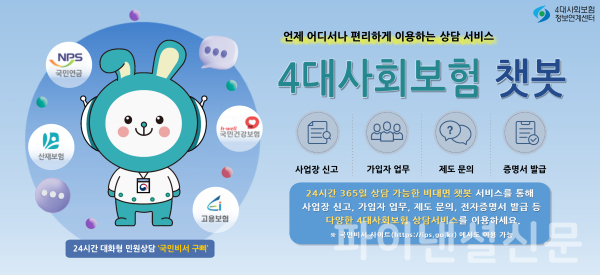
Starting this year, the National Pension premium rate has increased from the previous 9% to 9.5%, resulting in a slight change in the monthly burden for employees. This rate adjustment was made through social consensus to strengthen old-age income security, and consequently, the deduction amount for workplace subscribers has also increased. The Health Insurance premium rate has also been set at a total of 7.19%, reflecting the expansion of medical coverage and the maintenance of fiscal soundness. The Long-Term Care Insurance premium is levied at a certain ratio linked to the Health Insurance premium amount, so it is necessary to understand the overall deduction system. In the case of Employment Insurance, the rate related to unemployment benefits is maintained, with employees and employers sharing the burden at specified rates. It is essential to accurately grasp these figures, which are fine-tuned every year, to understand and accept the changes in your pay stub without misunderstanding.
The basic structure where employees and companies share the burden equally remains the same as in previous years. For the National Pension, out of the total 9.5%, employees and employers each pay 4.75%. For Health Insurance, out of the total 7.19%, employees and companies each bear 3.595%, which is deducted from the salary. For Employment Insurance, the premium for unemployment benefits is 1.8% in total, with the employee responsible for 0.9%. Since these rates are standard criteria applied to all employees, it is advisable to compare them with your own pay stub. This is the most reliable way to verify for yourself whether the amount deducted monthly is calculated correctly.
The 2026 National Pension premium rate has increased to 9.5%, with employees and employers each bearing half (4.75%).
2. How to Calculate Personal Burden for National Pension and Health Insurance
The items that take up the largest portion of a pay stub are undoubtedly the National Pension and Health Insurance premiums. For example, if an employee has a monthly gross salary of 3,000,000 KRW, applying the total National Pension rate of 9.5% results in a total premium of 199,500 KRW. The company pays half of this amount, and the employee has the remaining half, 99,750 KRW, deducted from their salary. Health Insurance premiums are calculated similarly: the monthly gross salary is multiplied by the Health Insurance rate of 7.19%, and the employee bears half of that value. When the Long-Term Care Insurance premium, which is calculated based on the Health Insurance premium amount, is added, the total amount deducted from your bank account each month is determined. If you understand this calculation structure in advance, you can accurately predict the amount that will appear on your next month’s pay stub after a salary increase due to a transfer or promotion.
In months where additional allowances or bonuses are paid, taxes and insurance premiums may be deducted significantly more than usual, which can be startling. This is a natural phenomenon that occurs because the monthly gross salary for that period temporarily increases, leading to higher Four Major Insurance levies. In particular, if hospitals or general companies do not accurately distinguish between tax-exempt and taxable income when reporting salaries, they may end up paying more insurance premiums than necessary. Maximizing the use of tax-exempt items such as meal allowances or self-driving assistance can reduce the pre-tax amount, which ultimately helps alleviate the Four Major Insurance burden. Therefore, HR or accounting staff should frequently check and verify relevant tax laws and insurance premium calculation criteria. Employees also need to develop the habit of carefully examining which parts of their salary are taxable and which are tax-exempt.
National Pension and Health Insurance premiums are calculated based on the monthly gross salary, with employees and companies paying half each.
3. Understanding the Differences Between Employment Insurance and Workers’ Compensation Insurance

Employment Insurance is a social safety net that supports re-employment when a worker loses their job and helps maintain their livelihood during the job-seeking period. The unemployment benefit premium rate borne by the employee is 0.9%, while the costs for employment stabilization and vocational capacity development projects are operated on the principle that the employer bears the full burden. On the other hand, Workers’ Compensation Insurance is a system for receiving compensation when injured at work, and employees do not bear any burden; the employer pays the full amount. This is why many new graduates wonder why there is no Workers’ Compensation Insurance item or personal deduction listed on their pay stub. Since Workers’ Compensation Insurance is entirely borne by the company based on risk rates, it is natural that it is not deducted from the employee’s salary. Thus, depending on the nature of each insurance and its primary funding method, it is clearly distinguished whose pocket the money comes from.
From the perspective of an employer, changes in Employment Insurance and Workers’ Compensation Insurance rates are a very sensitive issue directly linked to labor cost expenditures. From the moment an employee is hired, the employer must faithfully pay the prescribed premiums monthly through the Korea Workers’ Compensation & Welfare Service and the National Health Insurance Corporation. If a company fails to pay electricity bills or Four Major Insurance premiums on time due to poor management and becomes delinquent, it may face serious legal sanctions. In fact, cases where some companies or hospitals have been subject to on-site inspections or administrative penalties due to long-term delinquency of Four Major Insurance premiums caused by financial difficulties are often reported. Employees also need to occasionally check whether the insurance premiums deducted from their salary each month are actually being paid to the public institutions by their company. Since there are occasional cases where a company only withholds the source tax but neglects payment, it is safe to use the inquiry service for individual subscribers.
Employment Insurance is shared between employees and employers, while Workers’ Compensation Insurance is fully borne by the employer; delinquency can lead to serious problems.
4. Complete Analysis of Deductions Based on Your First Pay Stub
Many young people feel a sense of frustration when they hold their first pay stub after starting a job, seeing the difference between the pre-tax amount and the take-home pay. For example, if you sign a contract for an annual salary of 30,000,000 KRW and receive a basic monthly salary of 2,500,000 KRW, the amount deposited into your account could be around 2,000,000 KRW. This is because Four Major Insurance premiums such as National Pension, Health Insurance, and Employment Insurance are deducted in a lump sum, along with income tax and local income tax withheld at source. Looking at each item on the pay stub, the National Pension is a mandatory savings for old age, and Health Insurance is an essential cost to prepare for unexpected illnesses. Since Employment Insurance premiums serve as insurance against potential unemployment, they can ultimately be seen as a safety device for your future self. If you properly understand the meaning of these deduction items, you can view them positively as an investment in the future rather than simply feeling that money is being taken from you.
Carefully examining your pay stub is a basic process of protecting your own working conditions, going beyond just confirming that money has been deducted. Occasionally, companies may delay Four Major Insurance enrollment or arbitrarily apply tax deduction methods on the grounds of part-time work or probation periods. Under the Labor Standards Act, any worker who works a certain number of hours or more must be enrolled in the Four Major Insurances, regardless of whether they are a regular or contract employee. If a company refuses Four Major Insurance enrollment under the pretext of employment type or arbitrarily deducts a 3.3% business income tax, you may suffer significant disadvantages later. The practice of forcing nurses or office staff in hospitals or general companies into 3.3% contracts carries a high risk of violating labor laws, so caution is needed. The wisdom of a savvy employee lies in the effort to directly verify whether the deduction details printed on your pay stub are calculated accurately according to statutory rates.
The deduction details on your first pay stub are based on statutory rates and serve as a safety device for the future and a means to verify your legitimate rights.
5. Precautions for Withholding Tax Reporting and Four Major Insurance Administration
For those running a company or handling HR and general affairs duties, monthly withholding tax reporting and Four Major Insurance settlement are among the most difficult tasks. Withholding tax must be reported to the competent tax office and premiums paid to the public institutions by the 10th of the month following the month in which salaries were paid. If you omit employee hires, resignations, or changes in total compensation, you may face a “bomb” of year-end Health Insurance settlement or retroactive National Pension payments later. In particular, for new hires, if the history from their previous workplace or the exact monthly gross salary is not reflected, significant errors will occur in the premium assessment process. The part that confuses new accounting staff the most is why withholding tax reporting is necessary even though income tax has already been deducted. Withholding tax reporting is a legal procedure where the company collects and pays taxes on behalf of the state, so it must be completed accurately within the deadline.
In the field of HR and labor management, the importance of Four Major Insurance outsourcing and payroll management is growing daily, making consultation with experts possessing specialized knowledge essential. Not only are labor union-related duties and collective bargaining important, but issues of wage arrears and Four Major Insurance delinquency are critical risks that can determine the survival of a company. In fact, during the process of hospital sales or deteriorating management, issues of Four Major Insurance and wage arrears have surfaced to become subjects of inquiries by local governments or members of parliament. To detect and prevent these danger signals in advance, the best approach is to manage payroll ledgers and Four Major Insurance payment records transparently on a regular basis. Actively utilizing the online computer systems provided by the Korea Workers’ Compensation & Welfare Service and the National Health Insurance Corporation allows you to check unpaid amounts or errors in real time. Practitioners must frequently update themselves on legal amendments to thoroughly prepare so that neither the company nor the employees suffer harm.
Withholding tax reporting and Four Major Insurance management require strict adherence to deadlines; delinquency or omission can lead to serious administrative and legal risks.
6. Outlook and Preparation for the Four Major Insurance System After 2026
Considering future changes in our country’s population structure and the pace of aging, the Four Major Insurance rates are likely to face additional adjustment pressure. Discussions on increasing premium rates to delay the depletion of the National Pension fund and alleviate the burden on future generations are expected to continue. Employees need to pay attention to the trend of slightly rising premium rates each year and revise their personal asset management strategies. Rather than simply complaining that more money is being deducted from their salary, they should find ways to maximize the benefits of the social security system provided by the state. For example, knowing in advance about vocational training subsidies through Employment Insurance or the eligibility requirements for unemployment benefits can be a great help in times of crisis. Not only salary earners but also practitioners responsible for HR and labor management must check their systems to keep up with upcoming institutional reforms.
In conclusion, the Four Major Insurances are not simply mandatory deduction items that eat into your precious salary, but a system that serves as a sturdy shield for our lives. The habit of carefully checking the deduction amount printed on your monthly pay stub is the starting point for protecting your rights and maintaining a healthy economic life. Based on the changed 2026 rate criteria, please calculate your actual income accurately and prepare for the upcoming year-end tax settlement and insurance premium settlement. Employers and HR managers must also manage labor costs transparently to comply with statutory rates and prevent delinquency. I hope that through this time, your curiosity about the Four Major Insurances has been completely resolved, and that this serves as an opportunity to look at your next pay stub once more. We will continue to provide easy and accurate information on complex tax and labor common sense, so please keep your interest alive.
In preparation for the possibility of further premium rate increases due to aging, both individuals and companies need systematic financial management.
Frequently Asked Questions
=