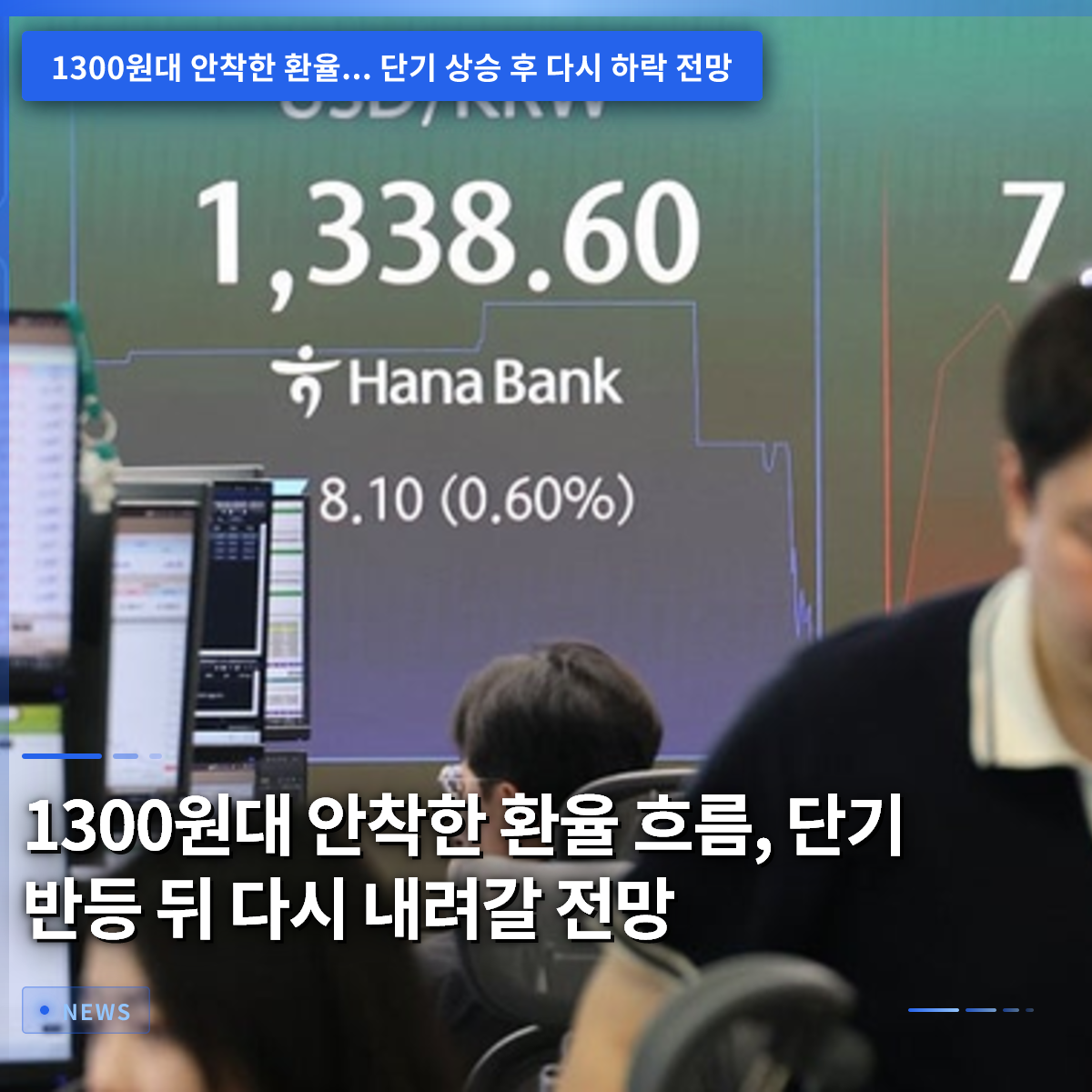
With the won-dollar exchange rate recently dropping to the mid-1,300 won range, attention is turning to future economic trends. Compared to the period when the rate surged well above 1,500 won, the current situation appears significantly more stable, though opinions among experts remain divided regarding its future direction. Exchange rate movements are a key indicator that significantly impacts various aspects of our lives, from office workers’ overseas direct purchases to corporate trade performance. It is easy to find people around us worrying about when to buy dollars or when to plan overseas trips. In this article, we will examine the background of the recent exchange rate decline, why it may rise again in the short term, and why it is ultimately expected to fall again. Understanding the principles behind exchange rate fluctuations will help you respond more wisely to upcoming economic changes.
=
KRW/USD Exchange Rate Settles in the 1,300 Won Range: Short-Term Rebound Expected Before a Further Decline
1. Recent KRW/USD Exchange Rate Movements and Current Position
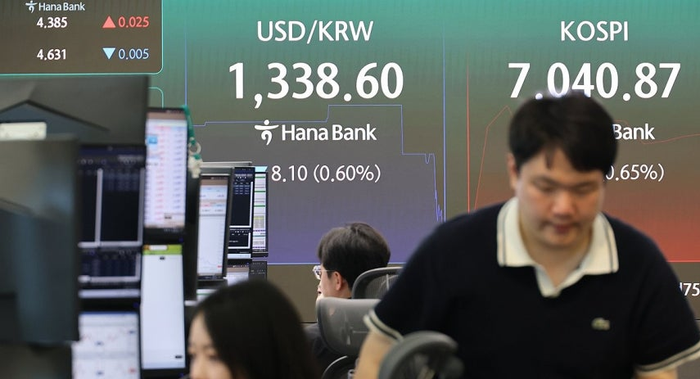
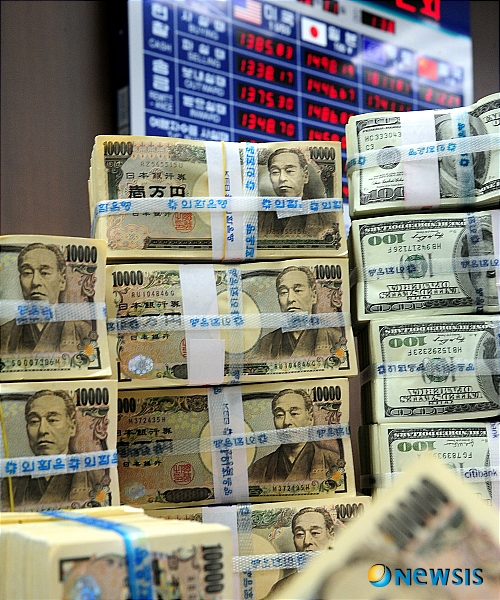
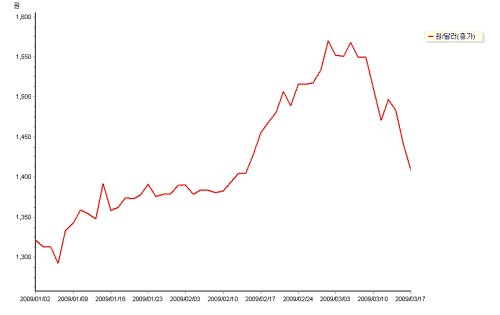
Based on the daily closing price, the won-dollar exchange rate is fluctuating between 1,350 and 1,360 won, showing a relatively stable trend. It is still vividly remembered that just a few months ago, the rate significantly exceeded the 1,500 won mark, causing nationwide tension. At that time, soaring import prices and increased raw material costs plunged many businesses and households into distress. However, the exchange rate subsequently began to decline at a fairly rapid pace, even dropping to 1,334 won in early this month. Of course, during this process, it also exhibited roller-coaster-like movements, rebounding to the 1,380 won range at times. Currently, it has firmly settled in the mid-1,350 won range, giving market participants a breather. The atmosphere at currency exchange counters and bank windows has also become noticeably lighter as citizens visit less frequently amidst continuous exchange rate volatility. For office workers who check the exchange rate window every morning or parents with children studying abroad, the mid-1,300 won figure provides a sense of psychological stability. Nevertheless, the exchange rate is like a living organism that can fluctuate at any time due to external shocks. This is precisely why we must carefully consider whether the current settlement in the 1,300 won range represents permanent peace or merely a brief calm before a massive storm.
The KRW/USD exchange rate has fallen from its peak several months ago and is currently settled in the mid-1,350 to 1,360 won range.
2. Factors Stimulating Short-Term Increases
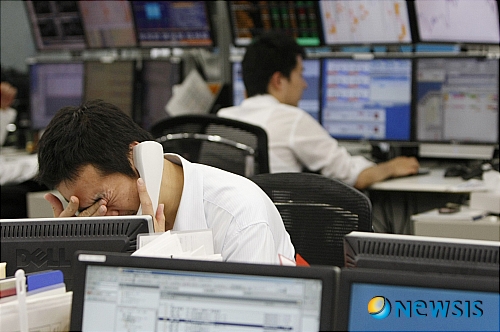
Although the exchange rate is currently pausing in the mid-1,300 won range, there is a sufficient possibility that it could bounce back upward in the short term. The first area to watch closely is the U.S. monetary policy and the trend of interest rate hikes. The U.S. Federal Reserve recently raised its benchmark interest rate by 0.25 percentage points, tightening the reins of monetary policy again. As the benchmark rate, which had been on hold for a long time, begins to rise, the strong dollar phenomenon is re-emerging in the market. Investors, anxious about the possibility of further rate hikes, are holding onto the dollar as a safe asset, which acts as pressure pushing down the value of the won. Additionally, the relentless rise in international oil prices is serving as a powerful trigger pushing the exchange rate upward. Given that South Korea relies entirely on imports for its energy, rising oil prices lead to a surge in dollar demand, which in turn fuels exchange rate increases due to concerns over trade deficits. Geopolitical risks surrounding the Middle East are also providing a solid support for the strong dollar. Unstable news from the Middle East dampens global investor sentiment, ultimately causing funds to flow into the dollar, which is considered the safest currency. In segments where the exchange rate has dropped sharply, pending demand to buy the now-cheaper dollar overlaps, further amplifying short-term upward pressure.
Potential further U.S. interest rate hikes, rising international oil prices, and uncertainty from the Middle East are factors that could push the exchange rate back up in the short term.
3. The Reversal Driven by Strong Exports and Trade Surplus

Despite short-term upward pressure, the primary reason experts predict a medium-to-long-term decline in the exchange rate is the robust export performance. Recent South Korean export results show a surprisingly steep growth trend, serving as a sturdy pillar for the economy. According to the Ministry of Trade, Industry and Energy, recent monthly export values have significantly exceeded $90 billion, showing an explosive growth rate of nearly 70% compared to the same period last year. This is an incredible achievement, ranking among the highest in history on a monthly basis, and fully demonstrates the resilience of South Korea’s manufacturing sector. With exports performing so well, the amount of dollars flowing into the country naturally increases enormously. The trade balance has also continued a streak of massive surpluses for three consecutive months, firmly supporting market expectations for a lower exchange rate. This is because companies repeatedly sell the substantial dollars earned from exports in the domestic market to secure won. When the supply of dollars in the market is abundant, the value of the dollar naturally falls, and the value of the won rises relatively. Thanks to this solid supply and demand structure, it is highly likely that the exchange rate will naturally turn downward once short-term shocks pass.
Record-high trade surpluses and strong exports centered on semiconductors are providing abundant dollar supply to the market, supporting a stronger won.
4. Medium-to-Long-Term Exchange Rate Outlook and Economic Impacts

If the trend of strong exports and trade surpluses continues, analysis gaining traction suggests that the exchange rate will gradually decline to the 1,200 to low 1,300 won range. This is supported by expectations that the domestic economic growth rate will maintain a solid trend around 3%, and that the cycle of key industries, including semiconductors, will enter an upward phase. If a country’s economic strength is robust and its ability to earn dollars is excellent, it will eventually return to its original value even if short-term negative factors emerge from outside. If the exchange rate drops to the 1,200 won range, import prices will stabilize, reducing the burden on consumer prices, and the real purchasing power of domestic consumers will increase significantly. However, there are not a few hurdles market participants must overcome to reach this medium-to-long-term downward trend. The exchange rate can jump in unexpected directions at any time due to political events ahead of the U.S. presidential election or subtle changes in the global supply chain. Therefore, companies must thoroughly manage risks against exchange rate volatility, and individual investors should also avoid taking excessive positions based solely on one-way predictions. While the long-term stabilization of the exchange rate is a positive signal for the overall economy, wisdom is needed to calmly handle the short-term fluctuations that may occur in the process.
In the medium to long term, the exchange rate is expected to fall to the 1,200 won range, driven by solid economic growth and current account surpluses.
5. A Wise Approach to Dealing with Exchange Rate Fluctuations
The process of the exchange rate rising and falling is an important signal that demands direct changes in our daily lives and asset management strategies. For example, if you have sent a child to study abroad or are planning an overseas trip soon, it is wise to buy dollars in installments as the rate drops to the mid-1,300 won range. Given that the outlook for a short-term rise in the exchange rate is dominant, a strategy of approaching it in stages rather than exchanging all funds at once is the shortcut to reducing risk. Conversely, stock investors in export-centric companies need to carefully examine how a falling exchange rate impacts corporate cost reduction or profitability. Since economic agents have different perspectives and interests regarding the exchange rate, one should not rely solely on unconditional predictions. The exchange rate is not determined by a single factor but is decided by the complex interplay of numerous variables, such as U.S. interest rates, Middle East political situations, and domestic export performance. It is important to adopt an attitude of calmly analyzing the principles behind why the exchange rate is moving in a certain way, rather than being swayed only by news headlines. If you cultivate the eye to read exchange rate trends, you will possess a powerful weapon to protect your assets and capture better opportunities even in the rapidly changing financial market.
You should establish strategies such as installment currency exchange or tailored investment plans by considering both the short-term volatility and medium-to-long-term direction of the exchange rate.
6. Key Points for Preparing for the Future Market
In conclusion, the KRW/USD exchange rate, currently settled in the mid-1,300 won range, is highly likely to show a mixed trend with upward and downward pressures evenly matched for the time being. The possibility of further U.S. interest rate hikes and the unstable Middle East situation will pull the exchange rate back up in the short term, but this force is unlikely to last forever. This is because the robust export performance of domestic companies and the massive, record-breaking trade surplus provide a strong fundamental support. As time passes, the market’s focus will shift from short-term negative factors back to solid economic indicators, which is expected to naturally lead to a downward stabilization of the exchange rate. The ability to maintain composure and read the big picture of the market is more important than ever during periods of high volatility. If you grasp the overall flow of the exchange rate with an eye for the forest, you can remain calm and composed without being anxious about short-term fluctuations. Please calmly observe what gifts the exchange rate will bring to our economy amid the global economic changes that will continue through the end of this year and into next year. We hope that the two-sided nature of the exchange rate examined today serves as an opportunity to re-examine your asset management plans.
Since short-term rising factors and long-term falling factors coexist, one should monitor economic trends with a calm perspective and prepare accordingly.
Frequently Asked Questions
=