The inheritance tax exemption limit is not a single fixed number but is determined by aggregating various deduction systems. Consequently, if you have a spouse and children, you often do not have to pay taxes on assets up to 1 billion won. Many people worry about facing a tax bomb due to the house and assets left behind by their parents. However, if you understand the system accurately, you can legally reduce your tax burden significantly. For example, even an ordinary family owning an apartment in Seoul can comfortably utilize the tax-exempt range if the spouse and children inherit together. You can greatly benefit from using the simulation program provided by the National Tax Service’s Hometax, which allows you to estimate the expected tax amount and deductions in advance. In this article, we will closely examine the hidden criteria of the inheritance tax exemption limit, specific calculation methods, and wise preparation strategies. Let’s uncover the secrets of inheritance tax calculations, which may seem complex, and learn how to protect your family’s valuable assets.
=
Inheritance Tax Exemption Limit: A Complete Guide to the Basic 1 Billion Won Calculation and Tax-Saving Strategies
1. Basic Concepts of the Inheritance Tax Exemption Limit and the Truth About 1 Billion Won
While the term “inheritance tax exemption limit” is commonly used in daily life, the precise legal term refers to the limit amount for inheritance deductions. Many people mistakenly believe that they must pay taxes if their parents’ assets exceed 1 billion won, but this can only be accurately understood by examining the structure of the basic deduction, the lump-sum deduction, and the spouse deduction. If you have children, you can generally receive deductions by combining the 200 million won basic deduction with other personal deductions, or by choosing the 500 million won lump-sum deduction. Additionally, if the spouse is alive, a minimum of 500 million won is further recognized as a spouse inheritance deduction, naturally completing the 1 billion won benchmark. However, if there are only children and no spouse, only the 500 million won lump-sum deduction applies, significantly reducing the exemption limit, so special caution is required. It is essential to remember that the exemption limit varies drastically depending on the survival status of family members and their statutory inheritance shares.
In reality, Mr. Kim, who lives in Seoul, lost sleep worrying about taxes after inheriting an apartment worth 120 million won left by his late father, jointly with his mother. He had heard from people around him that taxes are mandatory for assets over 1 billion won, leading him to believe he would have to pay a massive tax bill to the National Tax Service. However, with the help of a tax expert, he discovered that by applying both the spouse deduction and the lump-sum deduction, the actual inheritance tax he needed to pay was negligible. As shown here, carefully checking the deduction items applicable to your specific family situation allows you to inherit a much larger amount tax-free than you might think. Rather than blindly fearing what others say, it is most important to calculate the exact deduction amount applicable to your family.
The inheritance tax exemption limit is not a fixed amount but varies depending on whether you have a spouse and children, generally providing a deduction benefit of around 1 billion won.
2. Hidden Traps of the Spouse Inheritance Deduction and How to Utilize Up to 3 Billion Won
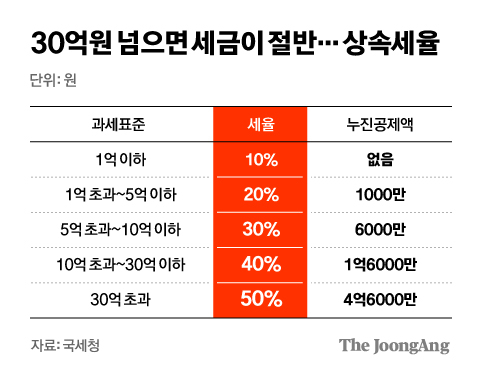
The spouse inheritance deduction is a powerful tax-saving tool that allows for a deduction of up to 3 billion won on the actual value of inherited assets, within the limit of the statutory inheritance share. If the spouse does not inherit a single won and the children take all the assets, the spouse deduction becomes zero, and the exemption limit drops sharply to 500 million won. Therefore, to achieve both the stability of the surviving spouse’s retirement life and tax savings, it is essential to divide a certain percentage or more of the assets in the spouse’s name. As seen in recent cases from the Daegu National Tax Service, you may face massive additional tax assessments if you mistakenly apply the statutory inheritance share when calculating the spouse deduction limit or omit required documents. If the spouse does not actually receive any assets or is merely listed formally, it can become a fatal issue during a National Tax Service audit.
Mr. Park, who lives in a provincial area, tried to simplify the tax filing process when his mother passed away, even though his father was still alive. He transferred all the assets solely into the names of his children. Later, a large-scale tax audit by the National Tax Service revealed that he had not received any spouse deduction, resulting in a tax bill that included hundreds of millions of won in additional taxes. The spouse deduction is only valid if there is an actual inheritance asset division agreement and if the tax documents are accurately submitted to the tax office within the filing deadline. A single overlooked document can cause assets saved over years to disappear into taxes, so it is safe to have an expert review the process. Never forget that simply allocating an appropriate share to the spouse can dramatically reduce the inheritance tax burden.
The spouse inheritance deduction is only recognized if assets are actually inherited, allowing for deductions of up to 3 billion won to significantly save on taxes.
3. Everything About Aggregating Prior Gift Asset Values and the 10-Year Rule
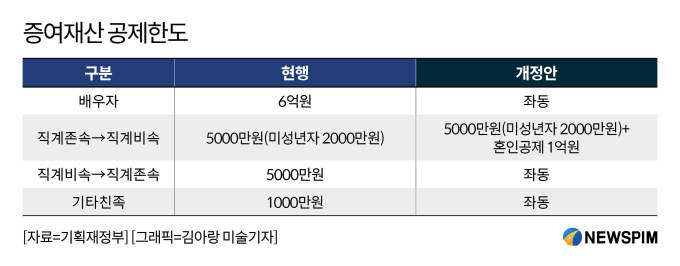
When calculating the inheritance tax exemption limit, if the decedent gave assets to the heirs before their death, these must be aggregated for calculation. Under current tax law, the value of assets gifted to heirs within 10 years prior to death is fully added to the inheritance tax taxable amount, making careful verification essential. Giving small amounts of holiday money or living expenses to children is generally acceptable within social norms, but the situation is different if large amounts of real estate or stocks were transferred in advance. There are many cases where people overlook the 10-year aggregation taxation rule, only to be detected by the National Tax Service’s computer network later and hit with a bomb of additional taxes. Therefore, when transferring assets, it is advantageous to plan for dispersed gifting over the long term rather than transferring everything at once.
Mr. Choi, who ran a business, lent 300 million won to his son for apartment purchase funds a few years ago without writing any promissory note or filing a tax return. When his father passed away and he filed for inheritance tax, this 300 million won was fully aggregated as a prior gift asset, exceeding the total inheritance tax exemption limit and resulting in unexpected tax payments. Even for financial transactions between family members, the National Tax Service strictly taxes them as gifts if there is no objective promissory note or record of interest payments. If there are prior gifts, you must thoroughly compare the gift tax filing records from that time with the value at the time of inheritance to avoid a tax bomb. Inheritance tax is a sensitive area where a difference of one day or missing documents can result in tax fluctuations of tens of millions of won.
Assets gifted to heirs within 10 years prior to death are aggregated in the inheritance tax calculation, so prior gift records must be managed thoroughly.
4. Checking Exemption Limits and Estimated Tax Amounts via NTS Hometax Simulation
Using the National Tax Service’s Hometax website or mobile app, anyone can easily perform an inheritance tax simulation from home, allowing them to grasp the approximate tax amount without visiting a tax office. By accurately entering the total value of inherited assets, debts, and the number of spouses and children, the basic deduction, lump-sum deduction, and various tax credits are calculated automatically. Through this process, you can visually confirm your family’s inheritance tax exemption limit and simulate which additional deductions would be beneficial. However, since simulation results are for reference based on simple input figures, you must reflect accurate appraisal values and financial asset details when actually filing. Cross-verifying the precise diagnosis of a tax expert with the Hometax calculation results is the safest tax-saving process.
Mr. Jung, an office worker, felt overwhelmed after his father’s passing and searched the internet, eventually trying the NTS Hometax simulation feature himself. Although he initially found the complex terminology difficult, he was able to see the approximate exemption limit and estimated tax amount at a glance after entering the apartment’s public notice price and deposit balances as instructed. Based on this, he was able to prepare the necessary documents step by step within the inheritance tax filing deadline, and conversations at the tax accountant’s office were much smoother. Rather than vaguely fearing how much tax will be owed, using official tools to confirm the numbers in advance is beneficial for mental health. Access the Hometax screen right now, input your family’s estimated asset scale, and formulate a tax-saving strategy.
Using the NTS Hometax inheritance tax simulation is essential for grasping the expected exemption limit and tax amount in advance to formulate a thorough tax-saving strategy.
5. Utilizing Easily Overlooked Additional Deductions and Financial Asset Inheritance Deductions
To maximize the inheritance tax exemption limit, you must not miss out on valuable systems such as the financial asset inheritance deduction and the cohabitation housing inheritance deduction, in addition to basic deductions. If the decedent left behind net financial assets such as deposits, savings, or stocks, you can receive additional deductions up to a certain amount, which is a great help for families with many cash assets. Additionally, if a child without a house lived with and cared for their parents in the same home for more than 10 years, they may be eligible for the cohabitation housing inheritance deduction, which deducts a significant portion of the housing value. These additional deductions are not applied automatically; the taxpayer must directly prepare supporting documents and file to receive the benefit, so caution is needed. Small differences in attention and document preparation play a decisive role in creating tax differences ranging from tens of millions to hundreds of millions of won.
Mr. Kang, who lived with his parents in a provincial area for a long time, actively utilized the cohabitation housing inheritance deduction system when he inherited their apartment after their passing. Although the requirements were strict, he submitted perfect evidence of maintaining the same household for over 10 years, resulting in a massive reduction in inheritance tax. Friends around him paid the full tax amount because they didn’t even know such a system existed, but Mr. Kang benefited greatly because he had studied asset management and tax laws a bit in advance. Inheritance tax is a cold world where you can only save legally what you know, so you must carefully compare various deduction items. To protect the valuable assets left by your parents, you must cleverly utilize all legal tools permitted by tax law.
Actively utilizing additional deduction systems such as the financial asset inheritance deduction and the cohabitation housing inheritance deduction can further increase the exemption limit.
6. Adhering to Inheritance Tax Filing Deadlines and Strategies for Tax Audits
Inheritance tax must be filed and paid to the competent tax office within 6 months from the end of the month in which the decedent died; failing to meet this deadline results in heavy additional taxes. Although the filing deadline may seem generous, 6 months is surprisingly short when you need to accurately calculate the inheritance tax exemption limit, obtain appraisals for real estate nationwide, and check deposit balances. Completing the inheritance tax filing does not mean the process is over, as the National Tax Service conducts rigorous post-filing verification and tax audits over several months. If omitted assets or falsely prepared documents are discovered during this process, you will be subject to additional taxes in addition to the deducted tax amount, so you must prepare the filing transparently and perfectly from the start. It is most important for the entire family to unite, share transparent asset details, and prepare thoroughly with an expert.
A few years ago, Mr. Lee, who lost his father, rushed to submit documents just one week before the filing deadline and made several mistakes. As a result, he was subjected to a rigorous post-filing audit by the National Tax Service. He had been reassured by the exemption limit, but it was discovered that prior gift records were omitted, forcing him to pay a much larger amount in penalties than the original tax owed. Through this painful experience, Mr. Lee deeply realized that inheritance tax is not just a matter of paying money, but that thorough document verification and adherence to deadlines are vital. If you are preparing for an inheritance right now, please take your time to fully utilize the 6-month golden period and carefully review documents with a tax accountant. Thorough prior preparation and adherence to legal deadlines are the only shield to protect our valuable assets from a tax bomb.
Inheritance tax must be filed accurately within 6 months from the end of the month of death, and transparent document management is essential to prepare for National Tax Service audits.
Frequently Asked Questions
=