Capital gains tax incurred when selling real estate can turn into an unexpected tax bomb if you are not thoroughly prepared. The core conclusion of this article is that capital gains tax is levied based on the capital gain, which is the selling price minus the acquisition price and necessary expenses. Therefore, accurate documentation of necessary expenses and careful management of the holding period are the best strategies for tax savings. Recently, with the revival of surtaxes for multi-home owners and various tax system reforms, the tax burden in the real estate market has become even heavier. It is not uncommon to see people who rushed into transactions hoping for price increases, only to regret it later after facing massive tax bills. There are also cases where people felt safe assuming they met the tax-exemption requirements, only to find themselves in trouble later when they could not prove the source of their funds. In this article, we will carefully examine the basic structure of capital gains tax, how to calculate it, and specific tax-saving measures that can be applied in real life.
=
Secrets to Saving on Capital Gains Tax and How to Calculate It: Practical Tips to Avoid a Tax Bomb
1. What is Capital Gains Tax?
Capital gains tax is a tax levied on the profit generated when an individual transfers real estate such as land or buildings. It is not automatically imposed just because you sold a house; rather, it is applied to the profit made when you sell for a price higher than what you paid. For example, if you bought an apartment for 300 million won five years ago and sold it recently for 500 million won, a capital gain of 200 million won is generated, and tax is applied to this amount. However, during this process, you can deduct necessary expenses such as legal fees incurred during purchase or interior costs from repairs. The tax base can vary significantly depending on how meticulously you account for these necessary expenses, so managing receipts is crucial. Many people focus only on the transaction price and make the mistake of omitting expenses in their tax calculations, resulting in paying unnecessary amounts of tax. When calculating the tax, the tax base is determined by deducting the Special Deduction for Long-Term Holding and the basic deduction from the capital gain. Since the deduction benefits increase with a longer holding period, it may be more advantageous to wait until the holding period is met rather than selling in a hurry. However, for multi-home owners, surtax rates are applied depending on whether the property is in a designated area and the number of homes owned, which can differ significantly from standard tax rates. Since tax laws are frequently amended, it is essential to regularly check which regulations apply to your assets. Having a basic understanding of these concepts before consulting an expert will give you a significant advantage when communicating with your tax agent.
Capital gains tax is levied on the amount remaining after deducting necessary expenses and deductions from the transaction profit. Therefore, thoroughly collecting expense documentation is the first step in tax savings.
2. Utilizing Necessary Expenses and the Special Deduction for Long-Term Holding
Not all money spent on home repairs is recognized as necessary expenses, so it is important to know exactly which items are included. Simple consumable costs like repainting or replacing flooring are difficult to claim, but capital expenditures that substantially increase the asset’s value, such as replacing a boiler or expansion work, are recognized as expenses. For instance, Mr. Kim, who lives in Seoul, found a receipt for window frame replacement work done a few years ago when selling his old apartment, allowing him to lower his tax base by tens of millions of won. Had he thrown away or failed to keep such receipts, he would have narrowly avoided a tax bomb. Therefore, when doing interior work or repairs, you must always obtain cash receipts or tax invoices and store them safely along with transfer confirmations. The Special Deduction for Long-Term Holding is a very beneficial system that allows a certain percentage of the capital gain to be deducted if you have owned and resided in a home for a long period. For single-home owners, the deduction rate is very high depending on the holding and residency periods, significantly reducing the tax burden. However, for multi-home owners or those with homes in non-designated areas, the deduction rate may differ, or they may be subject to surtaxes. It is frequent for people to assume they will receive tax exemption or high deductions because they have lived in a home for a long time, only to miss out on benefits due to temporary absences or miscalculations of the number of homes. Therefore, before signing a sales contract, you must definitely obtain a resident registration certificate and a real estate registry certificate to accurately calculate the holding and residency periods.
Thoroughly collect receipts for necessary expenses that qualify as capital expenditures and meet the requirements for the Special Deduction for Long-Term Holding to significantly reduce your tax burden.
3. Surtax Regulations for Multi-Home Owners and Latest Market Trends
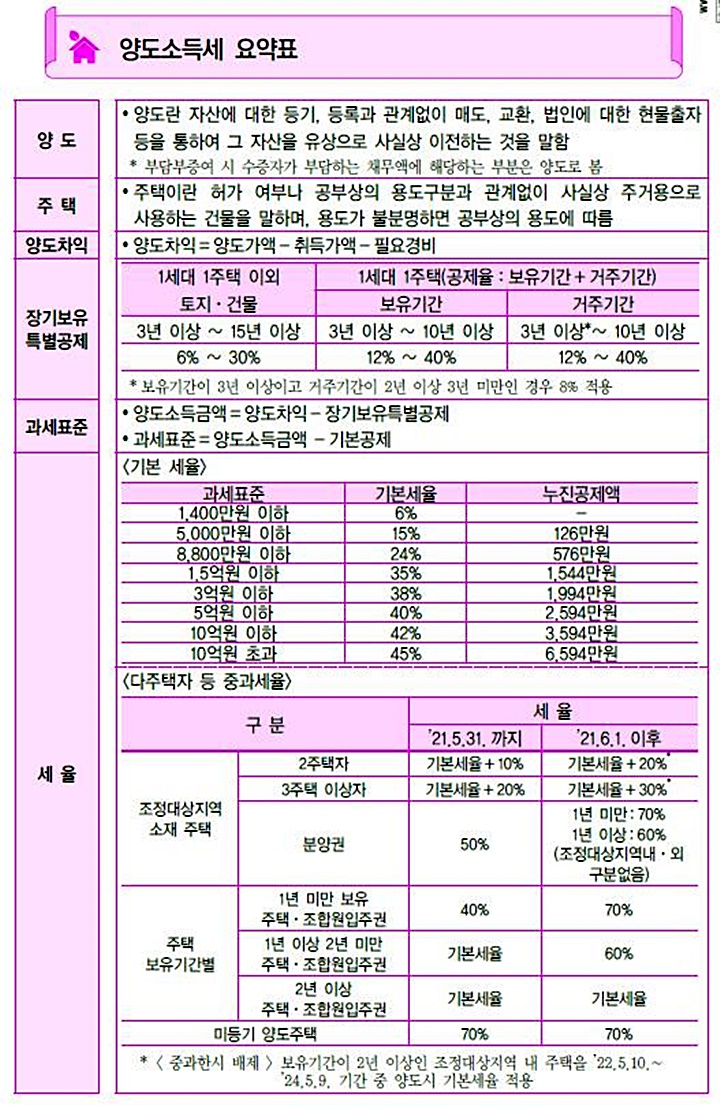
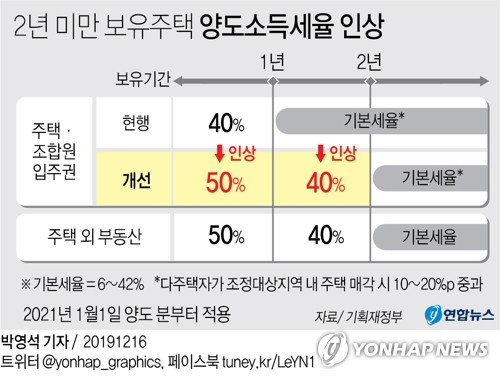
Recently, the surtax system for multi-home owners has been strictly re-applied in the real estate market, intensifying the phenomenon of withheld listings. With the expiration of temporary measures the government had introduced to boost transactions, multi-home owners are finding it difficult to act even if they want to sell their homes due to the tax burden. While home prices in core areas of Seoul remain firm, mixed trends are appearing in some regions where owners cannot bear the tax burden. When multi-home owners sell homes in designated areas, heavy additional tax rates are added to the basic rate, and the Special Deduction for Long-Term Holding is excluded, meaning they may have to pay more than half of their profit in taxes. Cases of gifting homes to children to avoid this tax burden have surged, but this also requires a comprehensive consideration of gift tax, acquisition tax, and other factors. Because homeowners who are simply holding out are reducing the number of listings on the market, a paradoxical phenomenon occurs where scarcity is highlighted. Many investors are caught off guard by unexpectedly high tax rates after rashly proceeding with transactions while holding multiple homes without calculating the taxes. Therefore, when planning to dispose of multiple homes, you should not just look at the selling price but consider the order in which to sell to minimize taxes. Experts advise that it is wise to review your comprehensive portfolio by considering future policy changes and holding tax burdens together.
With the revival of surtaxes on capital gains for multi-home owners, the tax burden has increased. Therefore, you should strategically approach the order of sales and the organization of your held properties.
4. Tax Exemption Requirements and the Pitfalls of the Single-Home Owner Status
Many people expect to automatically receive the tax exemption for single-home owners, but they often face tax assessments because they fail to meet the specific requirements. To receive the exemption, you must basically hold the home for more than two years, and if the home was acquired in a designated area, you must also meet the residency requirement of two years. A typical regrettable story is that of someone who owns a home in the provinces but rents in Seoul for work, only to miss the exemption because they accidentally failed to meet the residency period. Additionally, if you miss the legal deadline for disposing of your previous home by even one day while trying to use the temporary two-home benefit, the tax exemption can be nullified. Even if you qualify for tax exemption, failing to file with the tax office or failing to clearly document the source of funds can become a major problem later. Occasionally, people do not file at all because they believe no tax is due for exempt homes, which can lead to tax audits when they acquire other real estate or transfer funds to their children, as they cannot prove the acquisition price. News reports frequently feature cases where people fall for unverified internet rumors or YouTube advice, use illegal methods like split deposits, and end up facing both a tax bomb and surcharges. Even for tax-exempt homes, you must go through the proper capital gains reporting procedure and keep official documents to ensure safety in future asset management.
The tax exemption for single-home owners requires strict fulfillment of holding and residency period requirements. Even if exempt, you must not neglect tax filing to remain safe.
5. Precautions for Capital Gains Tax on Reconstruction and Inherited Real Estate
If you hold a right to move in (entry right) during a reconstruction or redevelopment process, the structure of capital gains tax calculation differs from that of general homes, causing significant confusion. The tax rates applied and the method of calculating the holding period change completely depending on the status of the home before and after the approval of the management disposal plan, and the timing of the entry right transaction. Mr. Park, a member of a reconstruction association in Seoul, only learned late that he would face massive taxes when trying to sell his member entry right due to overlapping restrictions on transferring member status and surtaxes for multi-home owners. The holding period for an entry right is calculated from the acquisition date of the original home, but if the transfer of member status is prohibited in that area, the transaction itself may be impossible, making prior verification essential. Special caution is also required when selling inherited real estate, especially as the system for the Special Deduction for Long-Term Holding on non-business land and inherited homes is expected to become more stringent in the future. With upcoming tax law amendments, the schedule for eliminating or reducing the Special Deduction for Long-Term Holding on inherited land has been set, prompting heirs to act quickly. The value assessed during the inheritance tax filing becomes the acquisition price that determines future capital gains tax, so underreporting or carelessly handling the inheritance tax filing can lead to a capital gains tax bomb later. When organizing assets inherited from parents, you should calculate the total tax amount by linking inheritance tax and capital gains tax as a single flow to minimize the overall burden.
Entry rights and inherited real estate have different tax calculation methods than general homes. Therefore, you must carefully review the acquisition timing and legal restrictions in advance.
6. How to Correct Incorrectly Assessed Taxes
There are cases where a significant proportion of taxes assessed by the National Tax Service or local tax offices contain errors and are refunded. Statistics show that a considerable number of taxes assessed by the National Tax Service are incorrectly calculated and corrected through objections or review requests, with corrections related to capital gains tax being frequent alongside VAT. If you feel that your capital gains tax has been over-assessed, you can actively utilize the rectification request system to demand a refund of the tax already paid. For example, if you find a receipt for necessary expenses that was omitted during filing, or if it is revealed that you met the tax exemption requirements later, you can receive a refund of the paid tax through a rectification request. It is easy to believe that the state will accurately assess taxes, but if taxpayers do not look out for themselves, there is a high risk of leaving overpaid taxes unclaimed. After completing a real estate sales contract, it is necessary to review the filing details with a tax expert to ensure there are no errors. Since real estate-related tax systems are likely to become more complex in the future, it is important to consistently acquire related information and prepare in advance. The most certain way to avoid a tax bomb is to study in advance without fear and receive legal tax-saving consulting when necessary. Start safe and smart asset management by calculating your current asset status and expected capital gains right now.
Overpaid capital gains tax can be refunded through a rectification request. Therefore, you need to be diligent in verifying the accuracy of the tax amount even after filing.
Frequently Asked Questions
=